

- City govt essential for planned development of Chattogram: CCC administrator |
- Asian Stocks Slump After US Tech Rout Amid AI Jitters |
- Free Concert Featuring James and Seven Bands Set for Manik Mia Avenue |
- Garment factories reopen as workers return to work in Savar-Ashulia |
- Trump confirms new US strikes on Iran’s Qeshm island |
The Saiyan Paradox: Dragon Ball Is More Immortal Than Goku And More Fragile Than Ever
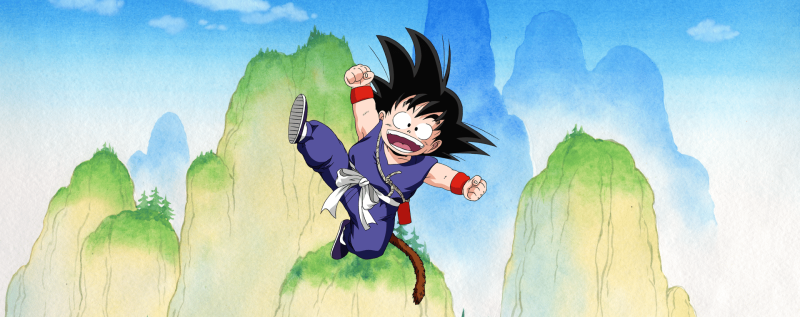
Image: Collected
Dragon Ball remains one of the few franchises that can disappear from weekly headlines for years and still generate billions of yen, global debates, and instant nostalgia the moment its name appears. Yet its greatest strength—its mythic simplicity—is also its biggest creative liability: after four decades, the series often recycles power-ups, stakes, and villains while struggling to move its core story meaningfully forward.
Still a Global Powerhouse
Dragon Ball’s cultural footprint is not merely historical. Toei’s financial report for the first half of fiscal year 2026–2027 placed Dragon Ball at approximately 12.353 billion yen—about $81 million—across major business segments, trailing only One Piece among Toei’s flagship properties.
That is the essence of the franchise’s “iconic” status: it does not require a new weekly anime or an active manga to remain commercially and culturally alive. The symbols are so durable—Goku’s orange gi, Vegeta’s pride, the Kamehameha, Super Saiyan transformations—that new generations continue encountering them through games, merchandise, streaming, memes, and parental hand-me-downs.
Why It Endures
Dragon Ball succeeds because it built a universal emotional engine: an underdog who trains, loses, evolves, and fights for people who cannot fight for themselves.
A simple but addictive escalation loop: Every arc introduces a stronger threat, forcing Goku and his allies to discover a new level of strength.
Characters with instantly readable identities: Goku is pure-hearted instinct, Vegeta is wounded pride, Piccolo is disciplined wisdom, and Frieza is elegant cruelty.
Visual language recognized worldwide: The Super Saiyan glow, energy blasts, martial-arts choreography, and dramatic power-up sequences are among anime’s most imitated images.
A cross-generational fanbase: Many viewers discovered Dragon Ball through Z, stayed for Super, and now share it with children who meet Goku through games and streaming.
The franchise’s recent output also keeps it visible. Dragon Ball Daima, the final anime project associated with Akira Toriyama, introduced canonical Super Saiyan 4 Goku and Super Saiyan 3 Vegeta in its final episodes, while a Dragon Ball Super: Beerus remake is scheduled for fall 2026 and a Galactic Patrol adaptation is reportedly in production.
The Creative Weakness
For all its longevity, Dragon Ball has a recurring problem: it often mistakes more power for more story.
The series’ central formula—new villain appears, heroes struggle, Goku unlocks a stronger form, villain is defeated—has produced some of anime’s greatest moments, but it has also made later entries feel predictable. Transformations such as Super Saiyan God, Super Saiyan Blue, Ultra Instinct, and various alternate forms are visually spectacular, yet they can dilute the emotional weight that earlier transformations carried. When every arc ends with another escalation, the audience begins to ask not “How will they win?” but “Which new form will appear?”
This is especially visible in Dragon Ball Daima. Despite acclaimed final-episode animation and major reveals, the series remains divisive and holds the lowest IMDb score among canonical Dragon Ball anime, at 8.0/10. Critics and fans have described its pacing as slow and its premise as divisive, with even former Dragon Ball editor Kazuhiko Torishima reportedly criticizing it harshly.
The Continuity Problem
Dragon Ball’s timeline has become increasingly difficult for newcomers to enter. The franchise now spans the original Dragon Ball, Dragon Ball Z, Dragon Ball GT, Dragon Ball Super, movies, Daima, video-game-exclusive forms, and competing interpretations of what is canonical.
That abundance rewards longtime fans but creates barriers:
● New viewers must decide where to start.
● Longtime fans argue over canon, timelines, and power scaling.
● Character development can be reset or sidelined to preserve familiar dynamics.
● Supporting characters such as Yamcha, Tien, and even Gohan often receive less sustained attention than Goku and Vegeta.
The result is a franchise that is enormous but not always coherent: its mythology keeps expanding, while its emotional focus often narrows around the same central rivalry.
A Franchise in Transition
The most serious current weakness is uncertainty. The Dragon Ball Super manga has been on an extended hiatus since Akira Toriyama’s death in March 2024; Chapter 103 appeared in V Jump on March 20, 2024, followed by a special Chapter 104 in February 2025, with no confirmed return date.
Toyotaro has hinted that more Dragon Ball Super work is coming, and V Jump has described the series as still “serializing,” but Shueisha has not officially announced when regular chapters will resume. For a franchise whose future storytelling depends so heavily on its manga, that is a major vulnerability.
The Verdict
Dragon Ball is iconic because it became bigger than any single series, author, adaptation, or continuity dispute. It is a global shorthand for shonen action: training, friendship, rivalry, transformation, and the belief that limits exist only to be broken.
But its future depends on whether it can evolve beyond escalation. The next era needs fewer recycled power-ups and more meaningful consequences—new emotional stakes, stronger roles for its supporting cast, and a clear creative direction after Toriyama. Dragon Ball does not need to become less legendary; it needs to become less afraid of changing what made it legendary in the first place.