

- City govt essential for planned development of Chattogram: CCC administrator |
- Asian Stocks Slump After US Tech Rout Amid AI Jitters |
- Free Concert Featuring James and Seven Bands Set for Manik Mia Avenue |
- Garment factories reopen as workers return to work in Savar-Ashulia |
- Trump confirms new US strikes on Iran’s Qeshm island |
Clayface: DC’s Grotesque Masterstroke That Just Clawed Up the Superhero Formula
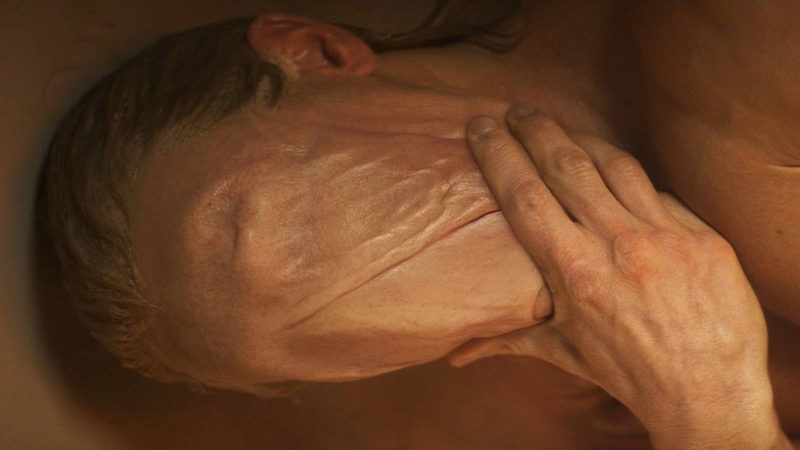
Image: Collected
DC Studios’ Clayface is not merely a comic book movie with horror elements, it is a full-blooded body-horror film wearing a Batman villain’s skin. And that distinction may permanently change what audiences expect when they hear the words “comic book movie.”
For decades, superhero cinema has been built around a familiar promise: spectacle, heroism, quips, and a world-ending threat resolved before the credits. Clayface rejects that contract. It is an R-rated, villain-led descent into disfigurement, obsession, revenge, and flesh that refuses to stay intact—more The Fly than Superman.
A Villain Story Without the Safety Net
The film follows Matt Hagen, played by Tom Rhys Harries, a rising actor whose face is brutally destroyed before experimental nanotechnology gives him the ability to reshape himself. What begins as a desperate attempt to reclaim his identity becomes a nightmare of transformation, violence, and self-erasure.
That is the genius of Clayface: it treats superpowers not as wish fulfillment, but as disease. Hagen’s shapeshifting is thrilling, but it is also horrifying because it makes identity unstable. Every new face is a lie; every transformation brings him closer to losing the person he used to be.
Director James Watkins leans into that unease with grimy visuals, practical effects, and deliberately uncomfortable body imagery. Critics have compared its sensibility to David Cronenberg and Sam Raimi, especially The Fly and Darkman—films about brilliant men destroyed by their own experiments.
What People Are Saying
Early reactions have been strikingly enthusiastic about the film’s willingness to be nasty. Collider’s Steven Weintraub called it “an awesome addition to the DCU” that requires no prior DC knowledge, while noting that audiences visibly reacted to its brutal scenes.
Others have been even more emphatic. YouTuber Brandon Davis described it as “freakishly awesome,” praising Watkins for using Clayface’s abilities creatively; critic Peter Gray said it retains “comic book flair” without softening its violence.
IGN’s Jim Vejvoda framed it as a throwback to hardboiled revenge thrillers, low-budget horror, and cult genre cinema, calling it a “well-written, beautifully acted body horror/mad science/antihero monster movie.”
The response has not been universally glowing. Some reviewers argue the film is uneven, that its visual effects do not always match its ambitions, and that it may be too niche for general audiences. But even skeptics concede that its standalone, genre-first approach gives the DC Universe a texture it has lacked.
The Moment Superhero Movies Grew Up
Clayface matters because it proves a comic book adaptation does not have to behave like a superhero movie. It can be a horror film, a revenge tragedy, a mad-science fable, or a character study—without pausing every ten minutes to remind viewers that it belongs to a larger franchise.
That is a major shift. For years, studios treated comic book source material as a brand engine: every film had to connect, tease, and service the next installment. Clayface flips that logic. As one early reaction put it, it works as “a movie that works on its own first,” with shared-universe considerations coming second.
This could reshape audience expectations in several ways:
Viewers may stop assuming every comic adaptation needs a heroic protagonist.
Studios may become more willing to let filmmakers impose a distinct genre identity on familiar characters.
R-rated comic book films may no longer feel like exceptions, but like legitimate creative lanes.
Audiences may judge these movies less by franchise continuity and more by whether they deliver a complete, specific cinematic experience.
Horror Is the New Superpower
The timing is not accidental. Body horror has been enjoying a major resurgence, and Clayface arrives at a moment when audiences are actively seeking films that make them squirm rather than simply dazzle them.
By putting a grotesque Batman villain at the center of that trend, DC has found something Marvel’s mainstream films rarely attempt: a comic book movie that is allowed to be genuinely unpleasant. Critics have noted its intense gore, face-melting imagery, and bleak undertones—elements usually kept far away from modern superhero audiences.
That does not mean every future DC film should be a horror movie. It means DC has demonstrated that its universe can contain radically different tones without collapsing. A bright Superman, a cosmic Supergirl, and a repulsive body-horror tragedy can coexist if each film commits fully to its own identity.
The Real Legacy of Clayface
Clayface may not be a flawless film, but it is a crucial one. It challenges the assumption that comic book movies must be broad, sanitized, and endlessly interconnected. More importantly, it shows that a villain can carry a film when the story treats his monstrousness as emotionally real rather than merely decorative.
If Clayface succeeds commercially, expect studios to stop asking, “How can we make another superhero movie?” and start asking, “What kind of movie can this character become?” That question could be the most exciting thing to happen to comic book cinema in years.
DC did not just make a Clayface movie. It made audiences realize that the cape-and-cowl era was only one possible version of comic book storytelling—and that the genre’s future may be far stranger, darker, and more human than anyone expected.