

- City govt essential for planned development of Chattogram: CCC administrator |
- Asian Stocks Slump After US Tech Rout Amid AI Jitters |
- Free Concert Featuring James and Seven Bands Set for Manik Mia Avenue |
- Garment factories reopen as workers return to work in Savar-Ashulia |
- Trump confirms new US strikes on Iran’s Qeshm island |
Mad Max: Fury Road: The Roaring Masterpiece That Redefined Action Cinema
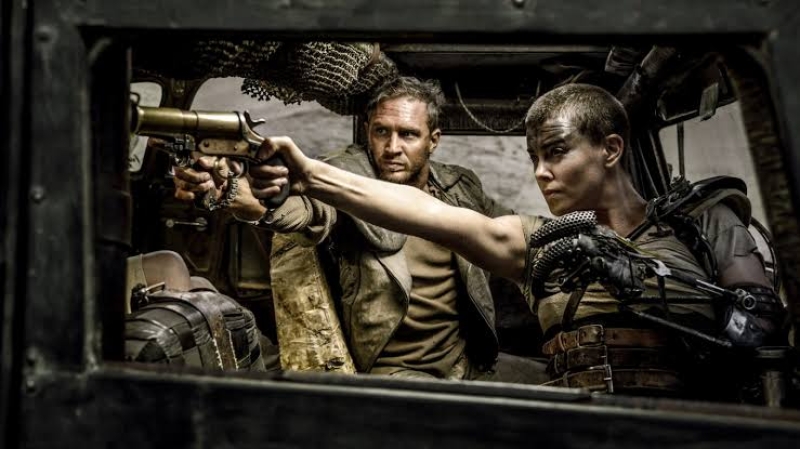
Image: Collected
Mad Max: Fury Road is not merely a great action movie—it is one of the most visually audacious, emotionally charged, and technically accomplished blockbusters ever made. Directed by George Miller, it turned a post-apocalyptic chase across the wasteland into a two-hour symphony of fire, steel, and survival.
A Story Told at Full Throttle
The film’s premise is deceptively simple: Max Rockatansky, a haunted drifter, joins Furiosa, a war captain fleeing the tyrant Immortan Joe with his captive “wives.” What follows is essentially one massive escape, counterattack, and chase—but Miller transforms that simplicity into momentum.
Rather than burying the audience in exposition, Fury Road communicates through movement, faces, machinery, and imagery. Its world feels ancient and mythic: a broken civilization worshipping gasoline, water, weapons, and power. That economy of storytelling gives the chaos emotional weight, making the film “exhilarating” while still carrying surprising narrative heft.
Furiosa Makes It Great
Tom Hardy’s Max is compelling, but Charlize Theron’s Imperator Furiosa is the movie’s beating heart. She is not a side character or a romantic accessory; she is the protagonist in every meaningful sense—resourceful, wounded, furious, and driven by a moral purpose.
Furiosa’s quest to lead the women to freedom gives the film its soul. In a genre often accused of reducing women to scenery, Fury Road places women at the center of its rebellion, while still allowing Max’s redemption arc to matter. Their partnership is built on mutual respect, not conventional romance, which makes it far more powerful.
Action as Pure Cinema
George Miller understands that action works best when the audience can feel every impact. Fury Road relies heavily on practical stunts, real vehicles, and in-camera spectacle, with more than 150 stunt performers contributing to its relentless chases.
The result is action that feels physical rather than weightless. War Rigs careen through sandstorms, motorcycles swarm like insects, and flame-throwing guitars blare across the desert—yet the film never loses spatial clarity. Every crash, jump, and explosion is edited with purpose.
That craft was recognized at the highest level: the film won six Academy Awards, including Best Film Editing, Best Production Design, Best Costume Design, Best Makeup and Hairstyling, Best Sound Editing, and Best Sound Mixing.
Cinematographer John Seale gives the wasteland a saturated, almost painterly intensity: orange deserts, blue night skies, chrome-plated warriors, and machines that look like religious artifacts. The production design turns every vehicle into a character.
The film’s aesthetic is extreme, but never empty. Immortan Joe’s Citadel, the War Boys’ pale body paint, Furiosa’s mechanical arm, and the gleaming chrome mouths of his followers all express the society’s obsession with scarcity, death, and control. It is worldbuilding through design, not dialogue.
Recognition That Endures
Fury Road earned ten Oscar nominations, including Best Picture and Best Director, and won more Academy Awards than any other film that year. It grossed more than $380 million worldwide against a $150 million budget, proving that bold, original filmmaking could still succeed commercially.
Critics have continued to elevate it over time. It has repeatedly appeared near the top of “best of the decade” and “greatest action film” lists, with many critics ranking it number one among 2010s films.
Mad Max: Fury Road matters because it proves blockbuster filmmaking can be both thrilling and artistic. It has the scale of a franchise movie, the craft of an auteur film, and the emotional clarity of a great myth.
A decade later, it remains a benchmark: proof that action cinema does not have to choose between spectacle and substance. It can roar, burn, and race across the desert—while saying something profound about freedom, trauma, and the courage to build a better world.