

- City govt essential for planned development of Chattogram: CCC administrator |
- Asian Stocks Slump After US Tech Rout Amid AI Jitters |
- Free Concert Featuring James and Seven Bands Set for Manik Mia Avenue |
- Garment factories reopen as workers return to work in Savar-Ashulia |
- Trump confirms new US strikes on Iran’s Qeshm island |
Timekeepers Vote to Abolish Leap Second From May 2027
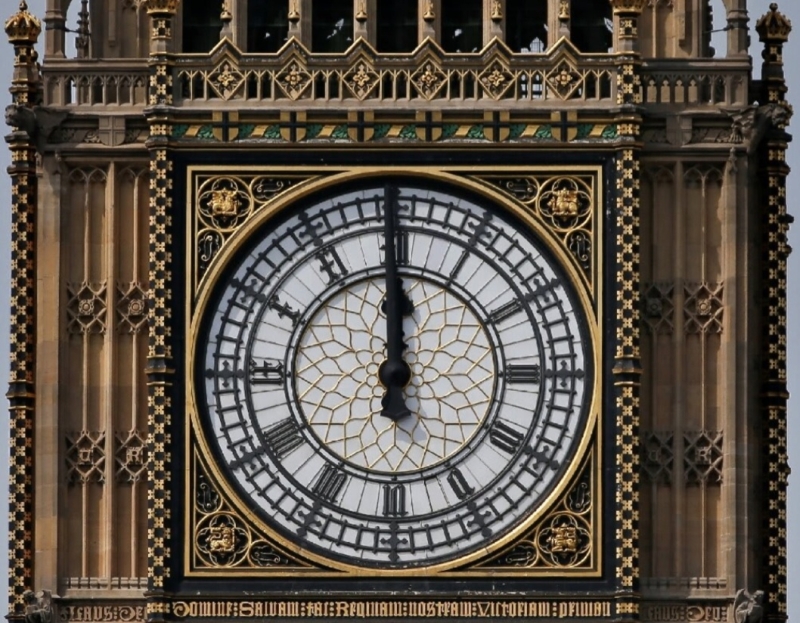
Image: Collected from @lundonlens on Instagram
Global timekeepers have voted to stop adding leap seconds to the world’s clocks, ending a practice that has kept atomic time aligned with Earth’s rotation since 1972.
Delegates at the General Conference on Weights and Measures (CGPM) in Versailles, France, approved the change on Thursday, October 15. From May 20, 2027, Coordinated Universal Time (UTC) will run continuously without occasional extra seconds.
The decision moves the deadline forward from 2035, when the CGPM had earlier planned to end leap seconds. Under the new resolution, UTC can drift by up to one hour from astronomical time before any correction is needed — a change often called a “leap hour.”
Why the change now
Earth’s rotation has sped up slightly since around 2020, raising the possibility of a first-ever “negative leap second,” in which a second would be removed from clocks. Noël Dimarcq, who heads the BIPM’s time and frequency committee, said that step has never been tested and could disrupt computer systems.
Positive leap seconds have already caused problems. They were linked to outages at Reddit and LinkedIn in 2012 and at Cloudflare in 2016. Meta warned in 2022 that removing a second could have a “devastating effect” on software.
The last leap second was added at the end of 2016. A total of 27 have been inserted since the system began.
What happens next
Earth’s rotation will still be monitored, and the gap between UTC and UT1 — the time scale based on Earth’s rotation — will continue to be published. Scientists say a one-hour correction, if ever needed, would likely not be required for hundreds or thousands of years.
Not everyone welcomes the decision. Astronomers and others who rely on Earth-orientation data will need to adjust to the growing difference between clock time and astronomical time. Critics have called the vote a way of “pushing back the decision” to future generations.
The conference also asked experts to develop proposals for redefining the second using more accurate optical clocks, and to work on a time standard for the Moon. Dimarcq said the changes “will have a profound impact on future timekeeping both on the earth and other planets.”
News category: Science and Technology — more specifically, Science / Technology news. It can also be placed under World News if the focus is on the international decision by the CGPM.