

- Oil Shock Sends Asian Markets Lower as Middle East Conflict Threatens Global Shipping |
- Trump Links Iran War to US Midterms, Backs United Ireland |
- PM Tarique Rahman Seeks Public Cooperation to Tackle Nationwide Dengue Outbreak |
- Jatiyatabadi Mahila Dal Vows to Lead Fight Against Rape, Violence Against Women and Children |
- 'Honorable' Dropped: PM Starts Implementing Decision from His Own Office |
Audiophile Culture: Inside the World of People Who Listen to Music Differently
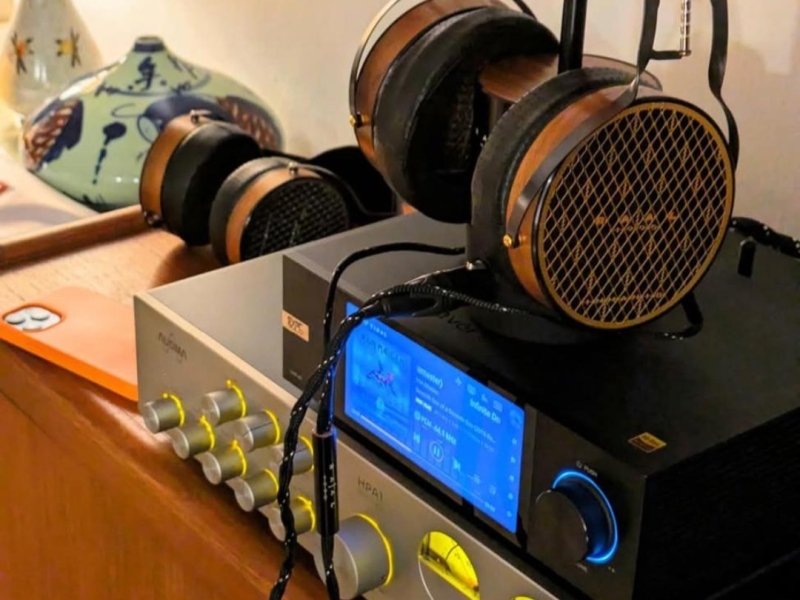
Image: Collected
For most people, listening to music is simple: put on a song, turn up the volume and enjoy it. For audiophiles, however, listening to music can become a much deeper pursuit. They obsess over sound quality, recording techniques, headphones, speakers, amplifiers and even the way a room is designed. What begins as a love of music can evolve into an entire subculture built around the search for the perfect listening experience.
Audiophiles are people who take a particular interest in high-fidelity audio, commonly known as Hi-Fi. Their goal is generally to reproduce recorded music as accurately and enjoyably as possible. Some pursue a neutral, studio-like sound, while others prefer a warmer or more dramatic presentation.
More Than Just Expensive Equipment
The audiophile world is often associated with expensive equipment. High-end speakers can cost thousands of dollars, while premium headphones, amplifiers, digital-to-analog converters and turntables can reach prices far beyond what the average listener would consider reasonable.
But money is not necessarily the defining feature of the culture. Many enthusiasts begin with inexpensive headphones or second-hand equipment before gradually upgrading their systems. The attraction lies in discovering how different components affect the listening experience.
An audiophile might spend hours comparing two headphones, examining differences in bass response, vocal clarity, soundstage and detail. Another might experiment with speaker placement, room acoustics or different recordings of the same album.
The Search for the "Perfect" Sound
One of the defining characteristics of audiophile culture is the idea that there is always something more to discover.
Listeners frequently use terms such as soundstage, imaging, separation, timbre, resolution and tonality to describe what they hear. A good system, in their view, can make instruments appear more clearly positioned and reveal details that may be difficult to notice on ordinary consumer equipment.
This can turn listening into an almost analytical activity. Instead of simply hearing a song, the listener may focus on the texture of a singer's voice, the positioning of a guitar, the decay of a cymbal or the acoustic characteristics of the recording space.
Yet audiophiles are not necessarily trying to turn music into a scientific experiment. At its heart, the hobby remains about enjoyment.
Vinyl, CDs and the Digital Revolution
Audiophile culture has also developed alongside major changes in music technology.
Vinyl records remain particularly popular among enthusiasts. Some appreciate the physical experience of handling records, while others enjoy the distinctive character associated with analogue playback. Turntables, cartridges and phono preamps have therefore become important parts of the audiophile marketplace.
At the same time, digital audio has transformed the hobby. High-resolution downloads, streaming services, digital-to-analog converters and lossless formats have made high-quality digital playback increasingly accessible.
This has created an interesting divide within the community. Some enthusiasts strongly prefer analogue formats, while others argue that modern digital systems can provide exceptional accuracy and convenience.
Headphones Created a New Generation of Audiophiles
Headphones have played a major role in bringing audiophile culture to a much wider audience.
Unlike large speaker systems, headphones can provide a high-quality listening experience without requiring a dedicated room. The rise of online communities and affordable enthusiast headphones has also made it easier for newcomers to enter the hobby.
The modern headphone enthusiast may compare open-back and closed-back designs, experiment with different ear pads or pair headphones with specialized amplifiers and DACs.
Online communities have further accelerated this trend. Reviews, frequency-response measurements and listening comparisons are now readily available, allowing newcomers to research equipment before spending money.
The Debate Over Expensive Upgrades
Perhaps the most controversial aspect of audiophile culture is the debate over whether expensive equipment actually sounds better.
There is a thriving market for premium cables, power conditioners, amplifiers and other accessories that can cost hundreds or even thousands of dollars. Some enthusiasts believe these products can produce meaningful improvements, while skeptics argue that many of the differences are exaggerated or difficult to hear under controlled conditions.
This disagreement has created a permanent tension within the community between subjective listening experiences and objective measurements.
Some audiophiles trust their ears above everything else. Others rely heavily on measurements such as frequency response, distortion and signal-to-noise ratio. The result is a culture where technical data and personal perception constantly collide.
The Psychology of Audiophile Culture
There is also a psychological dimension to the hobby. Audiophiles are often pursuing something that can never be completely achieved: perfection.
There is always another headphone, another amplifier, another recording or another speaker that promises a better experience. This can create an endless cycle of upgrades commonly described by enthusiasts as "upgraditis."
For some, this is part of the fun. Building a system becomes a personal project, much like collecting watches, cameras, cars or musical instruments.
For others, the constant pursuit can become expensive and distracting. The irony is that an audiophile can sometimes spend so much time thinking about equipment that the music itself becomes secondary.
Ultimately, It Is About the Music
Despite all the debates over equipment, formats and measurements, audiophile culture ultimately revolves around a simple idea: getting closer to the music.
A carefully assembled system can encourage listeners to revisit albums they have heard hundreds of times and notice details they previously overlooked. It can turn listening into an intentional activity rather than something happening in the background.
That is perhaps what makes the audiophile subculture so enduring. It combines technology, music, craftsmanship, collecting and personal taste. For some people, it is about owning impressive equipment. For others, it is about discovering the emotional and sonic details hidden inside recordings.
In the end, there may be no universally perfect audio system. There is only the system that makes a particular listener want to sit down, put on an album and keep listening.