

- City govt essential for planned development of Chattogram: CCC administrator |
- Asian Stocks Slump After US Tech Rout Amid AI Jitters |
- Free Concert Featuring James and Seven Bands Set for Manik Mia Avenue |
- Garment factories reopen as workers return to work in Savar-Ashulia |
- Trump confirms new US strikes on Iran’s Qeshm island |
From Outcast to Icon: Why Naruto Still Defines the Shonen “Big Three”
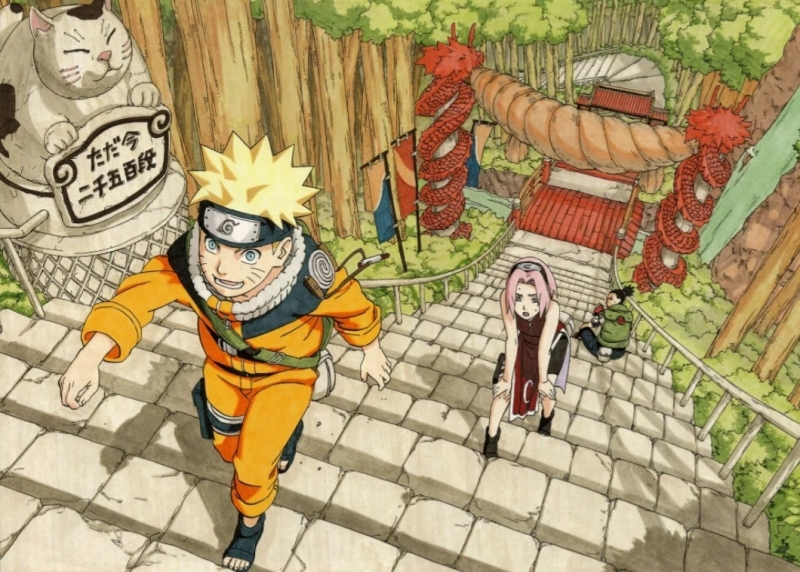
Image: Collected
Naruto stands out among the shonen “Big Three” because it turns a simple underdog premise into a deeply human story about loneliness, trauma, forgiveness, and the need to be seen. Alongside One Piece and Bleach, it dominated shonen manga and anime in the 2000s and early 2010s, but Naruto’s emotional core and character-driven conflicts give it a lasting power of its own.
An underdog everyone understands
Naruto Uzumaki begins as an isolated village outcast carrying the Nine-Tails fox, feared and rejected by the very people he wants to accept him. His dream of becoming Hokage is not merely about power; it is about earning recognition, belonging, and respect.
That makes his journey unusually relatable. Many shonen heroes fight to become stronger, but Naruto fights to prove that someone labeled worthless can still matter. His growth is emotional as much as physical: he learns discipline, empathy, responsibility, and the cost of protecting others.
Bonds as the real battlefield
At its heart, Naruto is a story about bonds. Team 7—Naruto, Sasuke, Sakura, and Kakashi—gives Naruto his first real sense of family, and the series repeatedly shows that relationships can heal people whom strength alone cannot.
The conflict with Sasuke is the clearest example. Rather than treating him as a simple villain, the story frames their rivalry as a tragedy between two lonely boys shaped differently by loss. Naruto’s refusal to abandon Sasuke becomes one of anime’s most memorable friendships, because it insists that redemption is possible even after betrayal.
Villains with painful humanity
Naruto is especially strong at making antagonists feel like damaged people rather than obstacles. Characters such as Pain, Obito, Itachi, Gaara, and Zabuza reveal how war, grief, ideology, and social rejection can turn suffering into violence.
Pain’s attack on Konoha is not just a spectacle; it challenges Naruto’s belief in peace and forces him to confront the cycle of hatred. This willingness to ask difficult moral questions separates Naruto from many action-focused shonen series.
A world built for storytelling
The ninja world gives the series a distinctive identity. Jutsu, chakra, hidden villages, clans, tailed beasts, and political rivalries create a setting that feels expansive without losing personal stakes.
Unlike many battle anime, Naruto often makes fights meaningful through strategy, psychology, and backstory. A battle may reveal a character’s fear, ideology, or unresolved grief, so victory rarely feels empty.
Cultural impact beyond anime
The “Big Three” label refers to One Piece, Naruto, and Bleach, three Weekly Shonen Jump series whose sales, global popularity, and influence made them the defining shonen franchises of their era. Together, they helped push anime further into Western mainstream culture, with Naruto Uzumaki becoming one of the most recognizable anime characters worldwide.
Naruto also influenced later shonen hits, including Demon Slayer and Jujutsu Kaisen, through its blend of flashy combat, emotional backstories, and character-focused worldbuilding. Its legacy continues through Boruto, showing how strongly the original series still connects with audiences.
The Significance In Its Depiction
Naruto endures because it speaks to anyone who has felt unseen, misunderstood, or left behind. Its message is simple but powerful: pain does not have to become hatred, and people can change through connection, effort, and compassion.
That is why Naruto is not only one of the Big Three—it is the series that made the “never give up” spirit feel personal.