

- City govt essential for planned development of Chattogram: CCC administrator |
- Asian Stocks Slump After US Tech Rout Amid AI Jitters |
- Free Concert Featuring James and Seven Bands Set for Manik Mia Avenue |
- Garment factories reopen as workers return to work in Savar-Ashulia |
- Trump confirms new US strikes on Iran’s Qeshm island |
The art of hypercar color: how Koenigsegg, Pagani, Bugatti and Ferrari choose their finishes
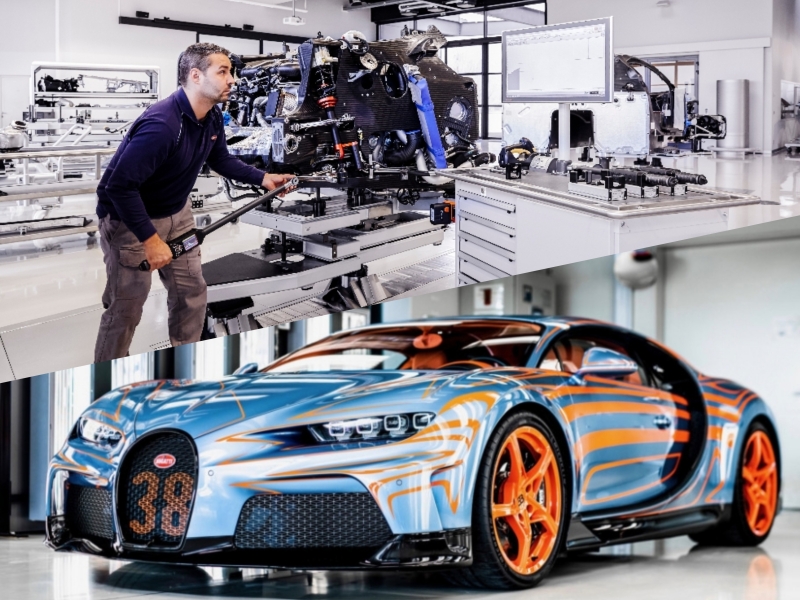
Image: Collected
For marques like Koenigsegg, Pagani, Bugatti and Ferrari, selecting a color is never just about picking from a catalog. It is a collaborative, almost couture-like process in which the client’s vision, the brand’s design language and the limits of materials science converge to create a finish that must survive extreme heat, UV exposure, brake dust and years of scrutiny under show lights. The result is a workflow that blends art direction, chemistry and old‑school handcraft, often taking weeks to months per car and adding tens to hundreds of thousands of dollars to the final invoice.
All four brands treat exterior color as a core element of the car’s identity rather than an afterthought. Bugatti runs its Sur Mesure program out of the Molsheim Atelier, where no two cars leave identical and paint schemes are developed in close collaboration between the client and a dedicated design team. Ferrari’s Tailor Made lets a limited number of buyers, assisted by specialists in Maranello, New York and Shanghai, create genuinely unique vehicles beyond the standard configurator palette. Pagani offers programs like Unico and Grandi Complicazioni, enabling near‑unlimited livery and paint choices and even one‑off “special project” cars developed over more than a year. Koenigsegg provides bespoke packages during the build, with custom paints, exposed carbon finishes and special pigments available as factory options, but only within the production window and with long lead times. In practice, the “selection” is a negotiation between the owner’s dream, the brand’s aesthetic codes and what is technically feasible on complex carbon‑fiber bodywork.
The process usually begins with an in‑person session, or a series of sessions, at the factory or a dedicated studio. At Bugatti, the bespoke journey kicks off with a visit to Molsheim, where the client meets a small personal design team who hear requests and test feasibility; the choice of paint colors is effectively unlimited, constrained mainly by safety and brand icons like the logo. Ferrari Tailor Made begins from one of three “collections” (Classica, Scuderia, Inedita) as inspiration, then moves into free‑form customization using physical paint chips, material boards and digital mock‑ups; entirely new colors can be created if a client brings an object to match. Pagani’s high‑end programs involve co‑creation with the Centro Stile team, using physical pigment chips, carbon samples and even thermal simulation rather than just digital renders; some projects run 12–18 months in the design phase alone. Koenigsegg buyers work directly with a sales and configuration coordinator to specify paint and carbon finishes alongside powertrain and interior options; full custom colors or liveries can be commissioned but carry significant cost and time.
Once a direction is chosen, the color itself may need to be engineered. Bugatti can spend up to four months developing a new paint color, nine months on a new leather, and up to a year for a new carbon interior treatment, because each material must meet strict durability and aesthetic standards. Ferrari keeps drawers of hundreds of unused paint chips and will match a client’s reference object, such as a watch, a piece of clothing or a ceramic, to create a unique shade, even letting the owner name previously unused colors. Pagani validates proposed finishes with extensive testing, including salt‑spray, abrasion cycles and infrared reflectance, to ensure the finish will not fade, chalk or react badly with carbon and clearcoat. Koenigsegg offers everything from solid and metallic to candy, color‑shift and exposed carbon weaves; special finishes like ghost matte or chameleon paints are treated as bespoke options with their own development and quality‑control steps.
Hypercar bodies are predominantly carbon fiber, which demands meticulous preparation before any pigment touches the surface. At Koenigsegg, panels arrive at a specialist painter where any epoxy residue is removed to prevent yellowing; multiple layers of clearcoat are applied directly to the carbon, then a basecoat, then final clear, with sanding and polishing between stages—a process reported to exceed 1,200 hours per car. Bugatti paintwork involves at least eight layers and more than 600 hours of handwork: thorough panel inspection, primer application (which alone can take over 100 hours), base color, and multiple clearcoat layers, all polished to a lustrous perfection. For complex Bugatti Sur Mesure liveries, such as the “Vagues de Lumière” light‑wave design, craftsmen first create 2D shapes that map onto the 3D body with millimeter precision, tape them, then hand‑paint layer upon layer of contrasting color before sealing with clearcoat; one employee reportedly spent four weeks just perfecting the taped lines. Pagani and Ferrari similarly rely on highly skilled painters and strict quality control; at the extreme end, a failed finish can mean scrapping an entire chassis rather than reworking it.
Before the car ships, the finish is inspected under multiple light sources and angles. Bugatti clients receive progress photos roughly every two weeks throughout the build, keeping them involved as the paint evolves. Ferrari Tailor Made configurations are done outside the standard configurator, often in Photoshop and with physical samples, then locked once the unique spec is approved at a Tailor Made facility. Pagani and Koenigsegg treat the final exterior as part of the car’s identity documentation; some owners even register their unique color names and codes as part of the vehicle’s provenance.
Bugatti frames its paint program as automotive couture, comparing its design studio to Parisian fashion houses where each fabric, or finish, is researched and refined per client. The brand emphasizes unlimited exterior color choice within safety and branding rules, a willingness to add sparkles or even diamonds to paint for certain commissions, and multi‑week, hand‑painted motifs that play with light and depth, turning the body into a kind of moving sculpture. Ferrari’s Tailor Made program is structured around heritage and experimentation, with three starting “collections” that give a narrative frame—racing history, classic elegance, or avant‑garde materials—before clients go fully custom. Clients can match any object and create a new shade; Ferrari will even let them name the color if it is unused, and recent Tailor Made cars have featured iridescent finishes inspired by traditional ceramics, showing how cultural references become paint codes.
Pagani treats each car as a commissioned artwork, not a configured product. Programs like Unico allow owners to update and customize nearly every bolt, with almost unlimited choices for livery, layout and paint. Grandi Complicazioni and “Progetto Speciale” projects can take over a year to develop, with deep material validation and strict rules, such as no post‑build exterior color changes; everything must be done during final assembly. Personalization at this level can add hundreds of thousands to millions of dollars to the invoice, reflecting hundreds of hours of design and engineering consultation. Koenigsegg’s approach is shaped by its small‑batch, carbon‑heavy construction. Paint is applied over meticulously prepared carbon panels, with multiple clear and base layers and extensive hand sanding and polishing; total paint time is cited at 1,000–1,200+ hours depending on spec. Standard options include signature blues, deep gloss blacks, exposed carbon weaves, matte finishes and color‑shift paints; full custom colors or liveries are available but priced as serious bespoke items. Custom paint and finishes can easily exceed $100,000, with extreme specs such as full naked carbon or special weaves pushing the car’s price well beyond base figures.
For these brands, color is part of the car’s narrative and resale identity. A unique Tailor Made Ferrari or Sur Mesure Bugatti is not just “red” or “blue”; it is “Verde Nathalie” or “Vagues de Lumière,” with a story about inspiration, development time and handcraft. That story reinforces the brand’s image as a couture atelier rather than a volume manufacturer, creates provenance that collectors care about when trading cars later, and justifies the extreme time and cost, because the finish is effectively a commissioned artwork integrated into an engineering masterpiece.