

- City govt essential for planned development of Chattogram: CCC administrator |
- Asian Stocks Slump After US Tech Rout Amid AI Jitters |
- Free Concert Featuring James and Seven Bands Set for Manik Mia Avenue |
- Garment factories reopen as workers return to work in Savar-Ashulia |
- Trump confirms new US strikes on Iran’s Qeshm island |
Rising Global Temperatures Alter Climate, Elevate Disaster Risks
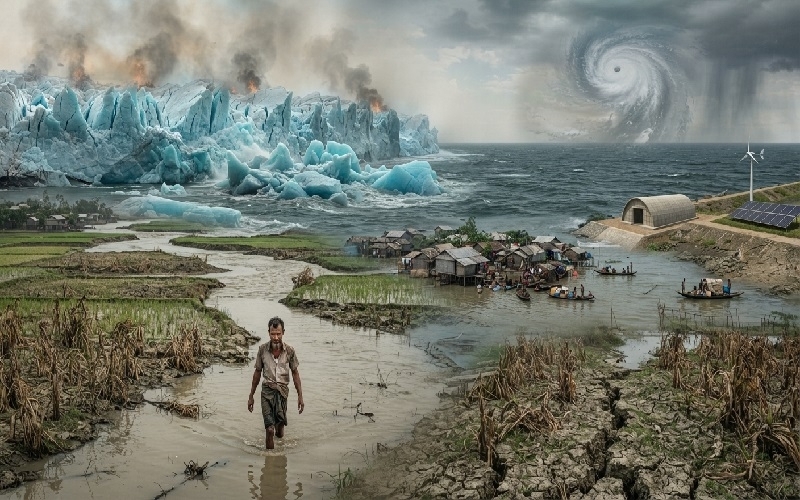
Image: Collected
Global temperatures are steadily rising, shifting the impact from melting polar ice and remote environmental crises into everyday threats worldwide. Intense heatwaves, erratic rainfall, prolonged droughts, flash floods, cyclones, wildfires, and sea-level rise are increasingly disrupting daily life, while placing long-term strain on food, water, health, economies, and biodiversity.
Scientists attribute global warming primarily to the buildup of greenhouse gases in the atmosphere. Burning fossil fuels—such as coal, oil, and gas—alongside industrialization, deforestation, and unchecked urbanization has heightened carbon dioxide levels, trapping heat around the planet.
Heatwaves Disrupt Daily Life
Extreme heat stands out as one of climate change's most visible impacts, reducing human productivity and elevating health risks, particularly for children, the elderly, and outdoor workers. Dehydration, heatstroke, and cardiovascular strain are growing concerns, forcing sectors like agriculture and construction to shift work hours or temporarily halt operations.
Shifting Rainfall Patterns
Weather systems are experiencing severe imbalances, causing extended droughts in some areas while delivering heavy, concentrated downpours in others. Beyond worsening water scarcity, these sudden torrents overwhelm drainage infrastructure in cities and submerge agricultural fields in rural regions.
Agricultural Uncertainty
Rising heat accelerates soil moisture loss, increasing irrigation demands. Unpredictable rain and heatwaves jeopardize crop yields, threatening food supplies and driving up market prices. In response, farmers require climate-resilient crop varieties, modern irrigation, and improved early-warning systems.
Melting Ice and Rising Seas
Warming temperatures are melting glaciers and causing ocean waters to expand thermal-wise. The resulting sea-level rise exacerbates coastal flooding, storm surges, and saltwater intrusion into freshwater sources and farmland.
Escalating Extremes and Wildfires
Warming oceans fuel stronger storms and extreme weather that cause severe, long-term economic damage to infrastructure and housing. Concurrently, drier conditions spark widespread wildfires that destroy ecosystems and release vast amounts of stored carbon back into the atmosphere, creating a dangerous feedback loop.
Impact on Biodiversity and Public Health
Shifts in habitat disrupt wildlife and marine ecosystems—particularly coral reefs—threatening global fisheries. Public health is similarly compromised; rising heat, vector-borne diseases, waterborne illnesses following floods, and displacement all place severe burdens on health systems and mental well-being.
Economic Pressure and Adaptation Needs
Rebuilding damaged infrastructure, declining labor productivity, and food insecurity present major economic threats. Mitigating these risks requires transitioning to renewable energy—such as solar and wind power—alongside reforestation, energy efficiency, and sustainable urban planning. Because some impacts are unavoidable, investing in climate adaptation—such as coastal embankments, resilient crops, and advanced warning systems—is essential for global stability.