

- Oil Shock Sends Asian Markets Lower as Middle East Conflict Threatens Global Shipping |
- Trump Links Iran War to US Midterms, Backs United Ireland |
- PM Tarique Rahman Seeks Public Cooperation to Tackle Nationwide Dengue Outbreak |
- Jatiyatabadi Mahila Dal Vows to Lead Fight Against Rape, Violence Against Women and Children |
- 'Honorable' Dropped: PM Starts Implementing Decision from His Own Office |
AI Deepfakes are increasingly difficult to detect as visual clues fade
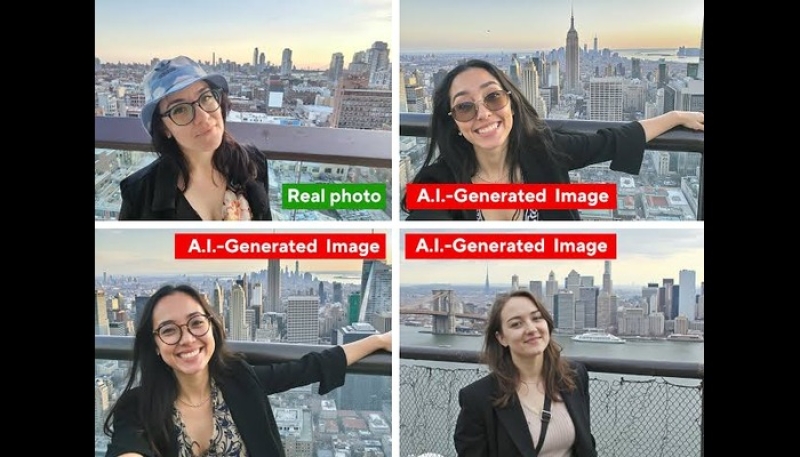
Image- Collected
A recent quiz has highlighted how difficult it has become to distinguish AI-generated images and videos from authentic content, with people performing little better than chance when identifying deepfakes.
CBS Los Angeles consumer investigator Kristine Lazar scored just three out of 12 on an AI detection quiz before receiving guidance on what to look for.
The quiz, created by online identity verification company Veriff, presented side-by-side images and videos featuring both real and AI-generated content. Despite initially feeling confident about her choices, Lazar found that many of her assumptions were incorrect.
Her initial score represented an accuracy rate of just 25%. Veriff Product Director Raul Liive said the result was consistent with the company's findings from testing members of the public, whose ability to identify AI-generated content was often close to a coin toss.
According to Liive, visual flaws that were once common indicators of AI-generated content—such as distorted fingers, unnatural eyes and other obvious abnormalities—have become far less reliable as the technology has advanced.
Instead, he advised viewers to look for subtle inconsistencies in facial features, unusual changes in texture, and unnatural patterns. In videos, limited blinking, inconsistent movement, and clothing that appears to blend unnaturally into the background may also provide clues.
After receiving guidance, Lazar retook the quiz and improved her score to eight correct answers out of 12. Among the details she noticed was a difference in the size of a subject's earrings.
Live said that even people who work with AI regularly cannot identify every fake image correctly without additional tools.
The experience highlighted the growing difficulty of relying solely on visual judgment to determine whether digital content is authentic. Experts recommend using AI detection tools or specialized verification applications rather than depending only on what appears on screen.
Source: CBS News