

- Oil Shock Sends Asian Markets Lower as Middle East Conflict Threatens Global Shipping |
- Trump Links Iran War to US Midterms, Backs United Ireland |
- PM Tarique Rahman Seeks Public Cooperation to Tackle Nationwide Dengue Outbreak |
- Jatiyatabadi Mahila Dal Vows to Lead Fight Against Rape, Violence Against Women and Children |
- 'Honorable' Dropped: PM Starts Implementing Decision from His Own Office |
Devotion Beyond Boundaries: The Sacred Connection Between the Aghoris and Lord Shiva
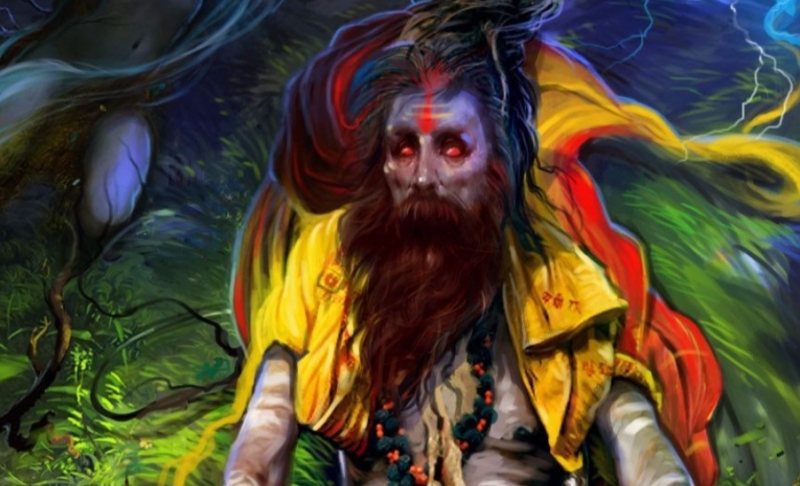
Image: Collected
In the landscape of Hindu spirituality, where pathways to the divine range from quiet devotion to rigorous intellectual inquiry, few traditions elicit as much intrigue, awe, and misunderstanding as that of the Aghoris. Characterized by their unconventional rites, extreme asceticism, and immersion in the spaces of death, the Aghoris stand at the outer margins of orthodox Hinduism. Yet, at the core of their practice lies an unwavering, total devotion to a single deity: Lord Shiva.
To understand the Aghori is to understand Shiva not merely as a god of the Hindu pantheon, but as the supreme, unconditioned reality—the ultimate ascetic who transcends all dualities of pure and impure, creation and destruction.
The Philosophy of Non-Duality: A-Ghor
The term Aghori literally translates from Sanskrit as "not terrible" or "that which is non-frightening." This linguistic paradox reveals the core philosophy of the sect. While their practices—dwelling in cremation grounds (shmashan), smearing their bodies with human ash (bhasma), and meditating among corpses—appear frightening to the uninitiated, the Aghori seeks to conquer fear (bhaya) and disgust (ghrina).
This worldview is rooted in Advaita (non-dualism). In the Aghori tradition, everything in existence emanates from the divine consciousness of Shiva. Because of this belief, nothing is considered inherently impure. The distinction between sacred and profane is viewed merely as a construct of human social conditioning (Maya). Furthermore, true liberation requires total integration, as one cannot achieve ultimate liberation (Moksha) while still harboring aversion or disgust toward certain aspects of creation.
Shiva as the Supreme Aghori
The bond between the Aghoris and Shiva is rooted in the imagery and mythological persona of Shiva himself. Unlike other deities depicting royal splendor or serene domesticity, Shiva is frequently portrayed in scripture as the original ascetic—Bholenath (the simple one) and Rudra (the fierce one).
Dwellers of the Cremation Ground (Shmashan)
In Hindu mythology, Shiva resides in Varanasi and Mount Kailash, but his true home is often described as the cremation ground. For the Aghori, the shmashan is not a place of horror, but a sacred temple. It represents the final reality where all societal titles, wealth, caste, and physical forms burn away. By residing here, the Aghori imitates Shiva, confronting impermanence directly.
The Wearers of Ash (Bhasma)
Shiva smears his body with the sacred ash of the pyre, representing the ultimate residue of the material world after the fire of realization has consumed all illusions. Aghoris cover themselves in bhasma as a physical reminder of mortality and as a ritual dress that mirrors their supreme guru, Shiva.
The Kapalika Tradition and the Skull (Kapala)
A signature artifact carried by Aghoris is the human skull cup, known as a kapala. This practice traces back to the ancient Kapalika sects and finds its mythological precedent in the story of Shiva cutting off Brahma’s fifth head. Bound by the vow to carry the skull until purified, Shiva used it as a begging bowl. Aghoris carry the kapala to honor this myth, using it for eating and drinking to break down deeply ingrained societal notions of clean versus unclean.
Transcending the Dualities of Creation
For mainstream society, life and death, purity and pollution, order and chaos are strictly separated. The Aghori uses unorthodox practices specifically designed to break these psychological barriers.
By accepting what society deems repulsive, the practitioner seeks to extinguish the ego (ahamkara). If Shiva resides in all things, then the ash, the corpse, the beggar, and the king are fundamentally equal. Furthermore, just as Shiva drank the Halahala (deadly poison) during the Samudra Manthan to save the universe, the Aghori aims to consume and digest the negative energies of the world without being affected by them.
Historical Roots and Modern Expression
While the roots of Aghora trace back through ancient Tantric lineages—including the Kapalikas and Nath traditions—the modern manifestation of the sect owes much to Baba Keenaram, a 17th-century saint considered an incarnation of Shiva. Baba Keenaram established the Krim-Kund ashram in Varanasi, which shifted the public perception of Aghora by emphasizing humanitarian service alongside spiritual discipline.
Today, while some Aghoris remain solitary ascetics wandering along the banks of the Ganges, others run charitable hospitals, treat leprosy patients, and manage educational centers. This practical service reflects the ultimate evolution of their philosophy: if all human beings are manifestations of Shiva, serving the sick and marginalized is the highest form of worship.
The Reality Behind the Mystery
The relationship between the Aghori and Shiva is far removed from mere shock value or sensationalism. It represents one of the most radical spiritual disciplines in human history—a path where devotion demands the total surrender of societal conditioning, fear, and ego.
By mirroring the fierce, unadorned, and boundless nature of Shiva, the Aghori seeks to wake up from the dream of duality, recognizing that beneath the ashes of the material world lies the timeless, radiant consciousness of the divine.