

- Oil Shock Sends Asian Markets Lower as Middle East Conflict Threatens Global Shipping |
- Trump Links Iran War to US Midterms, Backs United Ireland |
- PM Tarique Rahman Seeks Public Cooperation to Tackle Nationwide Dengue Outbreak |
- Jatiyatabadi Mahila Dal Vows to Lead Fight Against Rape, Violence Against Women and Children |
- 'Honorable' Dropped: PM Starts Implementing Decision from His Own Office |
Chinese Economic Zone Construction to Begin in Chattogram Tomorrow
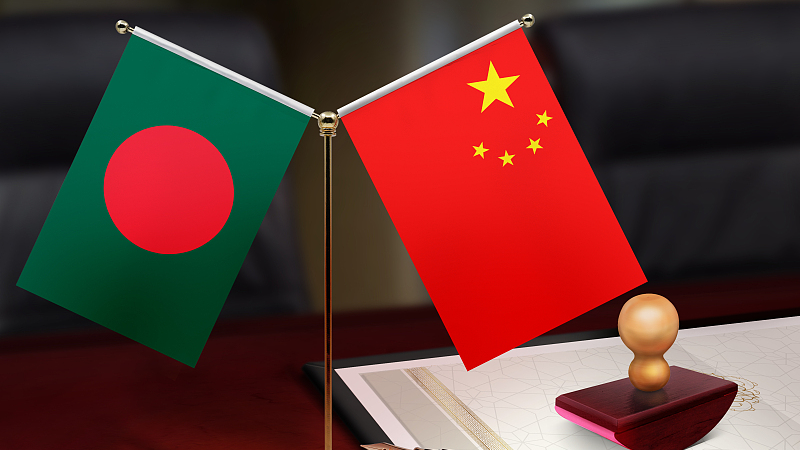
Photo: Collected
Construction of the long-delayed Chinese Economic and Industrial Zone (CEIZ) in Anwara, Chattogram, is set to officially begin tomorrow, more than a decade after the project was first planned.
The groundbreaking ceremony will take place at 10am at the project site, marking the start of construction of the zone's core infrastructure. Finance Minister Amir Khosru Mahmud Chowdhury, Home Minister Salahuddin Ahmed, Chinese Ambassador to Bangladesh Yao Wen, and Bangladesh Economic Zones Authority (Beza) Executive Chairman Ashik Chowdhury are expected to attend.
The government-to-government project will be developed on around 800 acres of land and is expected to attract approximately $500 million in foreign direct investment and generate more than 1 lakh direct and indirect jobs. The project is scheduled to be completed by 31 December 2031.
Business leaders have welcomed the move, saying the zone could help increase investment, employment and industrial growth. Chittagong Chamber of Commerce and Industry President Amirul Haque said the project would strengthen trade and economic ties between Bangladesh and China while creating jobs and attracting foreign investment.
BGMEA Director SM Abu Tayyab said the zone could benefit Bangladesh's readymade garment sector by enabling Chinese manufacturers to produce fabrics, accessories and other raw materials locally. This could reduce lead times and production costs while improving the competitiveness of the country's apparel industry.
Officials said the zone will accommodate Chinese, domestic and other foreign investors in sectors including advanced textiles, pharmaceuticals, light engineering, information technology and other export-oriented industries. Beza Executive Member Major General (Retd) Md Nazrul Islam said the authorities aim to make at least 60% of the industrial plots ready for factory construction within the first three years.
Fresh Momentum After PM's China Visit
The project gained new momentum following Prime Minister Tarique Rahman's official visit to China from 22 to 26 June, during which Bangladesh and China signed several investment-related agreements.
On 25 June, Beza exchanged a developer agreement with China Road and Bridge Corporation (CRBC) for developing the economic zone.
Chinese Ambassador Yao Wen said the project had made significant progress, with nearly all required documentation completed within four months of the new government's tenure. He also said more than 30 Chinese companies had committed around $500 million in investment. According to the ambassador, discussions between the prime minister and major Chinese companies in Beijing and Dalian also generated strong interest in investing in Bangladesh.
Tk4,189 Crore Infrastructure Project
On 16 June, the Executive Committee of the National Economic Council (Ecnec) approved a Tk4,189 crore supporting infrastructure project for the economic zone.
Of the total funding, the Chinese government will provide Tk2,467 crore through concessional financing, while the Bangladesh government will cover the remaining amount.
The supporting infrastructure will include a 1,235-metre jetty link road, a 330-metre bridge, a 1,181-metre four-lane road, a 25-million-litre Central Effluent Treatment Plant, a 20,000 deadweight-tonne multipurpose jetty, gas transmission facilities, power substations and transmission lines, water reservoirs, and nearly 12 kilometres of boundary wall.
Strategic Location
The economic zone is located near the Karnaphuli Tunnel, Chattogram Port and Shah Amanat International Airport, providing strong transport and logistics connectivity for export-oriented industries.
The government expects the project to contribute to industrialisation, job creation and increased foreign investment.
Bangladesh and China signed a memorandum of understanding for the project in 2014, while land acquisition was completed in 2016. However, implementation was delayed for years due to difficulties in appointing a developer, finalising financing arrangements and resolving administrative issues.
China Harbour Engineering Company (CHEC) was initially considered as the developer, but negotiations failed to progress. In 2022, the Chinese government nominated China Road and Bridge Corporation (CRBC) to develop the project, paving the way for its implementation.