

- Titas Gas suffers Tk5,140cr loss from unbilled gas in two years |
- Arson Attempt Foiled as Staff Quench Fire on Mirpur Bus |
- Personalized mRNA Melanoma Vaccine Intismeran Hits Major Milestone, Cutting Recurrence Risk by 42% in Landmark Phase 3 Trial |
- City govt essential for planned development of Chattogram: CCC administrator |
- Asian Stocks Slump After US Tech Rout Amid AI Jitters |
I Want An 'Inclusive' Constitutional Amendment Through Discussion: Home Minister
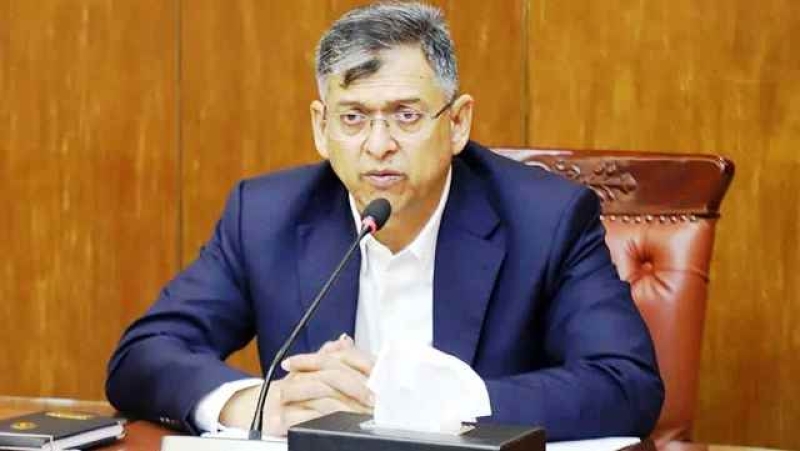
Image: Collected
Home Minister Salahuddin Ahmad has stated that an meangful and inclusive amendment to the Constitution will be brought about through discussions with all stakeholders.
He made the remarks at a press briefing following the fourth meeting of the Special Committee on Constitutional Amendment, held at the Parliament Building on Tuesday (September 29).
The Home Minister said the door for discussion on constitutional amendments remains open to everyone. "We invite them to submit their names to the Constitutional Amendment Committee, get involved, and join the discussions. We want to bring about a participatory and inclusive amendment through consultation with all side," he said.
He noted that discussions will be held with various social forces, organizations, and prominent personalities associated with the July Mass Uprising. At the same time, discussions will take place with the families of victims of enforced disappearances, murders, and persecution over the past 17 years, as well as surviving victims. Opinions will also be gathered from the families of those martyred in the July Mass Uprising.
Salahuddin Ahmad added that efforts will be made to seek views and recommendations from various segments of society by consulting people from different walks of life and their representatives. A report will then be drafted based on consultations and recommendations from constitutional experts.
He explained that a Constitutional Amendment Bill will be introduced in the National Parliament based on that report. Discussions will continue at that stage, with feedback sought both inside and outside Parliament. He expressed hope that a mutually acceptable amendment could be adopted through this consensus-driven process.
The meeting also discussed the necessity of a bicameral parliament. Addressing the matter, the Home Minister noted that Bangladesh is a unitary state and, according to the constitution, a "Unitary Independent Sovereign Republic." Since there is no state-based federal structure in the country, proposals were made to reconsider whether a bicameral parliament is actually required.
Salahuddin Ahmad said, "Questions were raised as to whether a two-house parliament is necessary at all for Bangladesh, given that it is a unitary state. Our constitution explicitly terms it a Unitary Independent Sovereign Republic, with no provincial system. Keeping that in mind, some suggested re-evaluating the idea. However, we agreed in the July National Charter to form a bicameral parliament, and we intend to proceed according to that commitment."
Additionally, the meeting covered discussions on the decentralization and independence of the judiciary, as well as the Caretaker Government system. The Home Minister added that statements from participants regarding the formulation, process, and framework of the Caretaker Government system were officially recorded.
He remarked, "We have recorded the inputs provided and requested everyone to share further proposals, as open discussion is needed regarding the framework and process of forming a Caretaker Government. Whatever is deemed fair and appropriate will be considered by Parliament, and we will adopt it."