

- Titas Gas suffers Tk5,140cr loss from unbilled gas in two years |
- Arson Attempt Foiled as Staff Quench Fire on Mirpur Bus |
- Personalized mRNA Melanoma Vaccine Intismeran Hits Major Milestone, Cutting Recurrence Risk by 42% in Landmark Phase 3 Trial |
- City govt essential for planned development of Chattogram: CCC administrator |
- Asian Stocks Slump After US Tech Rout Amid AI Jitters |
Trump Backs Sanctions Relief for Russia in Prisoner-Release Deal
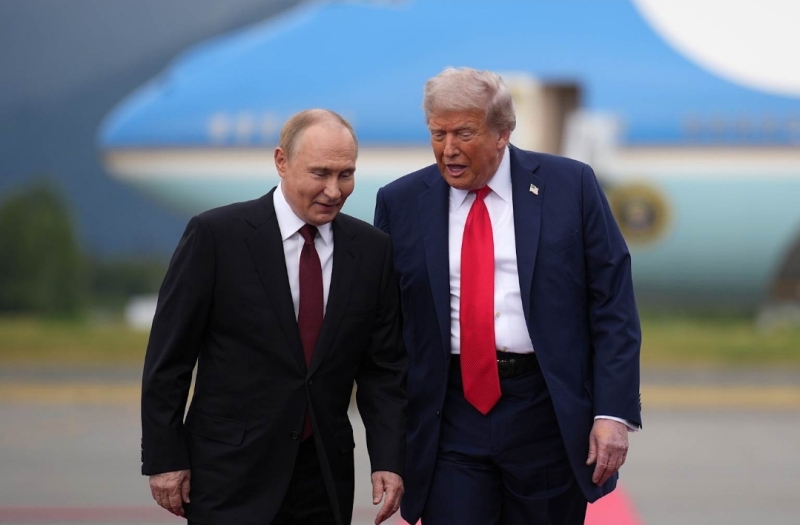
Image: Collected
President Donald Trump has endorsed a plan to ease U.S. sanctions on Russia in exchange for the release of political prisoners, a move that revives a Cold War–era diplomatic playbook even as Moscow continues its bombardment of Ukrainian cities. The initiative, first reported by The Atlantic on September 29, could reopen channels for trade in oil, diesel, and rare earth minerals — drawing sharp criticism from Kyiv and bipartisan warnings in Congress.
A Cold War Playbook Returns
The proposal was developed by John Coale, Trump's envoy to Eastern Europe, who previously secured the release of around 500 political prisoners in Belarus through negotiations with dictator Alexander Lukashenko. In that case, Washington eased sanctions and pursued a deal to buy Belarusian potash.
Coale says the approach mirrors tactics used during the Cold War. Russian Nobel laureate Dmitry Muratov, who met Coale this spring, reminded him that President Ronald Reagan routinely handed Soviet leader Mikhail Gorbachev lists of imprisoned dissidents — and Gorbachev routinely complied. Muratov brought photographs of jailed Russian anti-war activists and a commemorative medallion Reagan had given Gorbachev to underscore the precedent.
"All this stuff works toward the possibility of peace," Coale told The Atlantic. "The more interaction, the more trade-offs — either economic, prisoners, or whatever — leads step by step toward, hopefully, peace."
On September 28, the White House nominated Coale to serve as special presidential envoy for hostage affairs, with the rank of ambassador — a post that requires Senate confirmation.
Ukraine and Congress Push Back
The plan comes as Russian strikes killed at least nine people and wounded more than 80 across Ukraine on September 28, hitting apartment buildings, the National Academy of Sciences in Kyiv, and other civilian sites, according to RFE/RL. Fresh explosions were reported in Kyiv early on September 29.
Ukrainian President Volodymyr Zelensky told The Atlantic he would try to "block" any easing of sanctions before the war ends. "When someone gives Russia more money through trade, they give this war more time," he said during his address to the United Nations General Assembly last week. "Limit his money. Limit his war."
Bipartisan pressure is mounting in Congress for Trump to instead enforce the Lindsey O. Graham Sanctioning Russia and Iran Act of 2026, which he signed into law this month. Senator Roger Wicker, the Republican chairman of the Senate Armed Services Committee, urged Trump on September 28 to use those powers, saying Putin "mocks the peace process" but "might be compelled to take it more seriously if his bank account is threatened". Republican Representative Don Bacon called on the president to "move out quickly," adding that "the Russian economy is one of our leverage points".
The Risks Ahead
Svetlana Tikhanovskaya, leader of the Belarusian democratic opposition, warned that trading prisoners for sanctions relief would only encourage Moscow and Minsk to jail more people. "They can always arrest someone else, while the West loses leverage over these regimes," she told The Atlantic.
Oil prices dipped briefly on the news, as traders weighed the prospect of additional Russian crude returning to global markets. Coale plans to coordinate with Steve Witkoff, Trump's main contact with the Kremlin, who has met Putin at least seven times since the start of the war. The administration has also invited Putin to the G20 summit scheduled for December at Trump's golf club in Miami, though the Russian president has not yet accepted.