

- City govt essential for planned development of Chattogram: CCC administrator |
- Asian Stocks Slump After US Tech Rout Amid AI Jitters |
- Free Concert Featuring James and Seven Bands Set for Manik Mia Avenue |
- Garment factories reopen as workers return to work in Savar-Ashulia |
- Trump confirms new US strikes on Iran’s Qeshm island |
Oldest Shipwreck Ever Found: 4,700-Year-Old Trading Vessel Discovered Off Turkey
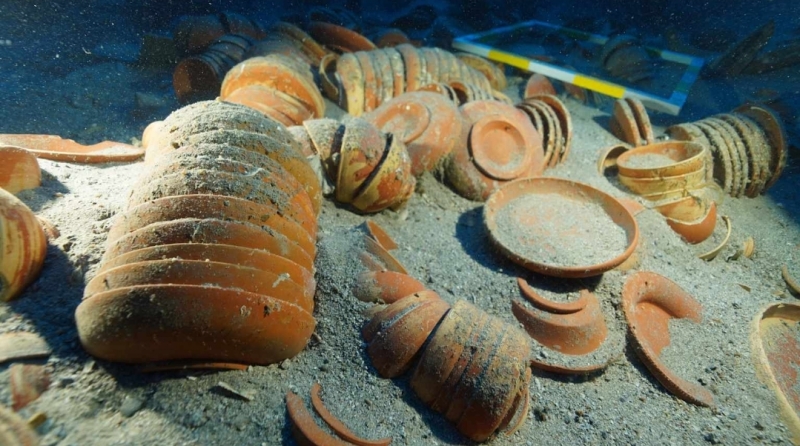
Image: Collected
Archaeologists have discovered what they believe is the world’s oldest known shipwreck off Kekova Island in Turkey’s southern Antalya province, dating the Early Bronze Age vessel to between 4,400 and 4,700 years ago.
The wreck lies about 30 metres beneath the Mediterranean Sea. Although its wooden hull has long since decayed, divers recovered more than 30 ceramic storage jars, called amphorae, and three large stone anchors scattered across the seabed.
Researchers believe the vessel was a trading ship roughly 10 metres long, possibly sailing from the eastern Mediterranean coast toward Troy or Minoan Crete. The amphorae may have carried olive oil, wine or resins, while one jar’s design suggests it may have been used to churn cheese or butter.
The jars’ shape, handles and decorative features closely match Early Bronze Age pottery found in Egypt and the Middle East, allowing archaeologists to date the wreck to around 2600–2400 BCE.
Culture and Tourism Minister Mehmet Nuri Ersoy said clay analysis suggests the amphorae were made in workshops in the Jordan Valley, with similar vessels found in Egypt, Troy and Crete. The discovery offers rare evidence of maritime trade and cultural exchange across the eastern Mediterranean thousands of years ago.
The excavation was led by Professor Hakan Öniz of Akdeniz University and organised by the Mediterranean Archaeology Association. Öniz said the team is confident in the dating, though the find was initially uncovered four years ago before further analysis confirmed its significance.
The recovered artefacts will be displayed at the new Mediterranean Underwater Archaeology Museum in Antalya, expected to open in the coming months.
If confirmed, the Kekova wreck would surpass the roughly 4,200-year-old shipwreck off Greece’s Dokos Island as the oldest known sunken vessel.