

- Oil Shock Sends Asian Markets Lower as Middle East Conflict Threatens Global Shipping |
- Trump Links Iran War to US Midterms, Backs United Ireland |
- PM Tarique Rahman Seeks Public Cooperation to Tackle Nationwide Dengue Outbreak |
- Jatiyatabadi Mahila Dal Vows to Lead Fight Against Rape, Violence Against Women and Children |
- 'Honorable' Dropped: PM Starts Implementing Decision from His Own Office |
CPD finds supply chain layers driving up consumer food costs
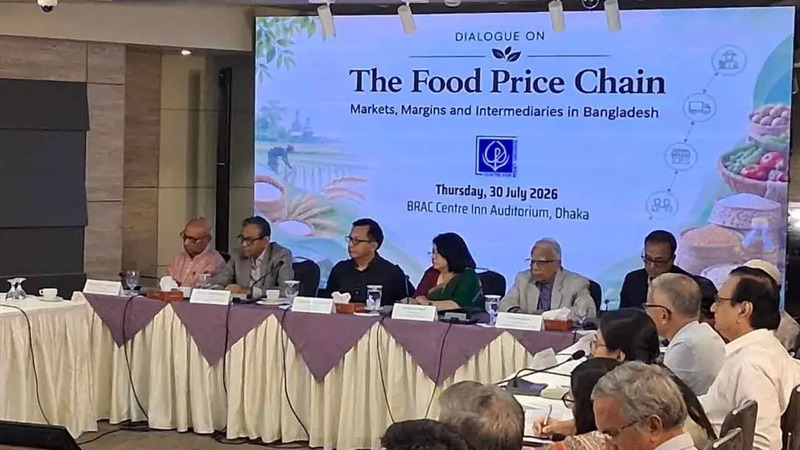
Image- Collected
Multiple layers of intermediaries and heavy reliance on urban wholesalers are key factors behind the wide gap between farm gate and retail prices of essential food items in Bangladesh, according to a study released by the Centre for Policy Dialogue (CPD) on Thursday.
The findings were presented at a seminar titled "The Food Price Chain: Markets, Margins and Intermediaries in Bangladesh" at the BRAC Centre in Dhaka.
The study examined the supply chains of 10 essential commodities—rice, lentil, onion, potato, green chilli, brinjal, egg, beef, fish and chicken—covering 10 markets in Dhaka Division and 820 market participants.
According to the report, retail prices increased between 10 percent and 116 percent from the farm gate, depending on the commodity. Green chilli recorded the highest price increase at 116 percent, followed by rice at 100 percent and onion at 87 percent.
The study found that commodities with longer supply chains involving middlemen, millers and wholesalers experienced higher price increases, while products with shorter supply chains, such as eggs, chicken, beef and Rui fish, showed comparatively lower price margins.
Researchers also found that urban wholesalers were the main source of supply for six of the 10 commodities surveyed, a concentration that could increase price volatility and bargaining power imbalances in the market.
The report identified supply shortages, trader collusion and hoarding as the main reasons behind high prices, while commission payments were common across several commodity markets. It also noted that chicken and beef farmers recorded negative net marketing margins due to high feed costs.
Speaking at the seminar, CPD Executive Director Fahmida Khatun said rising food prices have forced low-income households to spend nearly all of their savings on food, affecting their overall standard of living. She said food inflation has remained the main driver of overall inflation over the past four to five years and warned that failing to bring it under control would place further pressure on the economy.
The study recommended reducing unnecessary intermediaries between farmers and consumers, increasing competition in wholesale markets, expanding direct market access through cooperatives, improving price transparency and strengthening monitoring against hoarding and collusion. It also called for greater investment in storage facilities, cold-chain infrastructure and measures to reduce production costs for farmers.