

- City govt essential for planned development of Chattogram: CCC administrator |
- Asian Stocks Slump After US Tech Rout Amid AI Jitters |
- Free Concert Featuring James and Seven Bands Set for Manik Mia Avenue |
- Garment factories reopen as workers return to work in Savar-Ashulia |
- Trump confirms new US strikes on Iran’s Qeshm island |
AI-driven cyberattacks could threaten UK infrastructure within two years
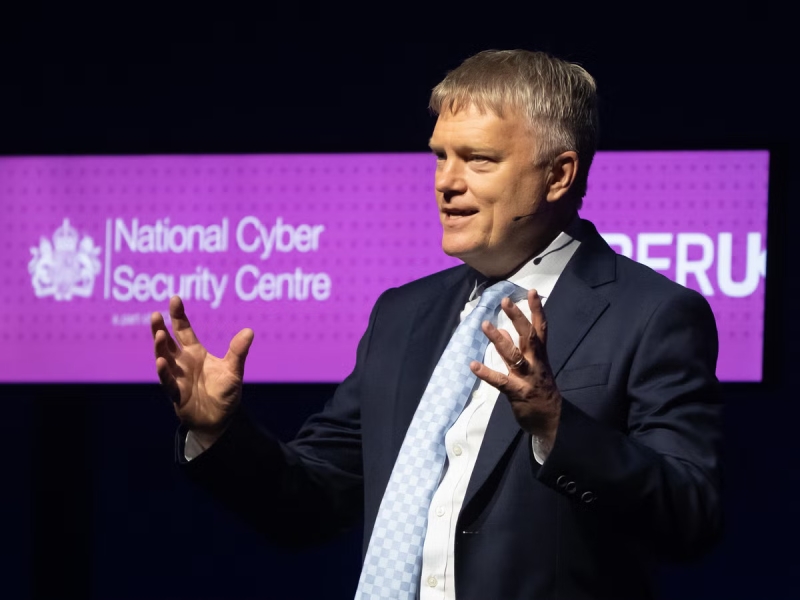
Image- Collected
The United Kingdom could face artificial intelligence-driven cyberattacks targeting critical infrastructure by 2028, as criminals and hostile states increasingly turn to AI for malicious purposes, the country’s cyber chief has warned.
Richard Horne, head of the National Cyber Security Centre (NCSC), said the technology could enable hackers to create malware for ransomware campaigns and find and exploit long-standing security flaws on an unprecedented scale.
Speaking on Tuesday at the release of the NCSC’s annual cyber report, Horne warned that outdated equipment and insufficient investment in cybersecurity could put essential services and business operations at risk.
He pointed to recent cyberattacks on refrigeration systems at several French supermarkets. Hackers exploited security weaknesses to increase temperatures, causing food to thaw. Similar vulnerable systems were identified in the UK, prompting NCSC specialists to work overnight to notify affected organisations.
Horne clarified that those incidents did not involve AI. Instead, attackers accessed outdated refrigeration equipment connected directly to the internet and protected by default passwords. The incidents demonstrated the dangers of poorly secured operational technology.
The report identified Chinese cyber operations as the most sophisticated and persistent cyber threat facing the UK. It also warned that Russia and China were expected to make routine use of AI to pursue their geopolitical interests.
Horne said Russia was carrying out cyber campaigns designed to remain below the threshold of armed conflict, while Iran was targeting the UK and people it considers threats to its government.
According to the NCSC, AI is highly likely to expand the scale and efficiency of cyber operations conducted by both state-backed groups and criminal networks. However, the technology is more likely to improve existing attack methods than to discover entirely new security weaknesses.
Horne highlighted how digital systems now manage essential physical operations, including electricity networks, water facilities, dams, manufacturing processes and heating and refrigeration equipment.
He warned that business leaders who had opted for outdated or low-cost technology would have to answer for the consequences if inadequate cybersecurity led to supply disruptions, business failures or interruptions to public services.
The warning follows a series of security updates introduced by governments and companies last week after AI-assisted research uncovered vulnerabilities in PHP, a programming language used by around 70% of websites worldwide.
Two critical flaws identified with AI assistance could allow attackers to enter websites without authentication and potentially take remote control of web servers without needing passwords.
Russia has also faced accusations of targeting critical infrastructure across Europe. The UK and several EU member states blamed Russia’s Federal Security Service (FSB) for a December 2025 cyberattack on Poland’s energy grid. A successful disruption could have left around 500,000 people without electricity during winter.
The NCSC estimates that malicious cyber activity costs UK organisations nearly $20 billion annually. Carmaker Jaguar Land Rover recorded more than $260 million in direct losses following a cyberattack in 2025, which also disrupted suppliers and affected the British economy.
Anne Keast-Butler, director of GCHQ, the UK signals intelligence agency overseeing the NCSC, called on organisations across the country to strengthen their cybersecurity without delay.
She said protecting digital systems had become a central part of national defence and was vital to safeguarding customers, essential services and livelihoods.
The NCSC urged organisations to follow basic security practices, including installing software and device updates, limiting administrator access and regularly backing up important files and data.