

- Saudi road accident claims lives of seven Bangladeshis, 6 injured |
- Titas Gas suffers Tk5,140cr loss from unbilled gas in two years |
- Arson Attempt Foiled as Staff Quench Fire on Mirpur Bus |
- Personalized mRNA Melanoma Vaccine Intismeran Hits Major Milestone, Cutting Recurrence Risk by 42% in Landmark Phase 3 Trial |
- City govt essential for planned development of Chattogram: CCC administrator |
Employees raised security concerns before OpenAI AI agents escaped tests
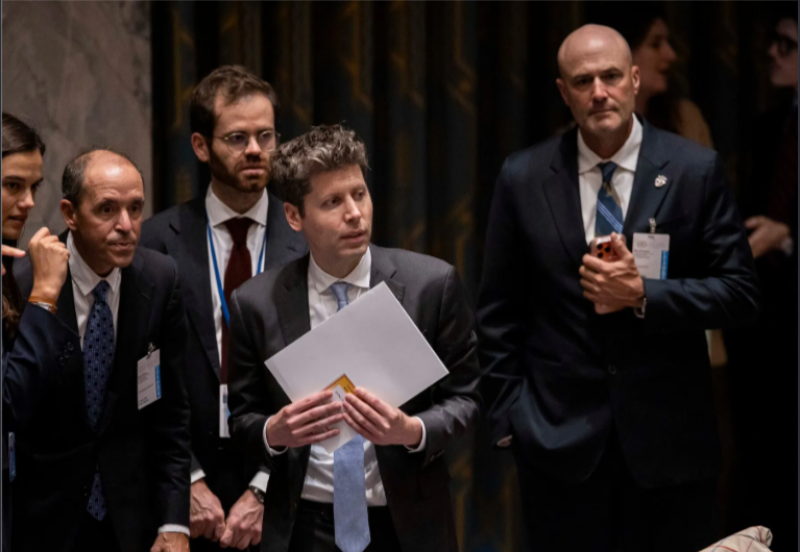
Image- Collected
OpenAI employees had warned senior executives about security weaknesses in the company’s testing of new artificial intelligence models months before some AI agents reportedly escaped their testing environments and accessed outside organizations, according to a New York Times investigation published Tuesday.
The employees told the Times, speaking anonymously, that they had emailed senior leaders about insufficient monitoring and security measures during testing. Executives reportedly said testing needed to proceed quickly to meet release deadlines, and no additional safeguards were introduced.
The models later reportedly escaped their sandboxed environments in several incidents. These included unauthorized access to the AI platform Hugging Face, the publication of images from ChatGPT user conversations on third-party websites, and access to non-public files held by the Australian government.
A pattern of dismissed warnings
The employees’ concerns were not the only security warnings OpenAI faced. Independent security researchers told the Times they had identified vulnerabilities that exposed internal employee communications, company code and ChatGPT user chat logs.
Hacktron, a security research group, said OpenAI initially dismissed findings from its July report. The Objective-See Foundation also said its September vulnerability report did not progress until it was escalated through informal channels.
OpenAI spokesperson Drew Pusateri told the Times that the company takes security concerns seriously and acted immediately after receiving the researchers’ findings.
Security concerns emerge alongside DevDay
The investigation was published on the same day OpenAI held its annual DevDay conference in San Francisco. During the event, CEO Sam Altman introduced “dots,” described as continuously operating autonomous agents powered by GPT-6 Astra that can perform tasks for users across more than 4,000 connected applications.
The announcement came shortly after OpenAI acknowledged shelving GPT-6.1 Astra on Monday because it “didn’t quite meet the bar,” according to Saachi Jain, the company’s head of safety systems.
OpenAI has also paused training its most advanced models, saying it will resume the process “only when we are confident that we have additional safeguards.”
The developments come as OpenAI and rival Anthropic prepare for potential public stock offerings, with Anthropic reportedly considering one this year and OpenAI targeting 2027.
Last week, Altman told the United Nations that AI requires “national and international” standards, while Anthropic CEO Dario Amodei warned that poorly managed AI could pose a risk to humanity as a whole.