

- Oil Shock Sends Asian Markets Lower as Middle East Conflict Threatens Global Shipping |
- Trump Links Iran War to US Midterms, Backs United Ireland |
- PM Tarique Rahman Seeks Public Cooperation to Tackle Nationwide Dengue Outbreak |
- Jatiyatabadi Mahila Dal Vows to Lead Fight Against Rape, Violence Against Women and Children |
- 'Honorable' Dropped: PM Starts Implementing Decision from His Own Office |
The Public and Private Dimensions of Religion
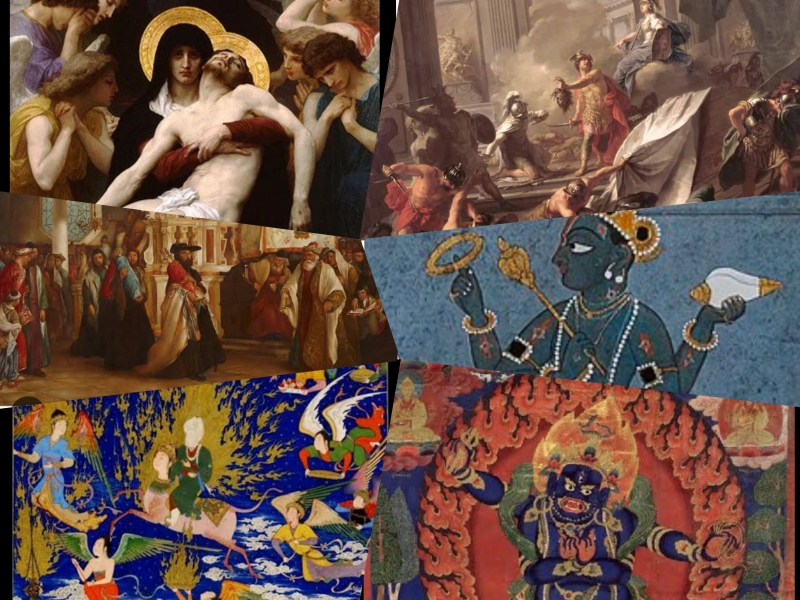
Image: Collected
Religion is often understood as a deeply personal matter, connected to faith, spirituality and an individual's relationship with the divine. At the same time, religion has always had a public dimension. Religious beliefs influence communities, traditions, architecture, politics, festivals, laws and even everyday social behavior. This creates two important dimensions of religious life: the private and the public.
Understanding the difference between these two dimensions helps explain how religion functions both inside an individual's mind and within society.
The Private Side of Religion
The private aspect of religion refers to the ways people experience and practice their faith in their personal lives. It includes beliefs, emotions, prayers, meditation, personal rituals and an individual's sense of connection with God or a higher power.
Private religious life can take place without an audience. A person may pray alone, read religious texts, meditate, reflect on moral questions or seek spiritual guidance. These activities may not be visible to society, but they can have a significant influence on an individual's behavior and worldview.
For many people, religion provides a source of meaning during difficult moments. Personal faith can help individuals cope with grief, uncertainty, failure and fear. It can also provide a sense of purpose and encourage qualities such as compassion, patience, honesty and forgiveness.
The private dimension of religion is therefore closely connected with personal identity and conscience.
The Public Side of Religion
The public aspect of religion becomes visible when religious beliefs and practices are expressed within a community or society.
Religious festivals are among the clearest examples. Events such as Eid, Christmas, Vesak, Diwali and other religious celebrations bring people together in public spaces. Places of worship—including mosques, churches, temples and monasteries—are also physical expressions of religion's public presence.
Religious clothing, symbols, processions, ceremonies and communal prayers can similarly make faith visible in everyday life.
Religion can also influence public culture. Religious ideas have historically shaped literature, art, music, architecture and traditions. Some societies have also developed laws and social customs that were influenced by religious principles.
In this sense, religion is not merely something that people believe; it can also be something that communities collectively practice.
Religion and Community
The public and private aspects of religion are closely connected.
A person's private beliefs can influence how they behave toward other people. Similarly, belonging to a religious community can influence an individual's understanding of their own faith.
For example, someone may privately believe that helping the poor is a religious responsibility. That belief can become public action when the person participates in charity, community service or humanitarian work.
Religious institutions often provide organized structures for these activities. Mosques, churches, temples and other religious organizations may operate schools, charities, food-distribution programs and community services.
Religion can therefore transform private values into collective action.
When Religion Enters Public Life
The public role of religion becomes more complicated when religious beliefs enter political or institutional life.
In democratic societies, individuals generally have the freedom to express their religious beliefs. Religious communities can participate in discussions about morality, social policy and public issues.
However, questions arise when one group's religious beliefs are imposed on people who do not share them.
This is where concepts such as religious freedom, secularism and freedom of conscience become important. A society must find a balance between allowing people to practice their faith publicly and protecting individuals who hold different beliefs—or no religious beliefs at all.
The distinction between private faith and public authority is therefore an important issue in modern political thought.
Public Religion Does Not Always Mean Politics
It is also important not to equate public religion with religious politics.
A person can express religion publicly without attempting to influence government. Wearing religious clothing, attending communal worship, participating in a religious festival or volunteering through a religious charity are all forms of public religious expression.
Public religion can therefore exist at the level of community and culture, even when it has no political purpose.
The Boundary Between Public and Private
The boundary between private and public religion is not always clear.
Consider prayer. Someone praying alone is participating in a private religious practice. But communal prayer in a place of worship is simultaneously a personal spiritual experience and a public expression of collective faith.
Similarly, a religious holiday may involve private rituals inside a home while also involving large public celebrations.
Religion constantly moves between these two spaces.
The private dimension gives religion its personal meaning, while the public dimension gives it a social and cultural presence.
Why Both Dimensions Matter
Looking at religion only as a private belief system can make it difficult to understand its influence on society. Conversely, looking at religion only as a public institution can overlook the personal experiences that motivate believers.
The two dimensions complement each other.
Private religion is concerned with faith, conscience, spirituality and personal practice.
Public religion is concerned with community, culture, institutions, collective practices and social expression.
Neither exists completely independently of the other.
Religion is simultaneously personal and social. It can exist in the quiet moment when an individual prays alone, as well as in the crowded celebration of a religious festival. It can influence personal morality while also shaping art, culture, communities and public life.
The challenge for modern societies is not necessarily to eliminate the public dimension of religion, but to ensure that religious expression can coexist with the rights and freedoms of people who hold different beliefs.
Ultimately, the relationship between the private and public aspects of religion demonstrates one of its most significant characteristics: religion can be deeply personal while still having a profound influence on the world beyond the individual.