

- Oil Shock Sends Asian Markets Lower as Middle East Conflict Threatens Global Shipping |
- Trump Links Iran War to US Midterms, Backs United Ireland |
- PM Tarique Rahman Seeks Public Cooperation to Tackle Nationwide Dengue Outbreak |
- Jatiyatabadi Mahila Dal Vows to Lead Fight Against Rape, Violence Against Women and Children |
- 'Honorable' Dropped: PM Starts Implementing Decision from His Own Office |
Hasina's extradition decision is India’s internal matter: ICT prosecutor
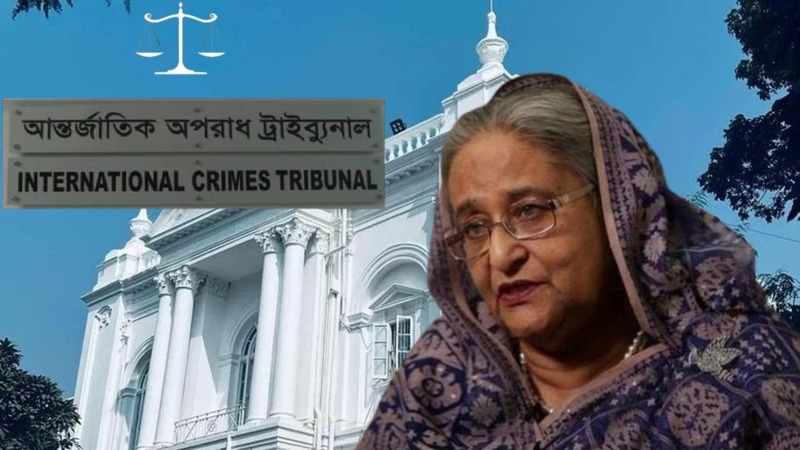
Whether Indian courts or the government will approve the extradition of ousted prime minister Sheikh Hasina to Bangladesh is an internal matter for India, International Crimes Tribunal (ICT) Chief Prosecutor Md Aminul Islam has said.
He made the remarks while speaking to journalists at his office today (August 16).
Referring to a report by The Indian Express, Aminul Islam said the newspaper had reported that Indian courts might need to approve Hasina’s extradition.
He said Bangladesh had already taken the necessary legal steps to bring Hasina back.
“What steps Indian officials will take, what process they will follow, whether they will seek court approval or send her through government approval, is entirely a matter for India,” he said.
The chief prosecutor said several cases against Hasina are pending in Bangladesh and that she has already been convicted in one case.
He said Hasina had stated that she would return to Bangladesh in December, but Bangladesh believes India should return her before then. Since she has been convicted by a Bangladeshi court, she should return to Bangladesh, he added.
Earlier, The Indian Express reported that Indian courts would ultimately decide whether Hasina should be extradited, while New Delhi was discussing the matter with Dhaka.
According to the report, a senior Indian government official said the decision would ultimately be made by Indian courts rather than through a political or diplomatic decision. The judicial process could also consider whether the offences alleged against Hasina constitute offences under Indian law.
The development comes as the government of Prime Minister Tarique Rahman continues to seek Hasina’s extradition. She was sentenced to death by the ICT in November 2025 after being convicted of crimes against humanity.
According to The Indian Express, Indian officials said Bangladesh’s extradition request contains the necessary legal documents under the 2013 extradition treaty between the two countries.
India’s Ministry of External Affairs has said the request is being examined under established procedures.
Asked about reports that Hasina had received political asylum in India, Aminul Islam said Bangladesh had no information confirming whether such an arrangement existed.
“We do not know whether there is any provision for political asylum in India. Therefore, we have no scope to comment further on the report published by the Indian media,” he said.
Regarding the extradition treaty, the chief prosecutor said Bangladesh and India already have an agreement on extradition. He also referred to India previously taking custody of Bangladeshi fugitive Anup Chetia under the agreement.
Aminul Islam said the Indian government had yet to clearly explain Hasina’s current status in the country.
“The matter has been conveyed by the Bangladesh government, but we are not aware of any clear explanation from the Indian government on this issue,” he said.
He added that Bangladesh had formally sought Hasina’s extradition under the existing treaty.
“Bangladesh has sought her return in the manner provided for in the extradition treaty. Now it remains to be seen what decision the Indian government takes,” he said.