

- Arson Attempt Foiled as Staff Quench Fire on Mirpur Bus |
- Personalized mRNA Melanoma Vaccine Intismeran Hits Major Milestone, Cutting Recurrence Risk by 42% in Landmark Phase 3 Trial |
- City govt essential for planned development of Chattogram: CCC administrator |
- Asian Stocks Slump After US Tech Rout Amid AI Jitters |
- Free Concert Featuring James and Seven Bands Set for Manik Mia Avenue |
Suleyman says Microsoft’s new AI model outperforms OpenAI’s with a quarter of the compute
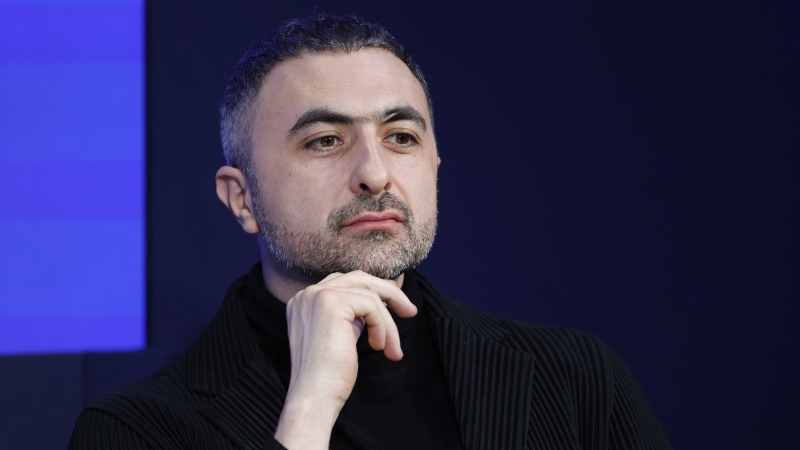
Image- Collected
Microsoft AI chief Mustafa Suleyman has said the company’s newly developed pre-trained base model is stronger than the model behind OpenAI’s GPT-5.6 Sol, while requiring only a quarter of the computing power used to train OpenAI’s model.
Speaking at an employee town hall on Thursday, October 15, Suleyman said Microsoft privately compared its MAI-Base-2 model with OpenAI models, including one nicknamed “Spud.” According to Business Insider, which first reported the remarks, he said Microsoft’s model performed better on tests measuring how well AI systems understand and predict patterns in information.
Microsoft announced MAI-Base-2 publicly a few hours before Suleyman’s comments. The company said the model is a mixture-of-experts system with 2.8 trillion total parameters and 80 billion active parameters. It was trained on 16,000 Nvidia GB200 GPUs over 38 days in August and September, using about 50 trillion tokens.
In its public announcement, Microsoft compared the model only with open-weight rivals. It said MAI-Base-2 outperformed every open-weight model it tested and that its training method was 4.2 to 12.3 times more compute-efficient than DeepSeek-V4-Pro-Base across four evaluations. Microsoft also said the model was 6.3 to 12.7 times more efficient than its previous MAI-Base-1, released in June.
Suleyman said the OpenAI comparison has not been published. He added that Microsoft used technical information available about OpenAI’s models for the private tests. Microsoft declined to comment, and OpenAI did not respond to a request for comment.
The remarks highlight growing competition between Microsoft and OpenAI, despite their close business ties. Microsoft has invested billions of dollars in OpenAI, and its stake is likely worth more than $100 billion. It also sells OpenAI models to Azure customers and uses them in products such as Copilot.
Over the past year, the partnership has come under strain as Microsoft has built more of its own AI technology. In March, the company moved Suleyman to focus on model development within its superintelligence unit.
Pre-training is the first and most compute-intensive stage of developing an AI model. If Microsoft can complete it more efficiently, it could reduce costs and rely less on outside providers. Microsoft said MAI-Base-2 is still in post-training and has not announced a release date or pricing. It plans to license the model’s weights to trusted partners through Foundry, while work on MAI-Base-3 has already begun.