

- Oil Shock Sends Asian Markets Lower as Middle East Conflict Threatens Global Shipping |
- Trump Links Iran War to US Midterms, Backs United Ireland |
- PM Tarique Rahman Seeks Public Cooperation to Tackle Nationwide Dengue Outbreak |
- Jatiyatabadi Mahila Dal Vows to Lead Fight Against Rape, Violence Against Women and Children |
- 'Honorable' Dropped: PM Starts Implementing Decision from His Own Office |
Gas Shortage Continues to Disrupt Daily Life as Price Hike Proposal Sparks Concern
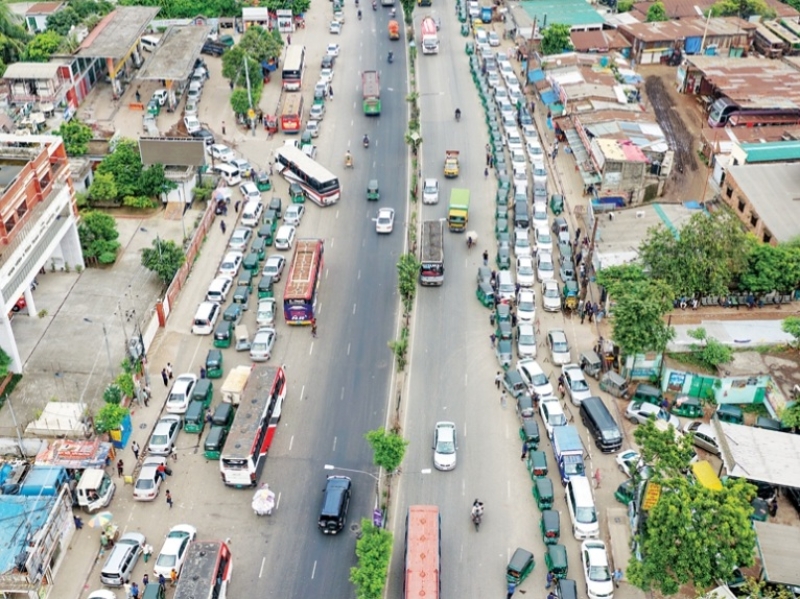
Image: Collected
DHAKA: Bangladesh's ongoing gas supply crisis continues to disrupt households, industries and transport services, while a proposal to increase gas prices has raised fresh public concern amid rising living costs.
According to officials, Petrobangla has proposed increasing the gas price for power generation to Tk 25 per cubic metre from Tk 16 and raising the CNG tariff for vehicles to Tk 65 from Tk 43 per cubic metre in an effort to reduce the government's subsidy burden. The proposal has been submitted to the Energy Division.
The gas crisis began on July 21 after a fire disabled one of the country's two floating storage and regasification units in Cox's Bazar, cutting around 500 million cubic feet of gas from the national grid and causing widespread supply disruptions.
Across Dhaka, households have been struggling with low or no gas pressure for more than a week, forcing many families to rely on electric cooking appliances or restaurant meals, increasing their monthly expenses despite continuing to pay full gas bills.
Residents reported being unable to cook due to negligible gas pressure, with some purchasing electric cookers while others depended on outside food as gas supplies remained insufficient even during late-night hours.
The manufacturing sector has also been severely affected. Gas-dependent industries, including garment, knitwear and dyeing factories, have faced production disruptions and shipment delays as many plants in Savar, Ashulia and Gazipur either reduced daytime operations or shifted production to nighttime in search of better gas pressure.
BKMEA President Mohammad Hatem said garment factories cannot simply move operations to night shifts because of compliance and safety requirements. He added that even backward-linkage industries such as dyeing and knitting units are receiving only 1.5 to 2 PSI of gas pressure at night, far below the required 15 PSI needed to operate machinery efficiently.
He warned that the crisis is disrupting production schedules, delaying export shipments and placing growing financial pressure on manufacturers, who are concerned about meeting wage payments and loan obligations if the situation continues.
The transport sector has also been hit, with long queues forming at CNG filling stations across the capital. Several stations suspended operations due to supply shortages, while others operated with limited capacity.
CNG auto-rickshaw drivers said hours spent waiting to refuel have significantly reduced their daily earnings. With fewer CNG-powered vehicles and ride-sharing services operating, commuters have been paying higher fares, while buses and metro rail services have remained overcrowded.
The power sector has also lost between 200 and 300 million cubic feet of gas per day, forcing the Bangladesh Power Development Board to rely more heavily on expensive furnace oil for electricity generation. Despite these measures, load-shedding has remained widespread across the country, frequently exceeding 2,000 MW.
According to Petrobangla, the power sector consumes 41 percent of the country's natural gas, followed by industries at 36 percent, households at 11 percent, fertiliser factories at 6 percent, the CNG sector at 5 percent and tea estates at 1 percent.
Source: New Age