

- City govt essential for planned development of Chattogram: CCC administrator |
- Asian Stocks Slump After US Tech Rout Amid AI Jitters |
- Free Concert Featuring James and Seven Bands Set for Manik Mia Avenue |
- Garment factories reopen as workers return to work in Savar-Ashulia |
- Trump confirms new US strikes on Iran’s Qeshm island |
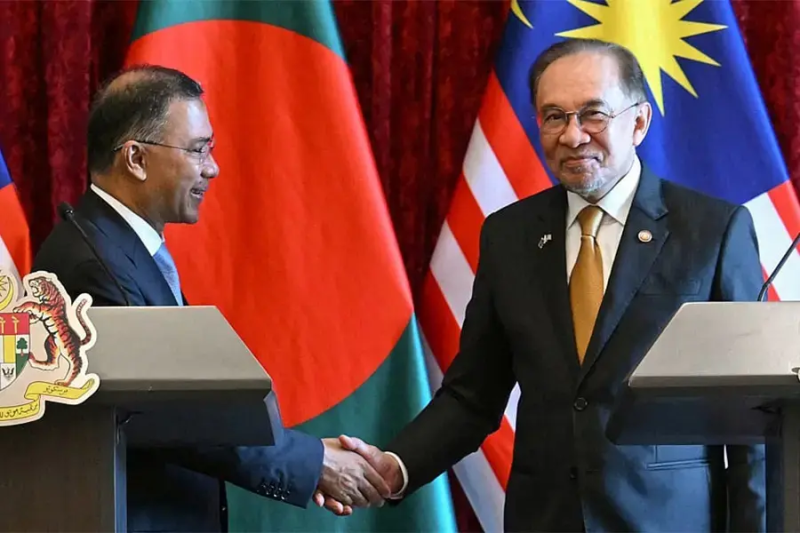
Anwar Ibrahim may visit Bangladesh in December as Malaysia trade deal talks continue in January
Representational Image- Collected
Malaysian Prime Minister Anwar Ibrahim is likely to visit Bangladesh in December this year at the invitation of Prime Minister Tarique Rahman. Meanwhile, the second round of negotiations on a proposed free trade agreement (FTA) between the two countries is expected to be held in Malaysia in January 2027.
The developments come after Bangladesh and Malaysia completed the first round of formal FTA negotiations in Dhaka, with both sides expressing optimism about reaching an agreement within a relatively short period.
A member of the Malaysian delegation told The Financial Express that Anwar Ibrahim was likely to visit Bangladesh in December following the invitation from his Bangladeshi counterpart.
Md Anwar Shahid, president of the Bangladesh Malaysia Chamber of Commerce and Industry (BMCCI), said the prime ministers of both countries were keen to sign the proposed FTA as soon as possible.
The three-day first round of negotiations began on October 27 and concluded on Thursday at the Pan Pacific Sonargaon hotel in Dhaka.
Thirteen working groups examined draft chapters and structural issues related to the proposed agreement.
The discussions covered trade in goods and services, investment, rules of origin, customs procedures, trade facilitation, digital trade, intellectual property rights, sanitary and phytosanitary (SPS) measures, technical barriers to trade (TBT), and issues affecting small and medium-sized enterprises (SMEs).
Both sides exchanged their positions and identified potential areas for cooperation. During the next round, negotiators will work to narrow differences and establish mutually acceptable positions on the remaining issues.
At the closing ceremony, Khadiza Nazneen, additional secretary at the Ministry of Commerce and Bangladesh’s chief negotiator, said the proposed FTA could elevate the longstanding friendly relations between the two countries to a new level of economic cooperation.
Referring to Malaysia’s progress in electronics, semiconductors and digital technology, she said the agreement could open up opportunities for technology transfer, investment and broader industrial cooperation.
The Bangladeshi delegation thanked the Malaysian team, led by chief negotiator Dr Rashidi Said, for participating in the negotiations. Both sides reaffirmed their commitment to securing an effective and mutually beneficial agreement that considers the interests of both countries.
The proposed FTA is particularly significant for Bangladesh as the country prepares to graduate from the least developed country (LDC) category.
Expanding trade partnerships and gaining access to new markets will be important for maintaining export competitiveness and attracting foreign investment after graduation.
An agreement with Malaysia, a major economy in the Association of Southeast Asian Nations (ASEAN), could improve market access for Bangladeshi goods and services, encourage investment and strengthen Bangladesh’s integration into regional supply chains.
However, the benefits will depend on the final terms of the agreement, the extent of tariff concessions, protections for domestic industries and the framework for implementation.