

- City govt essential for planned development of Chattogram: CCC administrator |
- Asian Stocks Slump After US Tech Rout Amid AI Jitters |
- Free Concert Featuring James and Seven Bands Set for Manik Mia Avenue |
- Garment factories reopen as workers return to work in Savar-Ashulia |
- Trump confirms new US strikes on Iran’s Qeshm island |
Bangladesh Targets $14 Billion Japanese Investment Deal, Eyes More Exports and 100,000 Skilled Workers Annually
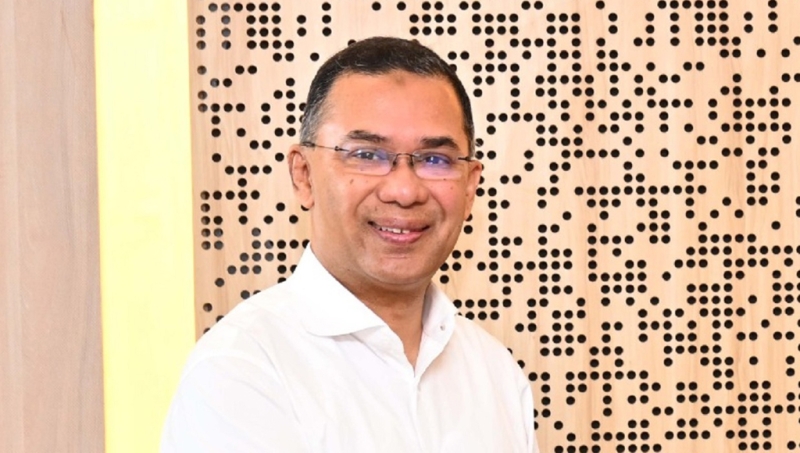
Image: Collected
Bangladesh is seeking approximately $14 billion in Japanese investment and economic cooperation over the 2026–2031 period, as Prime Minister Tarique Rahman begins a four-day official visit to Japan aimed at boosting exports, attracting foreign investment and expanding employment opportunities for skilled Bangladeshis.
The proposed package, valued at around ¥2.2 trillion, covers 12 priority sectors, including transport, manufacturing, energy, information technology, agriculture, pharmaceuticals, tourism and climate-resilient infrastructure. The initiatives are expected to combine concessional loans, private investment and public-private partnerships, according to a report by The Business Standard published on October 17.
Rahman departed Dhaka early on October 25 for the visit, which runs from October 26 to 29 at the invitation of Japanese Prime Minister Sanae Takaichi. He is scheduled to hold bilateral talks with Takaichi on October 27, followed by a joint press announcement and a luncheon hosted by the Japanese leader.
Transport and industrial development top investment agenda
Bangladesh is seeking approximately $3.45 billion for transport and urban connectivity projects, including metro rail expansion, railway development and major bridges. Another $3.14 billion is proposed for the development of the Maheshkhali-Matarbari Integrated Infrastructure Development Initiative and the surrounding industrial, port and commercial hub.
The Matarbari area is expected to play a significant role in Bangladesh's plans to strengthen its position as a regional manufacturing and logistics centre. Proposed infrastructure includes deep-sea port facilities, industrial zones, road and rail connections, and energy infrastructure designed to support trade and industrial expansion.
A further $1.57 billion is earmarked for manufacturing, electronics, automobiles and related industries. Bangladesh hopes to attract Japanese manufacturers to establish vehicle assembly and automobile component factories, while also encouraging cooperation in semiconductor technology, precision engineering and electronics.
The government is also seeking Japanese financing and investment for renewable energy, electricity-grid modernisation and climate adaptation. Proposed initiatives include coastal protection, improved embankments, water management and climate-resilient urban infrastructure.
The investment package is a proposal rather than a confirmed $14 billion commitment from Japan. Its implementation will depend on negotiations, financing arrangements and the development of individual projects.
Japan's private sector considers $6.36 billion investment
Separately, Japan plans to arrange approximately ¥1 trillion, equivalent to $6.36 billion, in private-sector investment in Bangladesh over the next five years, according to a Reuters report published on October 22, citing Japan's Nikkei newspaper.
The reported investment plans focus on automobile and other manufacturing industries, energy facilities and opportunities within Bangladesh's special economic zones. Reuters noted that it could not independently verify the report.
If realised, the proposed investments could complement Bangladesh's broader economic cooperation package by supporting industrial production, technology transfer and employment generation.
Bangladesh already has a substantial economic relationship with Japan, which has supported major infrastructure projects, including Dhaka's metro rail, the third terminal of Hazrat Shahjalal International Airport and development in Matarbari.
Target to send 100,000 workers and students to Japan annually
Expanding employment opportunities in Japan is another major priority of the visit. Bangladesh plans to propose sending up to 100,000 skilled workers and students to Japan annually to address labour shortages in the East Asian country and create overseas opportunities for young Bangladeshis.
Potential employment areas include engineering, information technology, manufacturing, nursing, caregiving, driving and other technical occupations. The government is considering expanded Japanese-language training, professional certification and specialised technical education to help workers meet Japanese labour-market requirements.
The initiative builds on existing bilateral cooperation. Bangladesh and Japan agreed in May 2025 to facilitate opportunities for at least 100,000 Bangladeshi workers over five years. On October 17, 2026, the two countries also signed a five-year memorandum of cooperation on employment and skills development, intended to facilitate recruitment from April 1, 2027.
The proposed annual target would require stronger training capacity, recognised professional qualifications and effective recruitment arrangements to ensure that workers can access suitable jobs through legal channels.
Economic Partnership Agreement expected to expand exports
Bangladesh also wants to increase exports to Japan, particularly ready-made garments, pharmaceuticals, information technology products and other manufactured goods.
A key issue is the implementation of the Economic Partnership Agreement signed by Bangladesh and Japan in February 2026. During the visit, the two governments are expected to discuss how to put the agreement into effect and improve access for Bangladeshi products in the Japanese market.
The agreement is expected to provide a framework for strengthening trade and investment ties, although its practical benefits will depend on implementation and the ability of Bangladeshi businesses to meet Japanese market requirements.
Bangladesh is also seeking greater participation by Japanese companies in its manufacturing sector, including through the Bangladesh Special Economic Zone in Araihazar, Narayanganj. The government aims to increase the number of Japanese companies operating in Bangladesh from around 338 to 500 by 2030, according to reporting by The Business Standard.
Broader cooperation and expected agreements
The visit is also expected to cover agriculture, fisheries, human resource development, renewable energy, digital transformation, civil aviation and environmental protection.
Foreign Secretary Asad Alam Siam previously said that around eight memorandums of understanding were under discussion, with three to four potentially being signed during the visit.
Rahman is also scheduled to attend the Japan-Bangladesh Economic Forum and meet business leaders and representatives of Japanese institutions, including the Japan International Cooperation Agency, the Japan Bank for International Cooperation and the Japan External Trade Organization.
Beyond trade and investment, the two sides may discuss regional security, energy cooperation and a sustainable solution to the Rohingya crisis.
The visit comes as Bangladesh seeks to diversify its export markets, attract foreign direct investment and create more skilled employment opportunities. The outcome will depend on whether the proposed investment plans translate into financing agreements, new industrial projects, expanded market access and sustainable jobs for Bangladeshis.