

- City govt essential for planned development of Chattogram: CCC administrator |
- Asian Stocks Slump After US Tech Rout Amid AI Jitters |
- Free Concert Featuring James and Seven Bands Set for Manik Mia Avenue |
- Garment factories reopen as workers return to work in Savar-Ashulia |
- Trump confirms new US strikes on Iran’s Qeshm island |
Stone Age Minds in a Screen-Age World: Why Modern Life Is Crashing the Human Brain
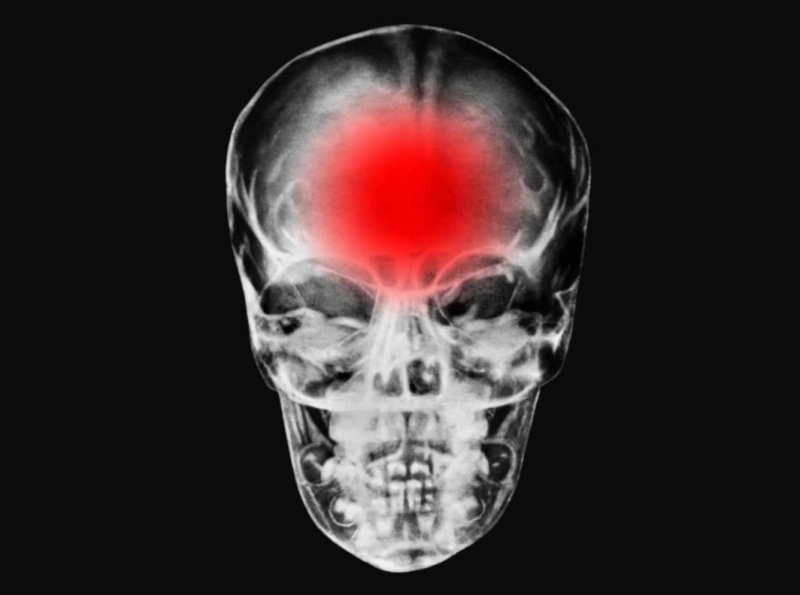
Image: Collected
If you find yourself navigating daily life beneath a constant haze of exhaustion, anxiety, and sensory burnout, science suggests the fault does not lie in your personal resilience. According to researchers, the chronic overwhelm defining contemporary life is the direct result of an "evolutionary mismatch".
At its core, evolutionary mismatch occurs when an organism’s inherited biological traits, honed over hundreds of thousands of years for one environment, are abruptly thrust into an entirely foreign habitat. Human neural architecture was designed for survival in small, close-knit tribal groups—foraging for roots, gathering berries, and managing social dynamics within a localized circle of known peers.
Today, that same Stone Age hardware is being forced to process the unrestrained input of the global internet, exposing the mind to the unfiltered thoughts, anxieties, and arguments of billions of people online while digesting thousands of rapid-fire, short-form videos daily. The result is clear: modern society is systematically overloading the human brain.
The Cognitive Cost of Infinite Inputs
For ancestral hunter-gatherers, survival depended on prioritizing immediate sensory feedback: rustling grass, changing weather patterns, or subtle behavioral shifts within a tribe. Social and environmental stimuli were limited, localized, and actionable.
In contrast, the digital era floods the brain with an unprecedented volume of stimuli that the nervous system was never calibrated to manage:
● Globalized Social Pressure: The human mind naturally tracks reputation within a manageable band of social connections. Being confronted with the opinions, judgments, and outrage cycles of billions online strains our innate social cognition.
● Algorithmic Overdrive: Short-form video feeds cycle through intense visual, auditory, and emotional hooks every few seconds. Processing thousands of these hyper-stimulating clips in a single day constantly triggers dopamine pathways, leaving the prefrontal cortex depleted.
● Hyper-Active Threat Detection: The brain’s primal alert systems struggle to differentiate between a physical predator nearby and an alarming news notification from the opposite side of the globe. Because these digital threats cannot be resolved through immediate physical action, the stress response remains perpetually switched on.
Bridging the Evolutionary Gap
Because biological evolution takes tens of thousands of years to adapt to environmental shifts, the human brain cannot simply evolve overnight to accommodate high-velocity digital consumption. Reclaiming cognitive balance requires deliberately reshaping our personal environments to align more closely with human biological limits.
● Imposing Digital Borders: The brain requires quiet periods to consolidate memory and regulate mood. Establishing strict screen-free windows—especially during the first and last hours of the day—shields attention from premature cognitive overload.
● Pacing Content Consumption: Replacing passive, hyper-compressed scrolling feeds with deliberate, long-form reading lowers the cognitive switching cost and allows focus to stabilize.
● Engaging the Analog World: Physical movement, time outdoors, and in-person social interactions mimic the sensory landscape the nervous system was built for, actively down-regulating chronic fight-or-flight responses.
Chronic modern fatigue is not an individual failing; it is a predictable biological response to an environment that outpaced human biology. Until our technology is designed to respect evolutionary constraints, the burden falls on the individual to create the boundaries our ancient brains need to survive.