

- Oil Shock Sends Asian Markets Lower as Middle East Conflict Threatens Global Shipping |
- Trump Links Iran War to US Midterms, Backs United Ireland |
- PM Tarique Rahman Seeks Public Cooperation to Tackle Nationwide Dengue Outbreak |
- Jatiyatabadi Mahila Dal Vows to Lead Fight Against Rape, Violence Against Women and Children |
- 'Honorable' Dropped: PM Starts Implementing Decision from His Own Office |
Trump Pauses Planned Iran Strikes, Cites Prospects of Rapid Deal
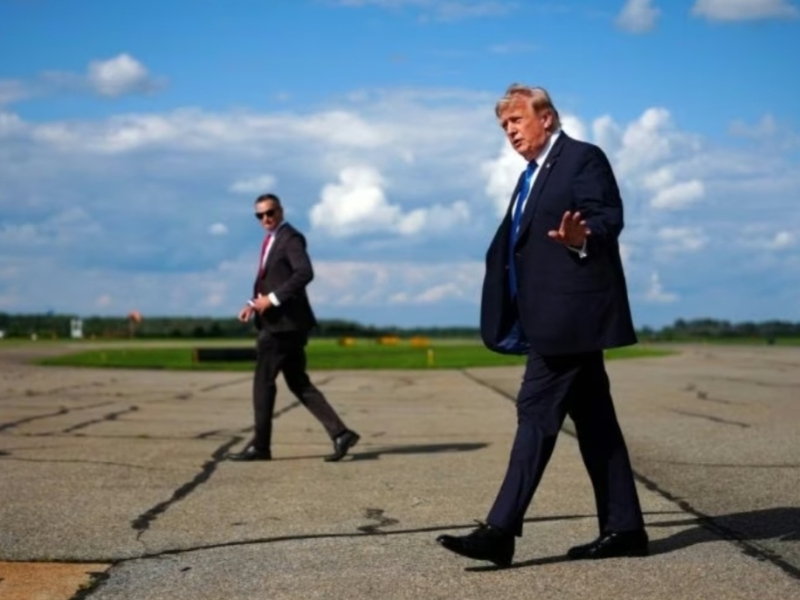
Image: Collected
US President Donald Trump has announced that the United States and Israel will suspend any new military strikes against Iran, provided that a deal to end the prolonged conflict is reached swiftly.
Posting on his Truth Social platform late Saturday in the United States and early Sunday in Iran, Trump claimed that Iran and several Middle Eastern countries had requested that Washington delay further attacks because "the perimeters of a deal has been agreed to." He said he accepted the request in hopes of securing an agreement that would benefit regional stability and Iran's future.
According to Trump, the proposed deal would require the immediate reopening of the Strait of Hormuz and the elimination of what he described as Iran's nuclear threat. He added that Israel supports the commitment to pursue the agreement.
Iran, however, rejected Trump's assertion that it had asked the United States to halt military action. Iranian state media, citing military officials, dismissed the claim as false and said the country's armed forces remain on high alert and prepared for any possible developments.
The Strait of Hormuz remains closed, disrupting a key global energy route, while shipping in the Red Sea continues to face threats from Yemen's Iran-backed Houthi movement.
Trump had earlier stated that the US military was prepared to launch new attacks on Iran but decided to suspend those plans after what he described as requests from Tehran and regional countries. Neither the White House nor Trump provided additional details about the proposed agreement or identified any mediators involved.
Meanwhile, Axios reported that Saudi Crown Prince Mohammed bin Salman spoke with Trump on Saturday and expressed concern over plans for expanded US strikes against Iran. According to the report, the Saudi leader encouraged Trump to pursue de-escalation instead of military action.
Despite Trump's remarks, no official details have emerged regarding the framework of the proposed deal. Regional countries including Qatar, the United Arab Emirates, Turkiye and Pakistan have continued urging both Washington and Tehran to return to diplomatic negotiations.
Pakistani government sources told Turkiye's Anadolu news agency that mediators from Pakistan and Qatar remain cautiously optimistic about restarting US-Iran talks. The sources said regional partners are maintaining contact with both governments and expect positive developments on renewed negotiations later this week.
The previous ceasefire, brokered by Pakistan and Qatar in June, collapsed amid disagreements over control of the Strait of Hormuz, a passage that carries nearly one-fifth of global oil and liquefied natural gas supplies. While Trump has called for the immediate reopening of the waterway, Tehran has shown no indication of changing its position, maintaining that conditions would not return to their pre-war status. Iran has instead proposed managing shipping traffic through Oman, a plan rejected by Washington and its Gulf allies.
Concerns over regional energy security have also intensified after Yemen's Houthi movement threatened shipping through the Bab al-Mandeb Strait, another strategic route for oil exports.
Despite renewed diplomatic efforts, the conflict has now entered its fifth month with no clear resolution in sight. Iran has also accused the United States of violating the ceasefire by disregarding navigation rules in the Strait of Hormuz, pushing vessels toward a southern route near the Omani coast, concealing military activity through commercial shipping, and imposing additional sanctions and a naval blockade.
Source: Al-Jazeera