

- Arson Attempt Foiled as Staff Quench Fire on Mirpur Bus |
- Personalized mRNA Melanoma Vaccine Intismeran Hits Major Milestone, Cutting Recurrence Risk by 42% in Landmark Phase 3 Trial |
- City govt essential for planned development of Chattogram: CCC administrator |
- Asian Stocks Slump After US Tech Rout Amid AI Jitters |
- Free Concert Featuring James and Seven Bands Set for Manik Mia Avenue |
OPEC+ Holds November Oil Output Steady for Second Month as War Strains Gulf Supply
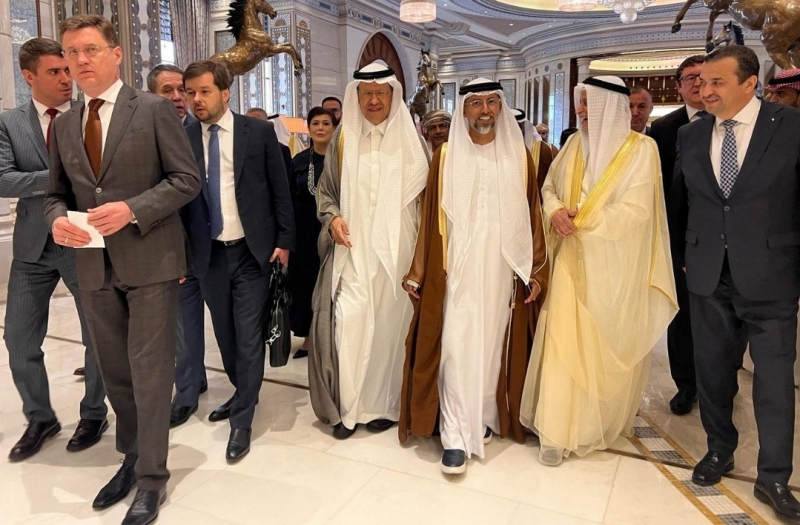
Image: Collected
OPEC+ has decided to keep its oil production targets unchanged for November, extending a pause in output increases for a second straight month as the U.S.-Israeli war on Iran continues to disrupt Gulf exports and limit how much several member countries can actually pump.
The decision was made on Sunday during a brief virtual meeting of seven core members of the alliance: Saudi Arabia, Russia, Iraq, Kuwait, Algeria, Kazakhstan and Oman. In a statement, OPEC said the countries agreed to “maintain September 2026 required production for November 2026,” while reaffirming their commitment to full compliance with the group’s broader production agreement.
A pause after months of increases
The move marks a clear shift in the group’s approach. OPEC+ had raised production targets every month from April through September as it gradually unwound a voluntary cut of 1.65 million barrels per day agreed in 2023. But after completing that reversal in September, the seven-nation subgroup held targets steady for October and has now done the same for November.
The group still has a separate production cut of roughly 2 million barrels per day in place, covering most OPEC+ members. That arrangement, originally agreed in 2022, is set to remain until the end of the year.
Targets versus real output
For many producers, the unchanged quotas are largely symbolic because actual output remains well below official targets. Reuters reported that Gulf producers have been exporting only 60% to 80% of normal volumes in recent months because of the war’s impact on shipping and production infrastructure.
According to OPEC data cited by Reuters, the seven core members produced 25 million barrels per day in August. That was 630,000 barrels per day higher than July, but still about 5 million barrels per day below February levels, before the conflict began in late February.
“The OPEC+ group of seven kept their production ceilings unchanged, in line with market expectations,” UBS analyst Giovanni Staunovo said. “That said, despite rising flows through the Strait of Hormuz, their output levels remain well below quota. Consequently, the oil market remains tight.”
War clouds the outlook
The decision reflects the uncertainty created by the continuing conflict, now in its eighth month. The United States and Iran remain divided over control of the Strait of Hormuz and Iran’s nuclear programme, while repeated disruptions to Gulf oil flows have kept crude prices elevated.
Brent crude ended Friday at about $102 per barrel, down on the day after Group of Seven economies agreed to release 100 million barrels of crude and diesel from emergency stockpiles. Before the war began, Brent traded at around $73 per barrel.
Bigger decisions delayed
The war has also delayed OPEC+’s review of member countries’ production capacity, according to Reuters sources. That review is expected to determine how quotas are distributed in 2027, and sources said significant changes to output policy are unlikely before then.
The seven members are scheduled to meet again on November 1 to review market conditions and decide on December production levels.
For now, OPEC+ appears to be choosing caution: keeping official targets steady while the real constraint remains not policy, but the war’s continuing grip on Gulf oil production and exports.