

- Oil Shock Sends Asian Markets Lower as Middle East Conflict Threatens Global Shipping |
- Trump Links Iran War to US Midterms, Backs United Ireland |
- PM Tarique Rahman Seeks Public Cooperation to Tackle Nationwide Dengue Outbreak |
- Jatiyatabadi Mahila Dal Vows to Lead Fight Against Rape, Violence Against Women and Children |
- 'Honorable' Dropped: PM Starts Implementing Decision from His Own Office |
Celebrity Trainer Reveals Simple 20-Minute Routine to Build and Keep Muscle After 50
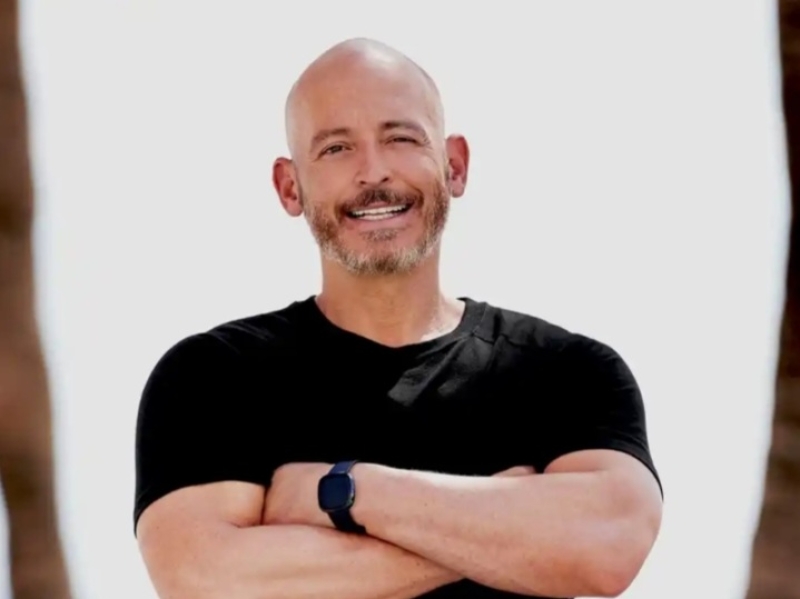
Image: Collected
At 51, celebrity personal trainer Harley Pasternak concentrates on building and maintaining muscle mass in a sustainable way as he gets older.
Sarcopenia, the natural age-related loss of muscle, typically starts around 30 and speeds up after 60. Because resistance training can help counteract it, Pasternak has adjusted his program to prioritise this goal.
He also emphasises recovery, limiting each session to 20 minutes and allowing the muscles he has trained several days of rest before working them again.
“As I get older, I find my recovery is not as it once was,” the trainer, who has coached more than 100 celebrity clients including Kim Kardashian, Rihanna and Robert Pattinson, told Business Insider.
Although he skips cardio-focused workouts, he consistently walks 12,000 steps a day for heart and mental health.
He described the 20-minute routine he follows six days a week.
Two major body parts plus core each session
Pasternak, a dedicated gym user with several training spaces in his Los Angeles home, structures every workout around two major muscle groups and one core exercise so that the same muscles are never trained on consecutive days. He selects one movement for each body part and performs multiple sets of roughly 20 repetitions, inserting a core exercise between them.
A sample session might include:
- Upper back (rhomboids): inverted rows
- Hamstrings: stiff-leg deadlifts
- Abs: pike planks
He begins with 20 repetitions of each strength move, then 19, adds a set of pike planks, continues dropping the count to 18 and 17 with another plank, and keeps reducing until he reaches 13. Once finished, he moves on with his day. “It’s the simplicity of the workouts that makes them easy to jump into,” he said.
Varying exercises to keep progress and interest
Whenever he returns to the same muscle group, Pasternak chooses a different exercise. The next time he trains hamstrings, for example, he might do prone hamstring curls, kickstand deadlifts or Nordic curls instead.
The variety helps his muscles continue adapting to new stimuli so strength keeps improving, and it prevents boredom. “Mentally, I would get bored doing the same exercises all the time,” he said.
Source: Business Insider