

- City govt essential for planned development of Chattogram: CCC administrator |
- Asian Stocks Slump After US Tech Rout Amid AI Jitters |
- Free Concert Featuring James and Seven Bands Set for Manik Mia Avenue |
- Garment factories reopen as workers return to work in Savar-Ashulia |
- Trump confirms new US strikes on Iran’s Qeshm island |
Bangladesh and Algeria seek to expand energy and trade ties
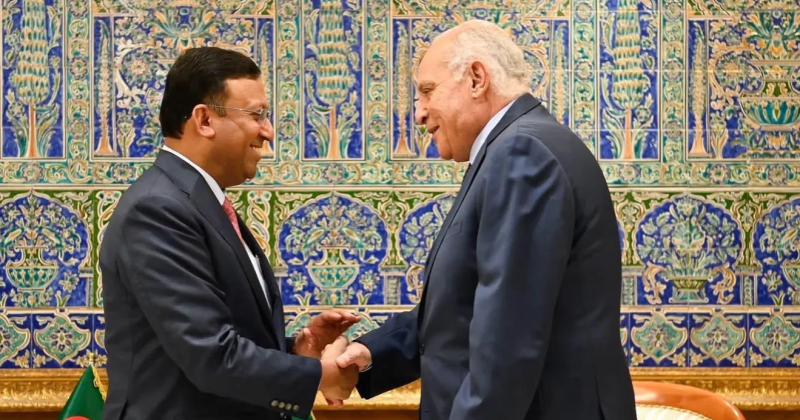
Image- Collected
Bangladesh and Algeria have reaffirmed their commitment to expanding cooperation in energy, trade, investment and industrial development, building on their longstanding friendship and a recently signed energy cooperation agreement.
The commitment was expressed at a reception hosted by Algerian Ambassador to Bangladesh Dr Abdelouahab Saidani at Le Méridien Dhaka on Saturday evening, marking the 72nd anniversary of Algeria’s Liberation Revolution.
Power, Energy and Mineral Resources Minister Iqbal Hassan Mahmood attended the event as the chief guest. Ambassadors, high commissioners, diplomats, senior government officials, representatives of international organisations and members of the Algerian community were also present.
Addressing the gathering, Mahmood highlighted the growing scope for cooperation in oil and gas exploration, technology transfer and capacity building. He described the recent signing of a memorandum of understanding (MoU) on energy cooperation as a historic milestone in bilateral relations.
The agreement was signed during a high-level Bangladeshi ministerial delegation’s visit to Algeria from October 20 to 22.
Mahmood thanked the Algerian government for its hospitality and cooperation during the visit, saying the agreement had created new opportunities for engagement in the energy sector.
Noting Algeria’s extensive experience in oil, gas and mining, he said Bangladesh was interested in benefiting from its expertise through technological cooperation and professional capacity development.
The minister also identified textiles, industrial products, food processing, ceramics and light engineering as promising areas for Algerian investment in Bangladesh. He encouraged Bangladeshi entrepreneurs to explore business opportunities in Algeria, citing its strategic location and economic potential.
Recalling the countries’ shared experiences in their struggles for independence, Mahmood called for turning their historical solidarity and political goodwill into practical economic partnerships.
Ambassador Saidani reaffirmed Algeria’s commitment to strengthening relations with Bangladesh through greater economic, commercial and strategic cooperation.
He recalled that Algeria was the first Arab country to officially recognise Bangladesh’s independence in December 1971, describing the gesture as a foundation of the two countries’ enduring relationship.
The ambassador identified oil and gas, pharmaceuticals, textiles, leather, healthcare and shipbuilding as potential areas for expanding cooperation.
Referring to the recent Bangladeshi delegation’s visit, he said it marked an important step towards strengthening economic and strategic ties.
Saidani also outlined Algeria’s ongoing economic transformation under President Abdelmadjid Tebboune, which focuses on diversification, non-hydrocarbon exports, infrastructure, mining, agriculture and foreign investment.
Paying tribute to those who fought and died in Algeria’s liberation struggle, the ambassador recalled the revolution launched on November 1, 1954, against 132 years of French colonial rule. He said the movement inspired national liberation struggles across Africa, Asia and Latin America.
Referring to this year’s commemorative theme, “November 1: Country’s Memory and Ummah’s Future”, Saidani reiterated Algeria’s commitment to sovereignty, self-determination, dialogue and the peaceful settlement of disputes. He also expressed support for the aspirations of the Palestinian and Western Saharan peoples.
Both sides expressed optimism that increased diplomatic engagement and recent agreements would help turn their longstanding friendship into practical cooperation in energy, trade, investment and industrial development.