

- City govt essential for planned development of Chattogram: CCC administrator |
- Asian Stocks Slump After US Tech Rout Amid AI Jitters |
- Free Concert Featuring James and Seven Bands Set for Manik Mia Avenue |
- Garment factories reopen as workers return to work in Savar-Ashulia |
- Trump confirms new US strikes on Iran’s Qeshm island |
Long Wait Over: Sydney South-West Metro Rail Services to Launch October 30
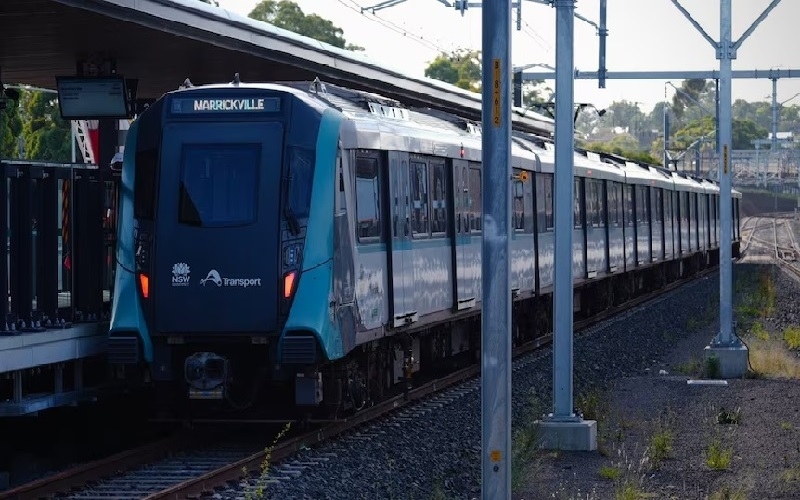
Bringing an end to more than two years of immense inconvenience and endless waiting, residents of South-West Sydney will finally be able to travel directly via modern metro trains starting next week. New South Wales (NSW) Premier Chris Minns announced that the first direct driverless metro train bound for Tallawong from Bankstown will officially depart at 4:31 AM on Friday, October 30, 2026. This launch marks an unprecedented and revolutionary milestone in the history of Sydney’s public transport network.
Relief After Prolonged Commuter Commotion
For the past 24 months, regular commuters along this route faced severe travel disruptions. Upgrading the 130-year-old traditional heavy rail line into a computer-age driverless modern metro network required complex and expensive trackwork. During this lengthy transformation period, the public had to rely on alternative "pink" rail-replacement buses, which cost taxpayers nearly $200 million and significantly increased travel times.
To ensure a smooth transition into this new era of rail travel, these special backup buses will remain in service until Sunday, November 1, even after the Metro opens on October 30. Once operational, the Metro will connect Bankstown to Sydney's Central Business District (CBD) in under 30 minutes. For instance, a trip from Lakemba to Victoria Cross Station will take just 37 minutes—24 minutes faster than the previous transport system.
10 Station Upgrades & Service Timetable
Under this mega project, 10 fully modernized and transformed stations will reopen simultaneously: Bankstown, Punchbowl, Wiley Park, Lakemba, Belmore, Campsie, Canterbury, Hurlstone Park, Dulwich Hill, and Marrickville.
The Metro operating schedules and frequencies are as follows:
● Weekday Peak Hours: Trains running every 4 minutes.
● Off-Peak Hours: Trains running every 5 minutes.
● Evenings & Weekends: Trains running every 10 minutes.
(Note: Train frequencies will be further increased during the inaugural weekend to manage higher passenger volume.)
Passenger Capacity & Fare Structure
According to government figures, the opening of the new M1 Metro Line will increase passenger capacity by approximately 50 percent compared to the old T3 Bankstown Line. During peak hours, the line will have the capacity to carry an additional 17,000 commuters. The existing Chatswood-to-Sydenham section currently carries between 210,000 and 245,000 passengers daily, a figure expected to rise sharply once Bankstown is integrated.
Fares on the Metro network are calculated based on travel distance, with a 30% discount applied during off-peak hours. For shorter journeys between 0 and 10 kilometers, commuters are charged an adult peak fare of $3.79 AUD, which reduces to $2.65 AUD during off-peak hours. For mid-range trips spanning 10 to 20 kilometers, the standard peak rate is $4.71 AUD, dropping to $3.29 AUD off-peak.
For longer trips between 20 and 35 kilometers, the peak fare is $5.42 AUD, while the off-peak rate comes to $3.79 AUD. Finally, for extended travel covering 35 to 65 kilometers, passengers pay a peak fare of $7.24 AUD, or $5.06 AUD when traveling outside of busy peak hours.
Additionally, thanks to the weekly Opal cap, passengers pay a maximum of $50 AUD per week, after which all remaining trips are free. Concession fares for children, students, and seniors remain at roughly half-price.
The final opening announcement of the South-West Metro has brought immense relief and excitement to local residents and the expatriate Bangladeshi community. Fueled by high-speed, modern train capabilities and improved public amenities, the social and economic connectivity of South-West Sydney is set to reach new heights.