

- City govt essential for planned development of Chattogram: CCC administrator |
- Asian Stocks Slump After US Tech Rout Amid AI Jitters |
- Free Concert Featuring James and Seven Bands Set for Manik Mia Avenue |
- Garment factories reopen as workers return to work in Savar-Ashulia |
- Trump confirms new US strikes on Iran’s Qeshm island |
Money supply growth outpaces output, fuelling inflation: World Bank
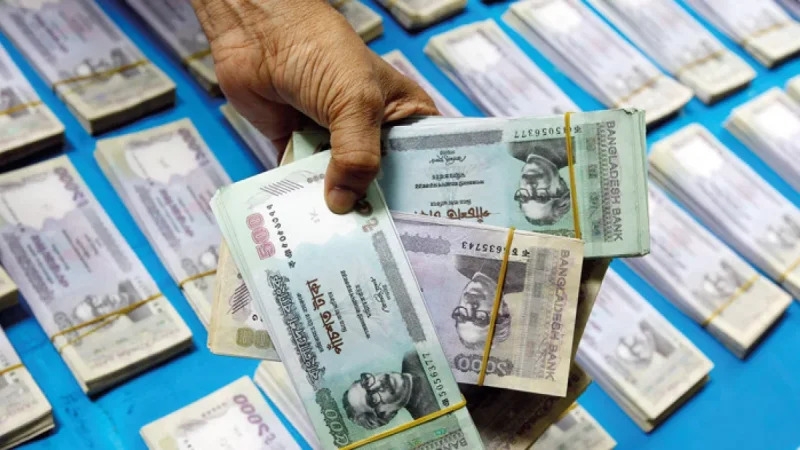
Representational Image- Collected
Bangladesh’s money supply is growing faster than economic output, adding to inflationary pressures as government borrowing rises and private-sector credit growth slows, according to the World Bank.
The global lender said broad money supply, known as M2, grew from 6.5% in June 2025 to 12.4% in May 2026, while inflation remained elevated throughout FY2025-26.
The report suggests that monetary expansion is becoming more closely linked to persistent price pressures. When money supply grows faster than the production of goods and services, it can push prices higher.
According to the World Bank, growth in M2 has been driven by increases in both net domestic assets and net foreign assets. Public-sector borrowing grew by more than 20%, with much of the funding used for current expenditure, including subsidies and interest payments, rather than productive investment.
Meanwhile, private-sector credit growth fell to a multi-decade low, restricting businesses’ access to financing and limiting economic activity.
Rising remittance inflows and the Bangladesh Bank’s foreign-exchange purchases also contributed to monetary expansion. However, structural constraints on production meant that the additional liquidity generated limited growth in real GDP while adding to price pressures.
The relationship between money supply and inflation has changed over time. During FY2017-FY2021, the two showed little consistent association. From FY2022 to FY2025, inflation rose above 9% and remained elevated even as M2 growth moderated.
The World Bank attributed much of that earlier inflation surge to supply-side shocks, particularly sharp fuel-price increases and depreciation of the taka.