

- City govt essential for planned development of Chattogram: CCC administrator |
- Asian Stocks Slump After US Tech Rout Amid AI Jitters |
- Free Concert Featuring James and Seven Bands Set for Manik Mia Avenue |
- Garment factories reopen as workers return to work in Savar-Ashulia |
- Trump confirms new US strikes on Iran’s Qeshm island |
Twenty-Eight Days in Palmerston North and Auckland: A Look Back
The Colors of the Homeland on a Foreign Canvas and Memories of New Zealand
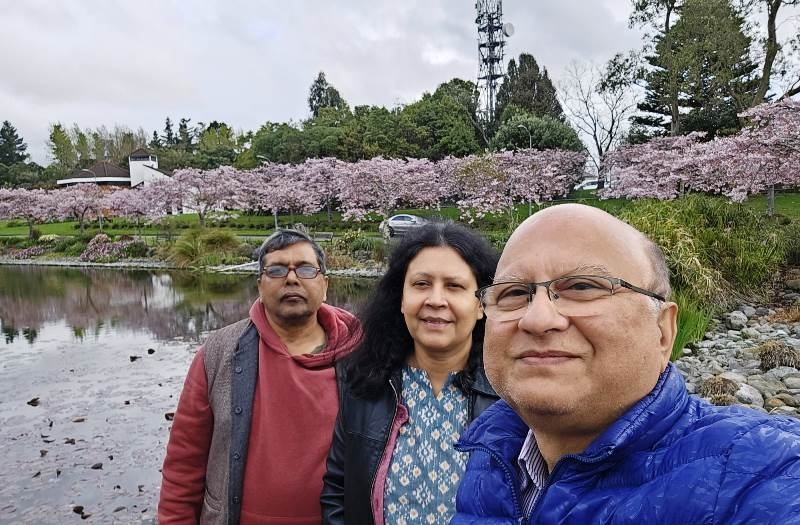
Image: Collected
Leaving behind the familiar affection and commotion of the motherland to build a life in an unfamiliar land thousands of miles away is what we call "expatriate life." No matter how colorful it may seem from the outside, the deeper reality within is largely a story of loneliness, struggle, and an unyielding pull toward one's roots. Life as an expatriate in New Zealand—an exceptionally beautiful island nation in the South Pacific—is just such a tale of mixed emotions, constantly reminding expatriates of their homeland.
1. A New Landscape and the Beginning of a Mesmerizing Journey
When a Bengali first sets foot in New Zealand—a land of lush green hills, deep blue seas, and a quiet, unhurried environment—a profound sense of awe takes over. However, once the initial months of enchantment fade, the harsh realities of true expatriate life gradually unfold.
Thanks to the warm invitation of dear and close friends, I had the good fortune of taking a month-long trip to New Zealand, which was spent wonderfully between Auckland and Palmerston North. Pintu Bhai and Tushar Bhai were with me throughout the approximately 510-kilometer road journey from Auckland to Palmerston North. Along the winding paths, amidst brief stops for sudden storms, rain, a stray beam of golden sunlight, and towering mountain ranges, the joy of travel was truly unique. The journey stirred up old memories and diverse experiences that made every single moment intensely thrilling.
2. Airport Hospitality and the Life Struggles of Tushar and Pintu
Even in a distant foreign land, the warmth of certain people makes the journey of life much smoother and more delightful. For instance, right at the beginning of my trip at Auckland Airport, the affectionate SP Akash rushed to give me a warm welcome. Having a familiar face show up with a car upon arriving in an entirely new country is an unforgettable memory of expatriate life.
Upon landing on these foreign shores, the individuals whose immense affection and company I received were Tushar Bhai and Pintu Bhai. At the start of my trip, I spent ten consecutive nights, and on my way back, one final night—making a total of eleven wonderful nights—under their safe and affectionate roof.
Recalling the days they left behind, Tushar Bhai and Pintu Bhai would often grow deeply emotional. Having navigated numerous ups and downs, they have successfully established themselves in New Zealand today. Hearing about the backbreaking labor and extreme hardships they endured coming from distant Qatar to this remote island nation fills the heart with profound respect. Their overflowing hospitality in the midst of busy expatriate lives will be remembered forever.
Another night stands out vividly in the canvas of my memory: Awami League President Kazi Hayat Setu Bhai, Ananya Arfin Chowdhury, Rasel Bhai, and our dear Pintu Bhai all gathered together to tour the night city of Auckland, enjoy a lively dinner, and return home late at night. Even in the midst of their hectic lives in New Zealand, Kazi Hayat Setu Bhai and Ananya Arfin would occasionally call to check in on me. Their love served as a comforting reminder of home in a foreign land.

3. Unforgettable Memories with Shamim Bhai, Tina Apa, and the BILS Office
The sweetest and longest chapter of my trip was spent in the company of Professor Shamim Shakur—an associate professor of economics at the famed Massey University—and Rubara Rahman Tina Apa. Today, sitting at my residence in Greenacre, Sydney, as I write this memoir for Dainik Bongolok, Tina Apa has called from across the distance to ask, "How are you? It has already been a year since your visit."
Her single sentence opened the floodgates of memory, taking me back to our old days at the BILS (Bangladesh Institute of Labour Studies) office in Dhanmondi. On the occasion of Tina Apa's birthday there, the joyous moment of reading a poem I had written and recited myself came rushing back. Faces filled with affection emerged from the past: Farida Farhana, Ripon Morshed, Titu, Tipu, Kazi, Goni Miah, Ghiyas Uddin Bhai, our then-Country Minister Endoztez Mooler, Mr. Hans, Sultan Bhai, Kohinur Apa, Sajjad Bhai, and Molla Bhai. Among the dear faces were also Sony Apa, Zakir, and Dina Apa. Whenever it was someone's birthday at the office, we held a lively gathering accompanied by special delicious food and joyous celebrations. Among them, Ghiyas Bhai and Kazi Solaiman have passed away. My direct boss, Mr. Hans, and Mooler also left this world long ago. I pray for the peace of their souls.
I was introduced to the BILS office by my teacher and cousin, Shaheed Ahsanullah Master. Today, I remember with deep reverence the leaders who founded the organization for working people: Nazrul Islam Khan, Jafrul Bhai, Siraj Bhai, Nurul Islam Bhai, Rai Ramesh Chandra, and Matin Bhai. I also recall colleagues Abdus Salam, Shakil Akhtar Chowdhury, Nazma Yasmin, Lily, and Tamanna.
Tina Apa is not only my former colleague but also a deeply respected teacher to my son. I still remember the many cozy chat sessions we shared at her home in Dhaka. On the other hand, while Shamim Bhai is a renowned professor of economics, he is a wonderfully sociable conversationalist who loves engaging in social activities.
During our time at their garden home, the friendly and warm demeanor of Shamim Bhai’s colleagues—particularly Professor Akhtaruzzaman and Professor Humayun Kabir Bhai—left a deep impression on me. Their regular, constructive discussions regarding the general populace, economy, and social decline of Bangladesh, even while living abroad, reflected a profound care for the country.
During my stay at Tina Apa's home, the hours spent playing Ludo and cards in our leisure time were entirely unique. When Shamim Bhai would make a "call" driven by economic calculation during card games and ultimately lose, his playful pout and feigned annoyance created a slice of authentic Bangladeshi warmth right in the heart of New Zealand. Both Tina Apa and Shamim Bhai are wonderful cooks; memories of the venison and national fish dishes they prepared still make my mouth water.
Tina Apa had two electric bicycles that had fallen into disrepair from long disuse, which I repaired with my own hands. Sometimes I would take those bikes and ride far beyond the city limits. Worried that I might run into trouble in a new city, Tina Apa would worry intensely for me on those days. Her genuine, familial concern provided me with immense comfort in New Zealand. Another day that shines bright in my memory is when Shamim Bhai and I took a train to travel to the capital city of Wellington. Waking up early and taking that wonderful train journey washed away all the fatigue of life abroad. Additionally, Tina Apa's pet cat, Amber, became a dear companion for a fortnight, acting almost like a security detail trailing behind us wherever we went.

4. Memories of Ellerslie Station and the Gray Tones of Loneliness
Later, during my daily commutes to the city center via Auckland's famous Ellerslie Station, watching the modern landscape glide past outside the train window would often fill my heart with a quiet melancholy. Whether waiting alone for a train on a bustling Auckland platform or walking by the serene Manawatu River in Palmerston North, sudden thoughts of a crowded, lively tea stall chat back in Bangladesh would bring forth a heavy sigh. Though expatriates find a higher standard of living here, psychological isolation and the pain of being uprooted remain daily companions.
On one occasion, Shamim Bhai took me to a special event organized by the Manawatu socio-cultural Bengali community. That day spent in a vibrant festival of shared warmth between Indian and Bangladeshi Bengalis was wonderful. After two weeks away, the nostalgic bus journey returning to Auckland from September 14 to September 27 remains another uniquely cherished memory, shared alongside Shamim Bhai and Amber, the beloved feline family member whose care and devotion reflected remarkable dedication.
Concluding Remarks from the Reporter
There are still many unsaid things about my New Zealand trip between September 2 and September 28 that I hope to write about later. In particular, there is the long story of the 510-kilometer bus journey sitting beside a Bengali woman on the way back to Auckland—a tale too expansive, which, if included here, might divert the core focus of this piece.
Whether a prolonged journey or a lifelong expatriate existence, no matter how temporarily one immerses oneself in the aesthetic colors of this lush island nation, every expatriate ultimately harbors a deep, subconscious desire to return to the embrace of their motherland: the soil of beloved Bangladesh. Expatriate life is, at its core, a story of immense sacrifice that teaches people to love their country all the more.