

- Arson Attempt Foiled as Staff Quench Fire on Mirpur Bus |
- Personalized mRNA Melanoma Vaccine Intismeran Hits Major Milestone, Cutting Recurrence Risk by 42% in Landmark Phase 3 Trial |
- City govt essential for planned development of Chattogram: CCC administrator |
- Asian Stocks Slump After US Tech Rout Amid AI Jitters |
- Free Concert Featuring James and Seven Bands Set for Manik Mia Avenue |
India raises anti-dumping duties on Bangladeshi jute products
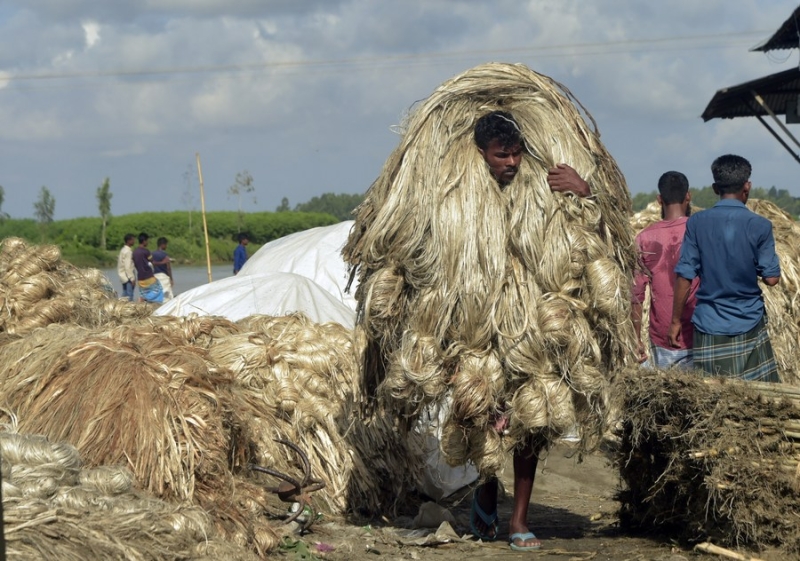
Image- Collected
India has imposed anti-dumping duties of up to $445 per tonne on jute products imported from Bangladesh, including jute yarn and twine, according to a notification issued by the country’s finance ministry.
The move follows a mid-term review by India’s Directorate General of Trade Remedies (DGTR), which concluded three months ago that Bangladeshi exporters continued to dump jute products in the Indian market, causing injury to the domestic industry.
The DGTR began the review in June 2025 following requests from the Indian Jute Mills Association and the AP Mesta Twine Mills Association. The review examined whether to increase existing anti-dumping duties on jute products from Bangladesh and Nepal.
The DGTR sought responses from 54 Bangladeshi mills and 36 mills in Nepal. The DGTR received responses from 38 Bangladeshi mills and five Nepali mills.
India had previously imposed duties ranging from $19 to $352 per tonne on jute yarn and twine, hessian fabric and jute sacking bags from Bangladesh and Nepal. The measures were later expanded to include jute sacking cloth from Bangladesh, contributing to a decline in shipments to one of Bangladesh’s major jute markets.
Under the latest measure issued on September 24, India listed 36 Bangladeshi jute manufacturers and imposed duties on jute yarn and twine, sacking bags and hessian fabrics, with rates beginning at $59 per tonne.
Asha Jute Industries Ltd, which exports jute yarn and twine, faces the lowest rate at $59 per tonne. Seventeen Bangladeshi companies will face a $120-per-tonne duty on jute sacking bags.
Six producers—AM Jute Industries, Bonanza Jute Composite, Lovely Jute Mills, Nawhata Jute Mills, Poddar Agro Industries and Ranu Agro Industries—were exempted from duties on all product categories they export.
Natore Jute Mills and Janata Jute Mills were also given a zero duty rate for sacking bags and hessian fabric.
For jute yarn and twine produced by companies outside the 36 listed firms, the duty will be $445 per tonne, according to the notification.
In its mid-term review, the DGTR said demand for jute products in India declined by 20 percent during the investigation period, while imports from Bangladesh and Nepal fell by 13 percent. The authority said this indicated that foreign producers were increasing their market share at the expense of Indian mills.
Bangladesh’s jute goods exports to India declined 18 percent year-on-year to 1.17 lakh tonnes in fiscal year 2024-25, according to the report.
Tapash Pramanik, chairman of the Bangladesh Jute Spinners Association, described the latest measure as “one-sided” and “coercive”. He said the subsidy rates considered by India when determining the anti-dumping duties had declined significantly and argued that Bangladesh’s jute sector does not receive the level of subsidies assumed in the review.
He said the government currently provides a 3-5 percent subsidy on yarn and twine and jute sacking. Tapash also acknowledged that jute goods exports to India had declined, but said overall exports of natural fibre-based products were unlikely to fall further.
According to the Export Promotion Bureau, Bangladesh earned $1.16 billion from jute and jute goods exports in FY21. The figure declined to $820 million in FY25 before rising 8 percent year-on-year to $884 million in FY26.