

- City govt essential for planned development of Chattogram: CCC administrator |
- Asian Stocks Slump After US Tech Rout Amid AI Jitters |
- Free Concert Featuring James and Seven Bands Set for Manik Mia Avenue |
- Garment factories reopen as workers return to work in Savar-Ashulia |
- Trump confirms new US strikes on Iran’s Qeshm island |
Religious Tradition and Cultural Worldview of the Yao People
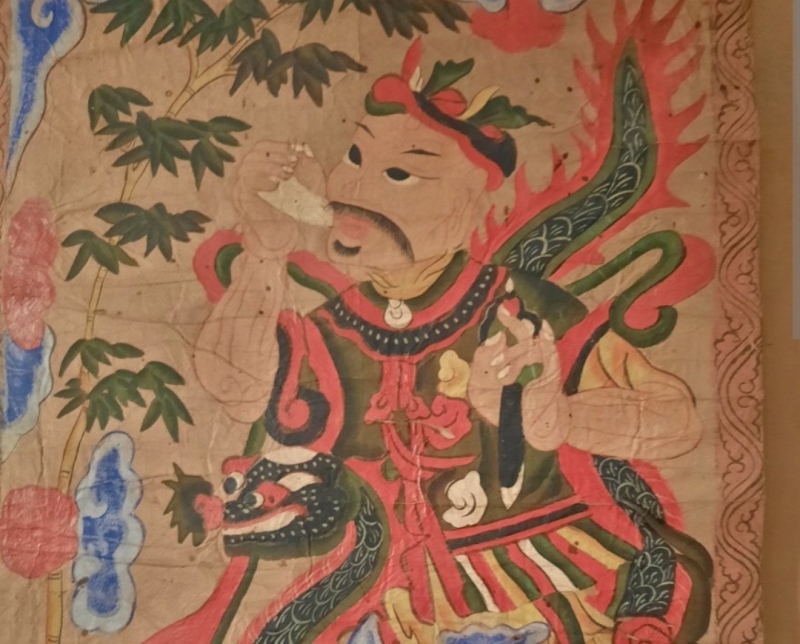
Image: Collected
The Yao religious tradition is especially significant because it demonstrates how religious systems develop through cultural exchange. Although Daoism has strongly influenced Yao ritual life, Yao communities have also preserved older beliefs connected to clan identity, nature, ancestors, and the legendary figure of King Pan. Therefore, Yaoism is best understood as a dynamic religious and cultural system rather than simply a local version of Chinese Daoism.
The Yao People and Their Historical Background
The Yao are a collection of related ethnic communities rather than a completely uniform population. They live primarily in the Chinese provinces of Guangxi, Hunan, Guangdong, Yunnan, and Jiangxi. Yao communities are also found in Vietnam, Laos, Thailand, and other parts of Southeast Asia. Different Yao groups use their own names, languages, customs, and ritual practices.
The word “Yao” historically functioned as an external label used by Han Chinese authorities and writers for several southern non-Han peoples. As a result, the category “Yao” includes communities with diverse histories and cultural practices. This diversity is important when discussing Yaoism because beliefs and ceremonies may differ from one Yao community to another.
Historically, many Yao groups lived in mountainous regions and maintained a degree of distance from central states. Their religious traditions developed through interaction with neighboring Han Chinese communities, local populations, and other ethnic groups. Beginning particularly during the Song and Yuan periods, various forms of Daoist ritual entered Yao areas. These traditions later became more firmly established during the Ming and Qing periods.
Indigenous Beliefs and Daoist Influence
Yao religious culture contains several layers. The first layer consists of indigenous beliefs in spirits, ancestors, nature forces, and local supernatural beings. The second involves worship connected to Yao history and identity, especially the veneration of King Pan. The third layer consists of Daoist theology, ritual texts, priests, registers, symbols, and ceremonies.
Daoism became one of the most influential elements of Yao religious life. Yao ritual specialists adopted ideas and practices associated with Zhengyi Daoism, the Lüshan tradition, and Meishan ritual traditions. The Yao also incorporated Daoist deities and cosmological ideas into their own religious system. The Three Pure Ones, a central group of Daoist deities, are among the important divine figures recognized in Yao Daoist traditions.
Nevertheless, this process did not simply replace older Yao beliefs. Instead, Daoist practices were adapted to local traditions. Indigenous spirits, ancestor worship, clan ceremonies, and the cult of King Pan continued to play important roles. This blending of traditions is sometimes described as Daoisation, meaning the process through which Yao religious culture adopted and transformed Daoist concepts and rituals.
King Pan and Yao Identity
One of the most important figures in Yao religious culture is **King Pan**, also known in some traditions as Panwang. He is regarded as an ancestral or foundational figure among many Yao communities. Stories about King Pan connect him with the origins, migration, survival, and collective identity of the Yao people.
The worship of King Pan is not merely a form of devotion to a supernatural being. It also expresses a shared sense of ancestry and community. Rituals devoted to him can reinforce relationships among families, clans, and villages. Through songs, oral narratives, ceremonies, and sacred documents, the memory of King Pan helps transmit Yao history across generations.
The importance of King Pan also shows that religion and ethnicity are closely connected in Yao society. Religious rituals do not only address spiritual concerns; they also preserve collective memory and define who belongs to the community.
Ancestor Worship and Spirits
Ancestor worship forms a central part of Yao religious practice. Ancestors are often understood as continuing members of the social community who can influence the well-being of their descendants. Families may honor ancestors through offerings, ritual remembrance, household ceremonies, and participation in larger communal events.
Yao religious traditions also recognize a wide range of supernatural beings. These may include household spirits, local nature spirits, protective deities, dangerous ghosts, and forces associated with illness or misfortune. Religious specialists perform rituals to communicate with these beings, seek protection, restore balance, or remove harmful influences.
This worldview does not always divide reality into sharply separated categories such as “religious” and “nonreligious.” Health, morality, family relations, agriculture, social harmony, and supernatural forces may all be connected. A misfortune can therefore be interpreted not only as a physical event but also as a sign of disturbed social or spiritual relationships.
Priests and Ritual Specialists
Yao Daoism is traditionally maintained by ritual specialists who possess religious knowledge and authority. In many communities, these specialists are trained through initiation, apprenticeship, memorization, and the study of ritual manuscripts. They may conduct ceremonies for healing, funerals, protection, exorcism, initiation, and communication with deities or ancestors.
A major ritual institution is known as Dujie, often translated as an ordination or “crossing the registers” ceremony. Through this process, a ritual specialist receives religious registers, authorization, and knowledge that connect the individual to the Daoist sacred world. The ceremony may also mark the person’s formal entry into a lineage of ritual authority.
Ritual specialists often use sacred texts written in Chinese characters. These texts can contain prayers, genealogies, myths, liturgies, instructions, and accounts of divine beings. Some manuscripts are treated as sacred objects and are carefully preserved within families or ritual lineages.
Rituals and Religious Practices
Yao religious rituals vary according to region and community, but several practices are especially important:
● Ancestor ceremonies, which honor deceased family members and seek their protection.
● Healing rituals, which address illness through prayers, offerings, spirit communication, or exorcism.
● Funeral ceremonies, which help guide the dead and restore harmony between the living and the deceased.
● Initiation and ordination rituals, which establish religious status and transmit ritual knowledge.
● Community festivals, which reinforce social solidarity and commemorate important ancestral or mythological figures.
● Protective ceremonies, which seek to defend households and communities from harmful spirits or misfortune.
Music, chanting, dance, costume, incense, ritual objects, and written manuscripts may all form part of these ceremonies. Religious performance is therefore both verbal and visual. It communicates with the supernatural world while also teaching community members about history, morality, ancestry, and social obligations.
Sacred Texts and Cultural Preservation
Written ritual manuscripts are among the most important features of Yao religious culture. Many texts are written in forms of classical or ritual Chinese, although their interpretation and use are shaped by Yao traditions. These manuscripts may describe deities, ritual procedures, origin stories, sacred journeys, and relationships between the human and supernatural worlds.
The manuscripts also serve as repositories of social memory. They can preserve family genealogies, migration histories, religious titles, and rules governing ritual life. In this sense, Yao religious texts are simultaneously theological documents, historical records, and cultural archives.
However, the transmission of this knowledge faces challenges. Modern education, urbanization, migration, state policies, religious change, and the decline of traditional ritual specialists can weaken the continuity of manuscript-based traditions. Cultural preservation efforts therefore often focus on documenting texts, recording ceremonies, supporting local practitioners, and teaching younger generations about Yao heritage.
Social Organization of Yao People
Yao religious life is closely connected to family and community organization. Rituals frequently involve household groups, clan networks, villages, and religious lineages. Religious authority may be inherited or transmitted through specific family and teacher-student relationships.
Ancestor worship reinforces the significance of kinship. Ritual participation can also clarify social responsibilities, regulate relationships between generations, and strengthen cooperation. Ceremonies are therefore not private acts alone; they may function as public events that renew community bonds.
From an anthropological perspective, Yaoism illustrates how religion can organize social life. It provides explanations for illness and misfortune, establishes moral expectations, preserves historical identity, and creates relationships among humans, ancestors, deities, and spirits.
Contemporary Developments
Yao religious traditions have changed considerably in the modern period. Political campaigns, state religious policies, migration, formal education, tourism, Christian missionary activity in some regions, and economic transformation have affected traditional practices. In some places, rituals declined or were interrupted; in others, they have been revived as part of cultural heritage and ethnic identity.
The term “Yao Daoism” has become increasingly common in academic discussions since the late twentieth century. However, some scholars caution that this label may place too much emphasis on Daoist influence and understate the independent history of Yao religious culture. Describing the tradition only as Daoism can make it appear more standardized and institutionally unified than it actually is.
A more accurate approach is to view Yaoism as a religious culture formed through interaction between indigenous Yao traditions and different forms of Daoism. This approach recognizes both cultural borrowing and local creativity.
Yaoism, or Yao religious culture, is a complex tradition that combines ancestor worship, spirit beliefs, indigenous mythology, Daoist theology, ritual specialists, sacred manuscripts, and communal ceremonies. Its development reflects centuries of cultural interaction between Yao communities and the wider Chinese religious world.
The tradition cannot be reduced either to “primitive animism” or to a simple form of Daoism. It is better understood as a flexible and historically changing system through which Yao communities express their relationship with ancestors, deities, nature, history, and one another. Its continuing importance lies not only in its religious beliefs but also in its role in preserving ethnic identity, collective memory, and social solidarity.