

- Oil Shock Sends Asian Markets Lower as Middle East Conflict Threatens Global Shipping |
- Trump Links Iran War to US Midterms, Backs United Ireland |
- PM Tarique Rahman Seeks Public Cooperation to Tackle Nationwide Dengue Outbreak |
- Jatiyatabadi Mahila Dal Vows to Lead Fight Against Rape, Violence Against Women and Children |
- 'Honorable' Dropped: PM Starts Implementing Decision from His Own Office |
Trump, Netanyahu Meet at White House; Iran and Gaza Top Agenda
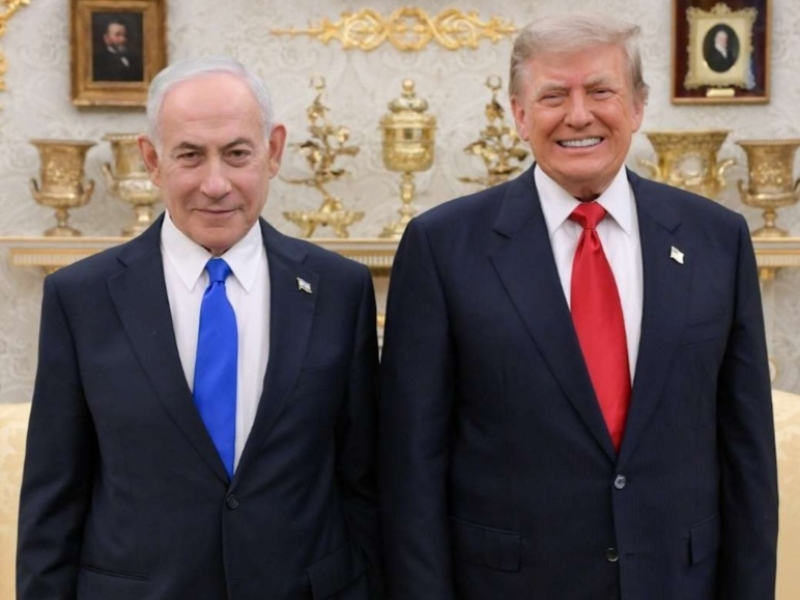
Image: Collected
Israeli Prime Minister Benjamin Netanyahu met with former U.S. President Donald Trump at the White House on Tuesday for a closed-door session lasting about three hours, with Iran and the future of Gaza dominating talks.
Trump described the meeting as “very good” in a post on Truth Social but said no definitive outcome was reached. He reiterated U.S. preference for a negotiated settlement with Tehran on its nuclear program, saying a deal would be preferable but warning that “if Iran refuses, they will just have to see what the outcome will be,” and noting U.S. strikes had followed past rejections.
The visit came amid intensified diplomatic activity aimed at securing a Gaza demilitarization plan. Trump’s son-in-law and envoy, Jared Kushner, recently concluded talks in Cairo with Hamas and held discussions with Netanyahu in Israel. A Board of Peace official told Reuters the Kushner-Netanyahu meetings were “lengthy, in depth, and very productive,” and that an agreed path forward for Gaza had been found.
Netanyahu also met with Secretary of State Marco Rubio during the trip and has signed on to join Trump’s Board of Peace, which is scheduled to meet next week. Officials did not release details of the White House session, and Netanyahu declined to comment publicly afterward.
The timing of the visit is politically sensitive for Netanyahu, who faces a challenging re-election campaign ahead of Israel’s late October vote. Recent polls suggest the right-wing, religious and ultra-nationalist bloc may struggle to secure a parliamentary majority. Trump has so far refrained from endorsing Netanyahu, telling reporters that it is “most appropriate for me to stay out of Israeli elections, but I may endorse somebody.”
U.S. political pressure may be a factor in the talks. Reporting in The Hill and analysis in Foreign Policy by former diplomats Aaron David Miller and Daniel Kurtzer suggested Trump could use the prospect of an endorsement as leverage to push Netanyahu toward supporting the Gaza plan, possibly making such support a condition for open backing. Miller and Kurtzer argued Trump is likely to “do the absolute minimum with respect to the Israeli election” unless Netanyahu makes a major concession on Gaza.
Netanyahu’s political future also intersects with ongoing legal challenges at home. Should he lose power, he could face new constraints in influencing a justice system where he stands trial on charges including bribery, fraud and breach of trust.
As U.S.-Israeli discussions continue, officials from both countries said substantive negotiations remain in progress but cautioned that significant obstacles persist on both Iran and Gaza, and that any agreement would require approval from multiple stakeholders.