

- City govt essential for planned development of Chattogram: CCC administrator |
- Asian Stocks Slump After US Tech Rout Amid AI Jitters |
- Free Concert Featuring James and Seven Bands Set for Manik Mia Avenue |
- Garment factories reopen as workers return to work in Savar-Ashulia |
- Trump confirms new US strikes on Iran’s Qeshm island |
President calls for stronger Bangladesh-Pakistan cooperation
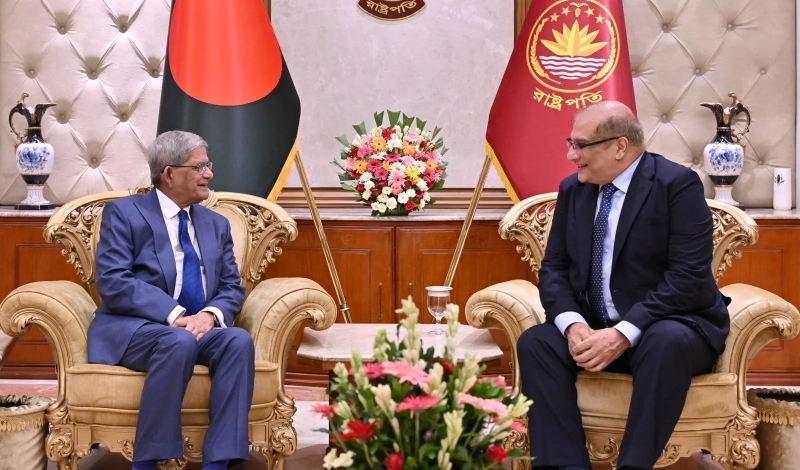
Image- Collected
President Mirza Fakhrul Islam Alamgir has called for stronger cooperation between Bangladesh and Pakistan in trade, investment, education, air connectivity, training and other areas of mutual interest.
He made the remarks on Sunday when Pakistani High Commissioner to Bangladesh Imran Haider paid a courtesy call on him at Bangabhaban. During the meeting, the envoy conveyed Pakistani President Asif Ali Zardari’s invitation for Mirza Fakhrul to visit Pakistan. The President thanked him and also invited the Pakistani President to visit Bangladesh.
Mirza Fakhrul said expanding trade and economic cooperation would benefit both countries. He stressed greater interaction between businesses and entrepreneurs and called for exploring new trade opportunities.
The President noted the popularity of Pakistani ready-made garments in Bangladesh and encouraged increased imports of garments, cotton yarn and other products to make bilateral trade more balanced. The Pakistani envoy said a trade fair showcasing Pakistani products would be held in Dhaka in October and proposed a similar Bangladeshi trade fair in Pakistan.
The two sides also discussed joint ventures, including manufacturing footballs and other sports equipment. The envoy highlighted the positive impact of resumed direct Dhaka-Karachi flights on trade, business, medical tourism and people-to-people contacts, while calling for more flights.
Bangladesh also sees opportunities to increase exports of tea, ceramics, betel leaf, agricultural products, medicines and other quality goods to Pakistan.
Mirza Fakhrul further called for greater exchange of training programmes between the countries’ armed forces and civil administrations, as well as expanded higher-education opportunities in science, engineering, technology and medicine.
Both sides expressed hope that increased cooperation in trade, education, culture, training and people-to-people contacts would make bilateral relations more productive and multidimensional.