

- Oil Shock Sends Asian Markets Lower as Middle East Conflict Threatens Global Shipping |
- Trump Links Iran War to US Midterms, Backs United Ireland |
- PM Tarique Rahman Seeks Public Cooperation to Tackle Nationwide Dengue Outbreak |
- Jatiyatabadi Mahila Dal Vows to Lead Fight Against Rape, Violence Against Women and Children |
- 'Honorable' Dropped: PM Starts Implementing Decision from His Own Office |
Japan Labels China's Military Expansion Its Top Security Concern
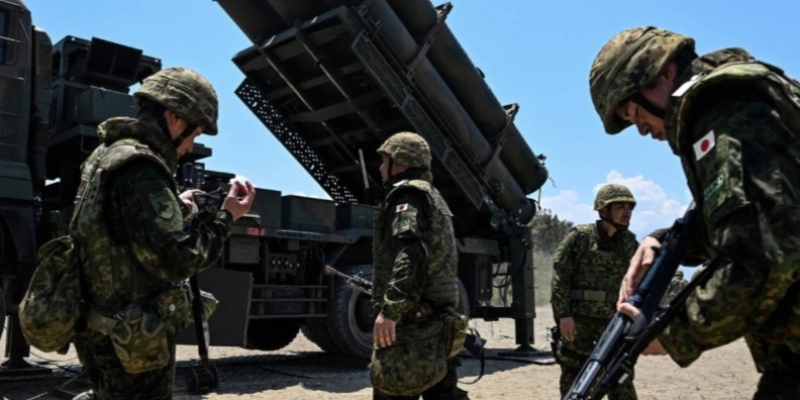
Image: Collected
Japan has identified China's expanding military activities as its foremost security challenge, saying the issue should be addressed by strengthening the country's overall national capabilities and deepening cooperation with allies and like-minded partners.
The assessment appears in Japan's annual defense white paper, which was approved by the Cabinet on Tuesday. Spanning a record 598 pages, the report outlines Tokyo's view of the increasingly unstable security environment across the region.
This year's edition features an anime-style cover and, for the first time, includes links to short videos explaining Japan's security policies. The Defense Ministry said the additions are intended to improve public understanding ahead of the planned revision of the country's three major security documents later this year.
Defense Minister Shinjiro Koizumi said the government hopes the report will help people better understand Japan's security policies and encourage discussion about how national security affects the country's future.
In the report's introduction, Koizumi wrote that threats to a free and open international order based on the rule of law have intensified since Japan last updated its security documents in December 2022. He pointed to China's and North Korea's military expansion, their closer ties with Russia, and lessons from Russia's war in Ukraine as key developments shaping the current security landscape.
Koizumi said the rapidly changing environment requires stronger resilience across the Indo-Pacific region. He pledged to expand cooperation with allies and partner nations by increasing coordination in military exercises, troop deployments, defense equipment, and industrial cooperation to strengthen regional deterrence.
The report also reflects Japan's efforts to broaden its security partnerships while maintaining its alliance with the United States.
As in previous years, the white paper describes China as an "unprecedented strategic challenge." It says Beijing's expanding military capabilities have resulted in more frequent operations around Japan, including in the western Pacific near the Izu and Ogasawara islands.
According to the report, China's increased military presence in the western Pacific has heightened concerns in Japan that unexpected encounters could lead to accidents and potentially escalate into a broader conflict.
The document highlights several recent incidents, including two occasions in December when fighter aircraft from China's Liaoning aircraft carrier locked radar onto Japan Air Self-Defense Force aircraft over international waters southeast of Okinawa. It also refers to China's deployment of the Liaoning and another aircraft carrier deep into the western Pacific last summer, along with repeated flights by Chinese military aircraft near Japanese planes that Tokyo said increased the risk of collisions.
The report was released as relations between Japan and China remain strained following comments by Prime Minister Sanae Takaichi, who said Japan could exercise the right to collective self-defense in response to a worst-case scenario such as a Chinese naval blockade of Taiwan. She argued such a situation could threaten Japan's national survival.
Although the report does not directly mention the diplomatic tensions resulting from those remarks, it repeats Japan's concern over China's increased military activities in the waters and airspace surrounding Taiwan.
It also expresses concern about what it describes as China's pursuit of unification through gray-zone operations, including the possibility of using China Coast Guard vessels to blockade Taiwan.
The report says stability across the Taiwan Strait is important to the international community and that Japan will continue to closely monitor developments.
Responding to criticism from Beijing over Japan's military buildup, the white paper reiterates that Japan remains committed to its exclusively defensive policy and has no intention of becoming a military power that threatens other countries.
The report also reaffirms the government's commitment to Japan's long-standing three nonnuclear principles as official policy, although Koizumi has said public debate over nuclear weapons is unavoidable.
The document also refers to changes in U.S. security policy under President Donald Trump, noting that Washington is placing greater emphasis on homeland security while continuing to focus on the Indo-Pacific.
It mentions calls from the Trump administration for allies, including Japan, to increase military spending. U.S. Defense Secretary Pete Hegseth has urged Indo-Pacific partners to follow NATO members by allocating 5% of gross domestic product to defense, including 3.5% for core military spending.
In a speech in May, Hegseth said Japan was making progress in increasing defense spending but indicated that further increases would be expected from U.S. allies.
Japan has not committed to a future spending target, saying its priority is strengthening military capabilities rather than setting a specific percentage, particularly as the country faces a stronger yen and persistent inflation.
According to Defense Ministry officials, one of the report's central messages is that national security policy is closely connected to the country's future and that investment in defense can generate broader economic and social benefits.