

- Saudi road accident claims lives of seven Bangladeshis, 6 injured |
- Titas Gas suffers Tk5,140cr loss from unbilled gas in two years |
- Arson Attempt Foiled as Staff Quench Fire on Mirpur Bus |
- Personalized mRNA Melanoma Vaccine Intismeran Hits Major Milestone, Cutting Recurrence Risk by 42% in Landmark Phase 3 Trial |
- City govt essential for planned development of Chattogram: CCC administrator |
US Sends Hundreds of Troops to Latin America in Expanding Anti-Drug Push
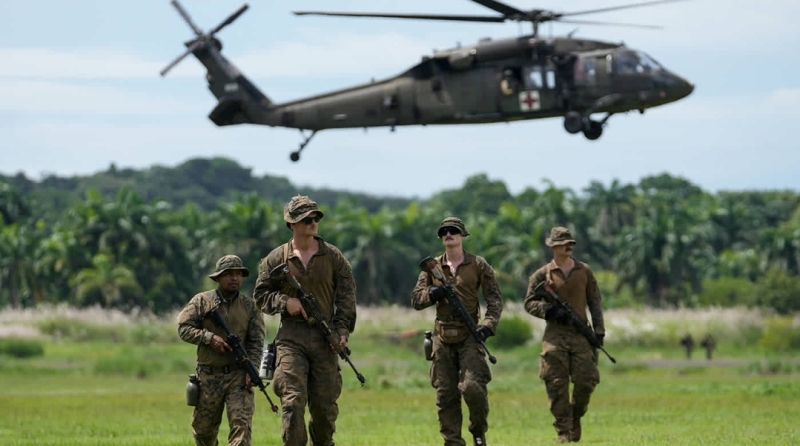
Image: Collected
The United States is deploying several hundred Army soldiers to Latin America to train regional forces and support an expanding campaign against drug-trafficking networks, according to US military officials cited by The New York Times. The move signals a shift from maritime interdiction toward a broader, land-based military presence across Central and South America.
Panama First, Then Colombia and Honduras
The first troops from a roughly 600-soldier battalion of the Army’s 10th Mountain Division, based at Fort Drum, New York, have begun arriving at a new jungle-warfare training facility in Panama. From there, rotations are expected to move to Colombia and Honduras for joint training with local forces.
In Colombia, the troops are scheduled to take part in the Southern Vanguard exercise later this month. Officials said some soldiers could also help secure US helicopters and support Special Operations personnel advising partner militaries on raids against suspected traffickers.
A Wider Counter-Cartel Campaign
The deployment builds on a campaign that began with US strikes on alleged drug-trafficking vessels in the Caribbean and Eastern Pacific. The Pentagon has also moved MQ-9 Reaper drones to Colombia and Ecuador, while commanders signal that operations may expand from boats to land-based targets.
Several hundred additional 10th Mountain soldiers are expected to help staff a new Pentagon command for Western Hemisphere operations in Miami. Defense Secretary Pete Hegseth has also created an office to coordinate the administration’s counter-cartel efforts.
Temporary Now, Possibly Permanent
US officials described the current rotations as temporary, but said the arrangement could evolve into a more enduring military presence in the region. Hegseth said Washington would “posture and base as necessary” in Central and South America, framing the effort as a direct campaign against criminal organizations.
The deployment has revived comparisons with the United States’ long history of military intervention in Latin America, even as officials present it as a partner-led training and counter-narcotics mission.