

- 35 Australian-Based Bangladeshi Journalists Demand Immediate Release of Senior Media Leader Iqbal Sobhan Chowdhury |
- Six killed, 17 injured in mass shooting in Poland’s Krakow |
- BGB sets up security across industrial areas after garment protests |
- Actress Samira Khan Mahi Crowned 'Miss Universe Bangladesh 2026' |
- We must work together to resist anti-national conspiracies |
Indonesia’s wildfire smoke chokes Kuala Lumpur and Singapore
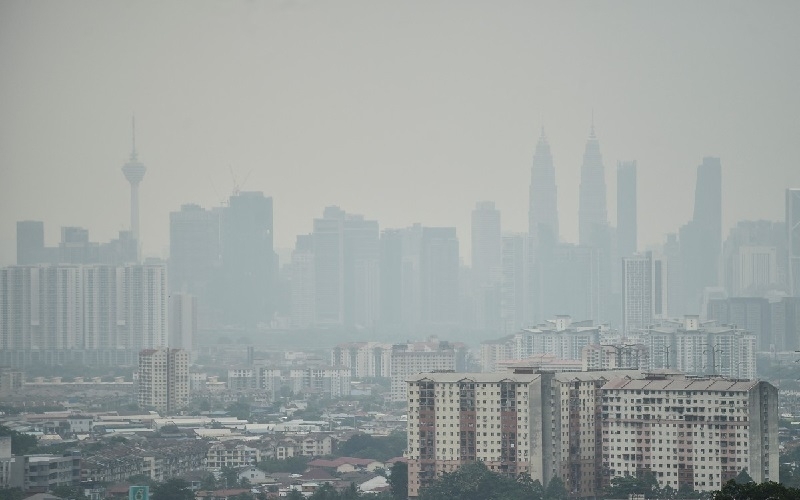
The skies over Malaysia’s Kuala Lumpur have been covered in smoke from Indonesia’s wildfires, leaving air quality unhealthy in both countries.
Smoke from severe wildfires spreading across Indonesia’s forests and peatlands has caused air quality to deteriorate in Malaysia and Singapore. Kuala Lumpur and Singapore have remained under a thick layer of haze for more than a month, with Malaysia’s capital ranking as the world’s most polluted major city on Wednesday and Singapore placing third.
According to Swiss-based air quality monitoring organisation IQAir, Kuala Lumpur recorded an air quality index of 166 on Wednesday morning, while Singapore’s reading stood at 155. An AQI above 150 is considered unhealthy, while readings above 300 are classified as hazardous.
Smoke from burning forests and peatlands in Indonesia’s Borneo and Sumatra has been carried by the wind into Malaysia and Singapore. The haze has been described as more intense than the cross-border air pollution that regularly affects Southeast Asia.
Malaysia’s Department of Environment reported 327 fire hotspots in Kalimantan and 191 in Sumatra on September 29. Another hotspot was detected in Sarawak. Moderate to dense smoke from these fires has spread across Peninsular Malaysia, Singapore and parts of northwestern Borneo.
By Wednesday afternoon, unhealthy air quality had been recorded in 23 areas across Peninsular Malaysia. Conditions were concerning in Selangor, Johor, Negeri Sembilan, Pahang, Kuala Lumpur and Putrajaya, among other areas.
Meteorologists and environmental experts said prolonged dry and hot weather is intensifying the fires in Indonesia. The situation has also been aggravated by the effects of El Niño and the use of fire to clear land, making the fires more difficult to control.
The haze is also affecting daily life in both countries. Some Singapore residents have reduced outdoor exercise and sports activities, while several people have reported problems including breathing difficulties, sneezing and allergies.
Malaysia’s Department of Environment said surveillance, inspections and patrols have been increased in fire-prone areas, particularly peatlands and waste disposal sites. If evidence of legal violations involving fires is found, action will be taken based on investigations and evidence.
The current wildfires in Indonesia are being regarded as among the country’s most severe in recent years. According to IQAir data, Indonesian wildfires produced 19.7 million metric tons of fire-related emissions during the first week of September alone, accounting for more than one-third of global wildfire emissions during that week.
Environmental experts said a rapid improvement in conditions is unlikely until rainfall arrives. With El Niño continuing to affect the region, concerns are growing across Southeast Asia over the fires and resulting haze in Indonesia.