

- 35 Australian-Based Bangladeshi Journalists Demand Immediate Release of Senior Media Leader Iqbal Sobhan Chowdhury |
- Six killed, 17 injured in mass shooting in Poland’s Krakow |
- BGB sets up security across industrial areas after garment protests |
- Actress Samira Khan Mahi Crowned 'Miss Universe Bangladesh 2026' |
- We must work together to resist anti-national conspiracies |
El Niño-fueled wildfires put thousands of orangutans at risk in Indonesia
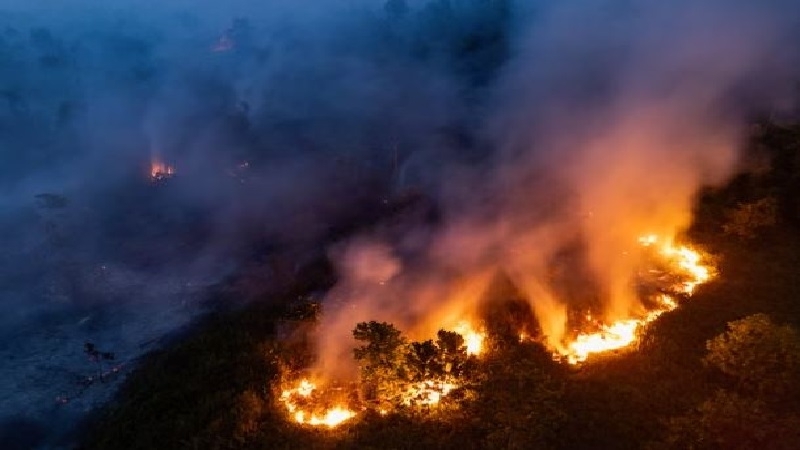
Image- Collected
Severe wildfires fueled by El Niño are burning vast areas of forest and peatland in Indonesia, severely damaging orangutan habitats. Experts warn that thousands of orangutans could die, suffer injuries or be displaced after losing their safe habitats.
Wildfires are spreading rapidly across Sumatra, Kalimantan and Papua, with forests and peatlands particularly affected. Although peatlands are naturally wet, many have been drained over the years for industrial agriculture, leaving them highly vulnerable to fire.
According to information from primate specialists at the International Union for Conservation of Nature (IUCN), about 52 percent of the orangutan habitat on Borneo is currently affected by the fires. The fires have also spread into habitats of five gibbon species. Environmental organisation Geopix reported that around 4,500 fires have been detected in at least 21 Sumatran elephant habitats in recent months.
Wildlife conservationist and veterinarian Carmelle Yano Sanchez said the scale of wildlife deaths and damage caused by the fires is extensive. Her organisation, Yairi, has already rescued more than 20 orangutans endangered by fire and smoke, along with other animals.
Some rescued animals suffered burn injuries, while others were affected by dehydration and a lack of food. One orangutan is believed to have died after inhaling smoke. With little rainfall recorded in many areas for the past 80 days, leaves and fruits have dried up, leaving animals that survive the fires facing food shortages.
Researchers said the effects of the wildfires could continue long after the flames are extinguished. Forest recovery may take several years, while reduced fruit production and declining numbers of pollinating animals could affect the forest food chain in the future.
Researchers have also observed unusually heavy loss of leaves and small branches due to excessive smoke. They believe dense smoke blocking sunlight and disrupting photosynthesis is one of the main reasons. As a result, food shortages for wildlife are not ending quickly even after the fires are brought under control.
The long-term effects of smoke exposure on orangutan health remain unclear. However, studies conducted after previous wildfires found that orangutans called less frequently in dense smoke and their vocal patterns could also change. These changes continued for several weeks even after the smoke had cleared.
The fires are threatening not only wildlife habitats but also important research facilities. The Tuanan and Rangkong orangutan research centres in Central and West Kalimantan have faced fire risks in recent weeks. Local residents and research team members have cleared vegetation and arranged temporary water spraying to prevent the fires from reaching the centres.
At the Tuanan research centre, researchers have spent the past 23 years studying around 2,500 trees and the same orangutans. Researchers fear that the fires could damage this long-term research and its accumulated data.
IUCN specialists have called for urgent technical and financial assistance to tackle the wildfires. They also stressed the need to rewet peatlands, stop deforestation and make long-term investments in restoring forests damaged by fires.
Officials from Indonesia's forestry ministry said the wildfires could continue until early November if the rainy season begins late. Environmental organisation Wahana Lingkungan Hidup Indonesia (WALHI) estimated that around 600,000 hectares of land across the country were affected by fires in August alone.