

- City govt essential for planned development of Chattogram: CCC administrator |
- Asian Stocks Slump After US Tech Rout Amid AI Jitters |
- Free Concert Featuring James and Seven Bands Set for Manik Mia Avenue |
- Garment factories reopen as workers return to work in Savar-Ashulia |
- Trump confirms new US strikes on Iran’s Qeshm island |
China Tests Solar Panels 10 Metres Underwater
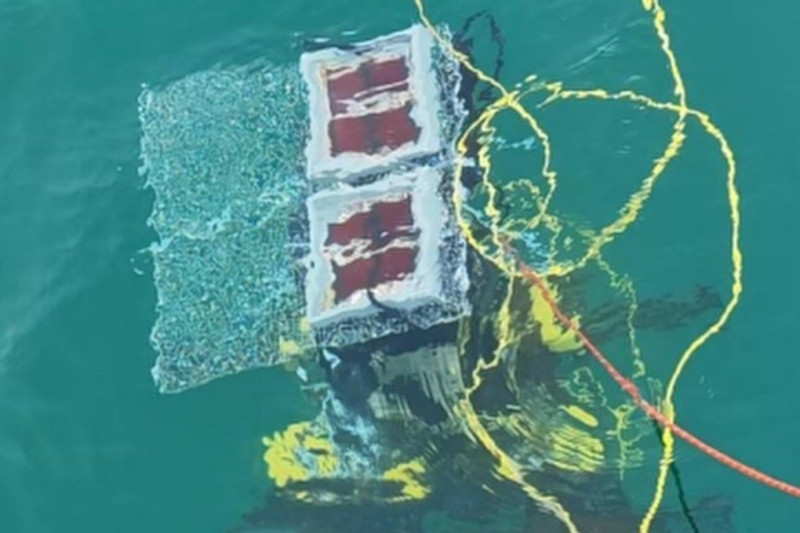
Image: Collected
Chinese scientists have successfully demonstrated solar cells capable of generating electricity 10 metres beneath the surface of the South China Sea, marking a significant development in underwater renewable-energy technology.
The research team from Yunnan University deployed specially designed perovskite solar modules near Weizhou Island using an underwater robot. Unlike conventional solar panels, the new cells were designed to capture the blue-green wavelengths of sunlight that can penetrate seawater at greater depths.
During field tests, the panels were operated at depths of 2, 6 and 10 metres. At the 10-metre depth, the system generated about 324 milliwatt-hours of electricity over two hours, enough to charge lithium-ion batteries and subsequently power an LED panel.
Researchers said the cells achieved a laboratory power-conversion efficiency of 34.71% under light conditions designed to simulate those found 10 metres underwater. The technology also showed strong durability during simulated underwater testing.
The development could eventually help provide continuous power to underwater sensors, monitoring equipment, communication systems and autonomous underwater vehicles, reducing their reliance on batteries that require regular replacement or maintenance.
The research was published in the scientific journal Joule. The scientists are now exploring whether the technology can operate effectively at greater depths, although issues such as reduced sunlight, seawater corrosion and biological growth on the panels remain challenges.