

- City govt essential for planned development of Chattogram: CCC administrator |
- Asian Stocks Slump After US Tech Rout Amid AI Jitters |
- Free Concert Featuring James and Seven Bands Set for Manik Mia Avenue |
- Garment factories reopen as workers return to work in Savar-Ashulia |
- Trump confirms new US strikes on Iran’s Qeshm island |
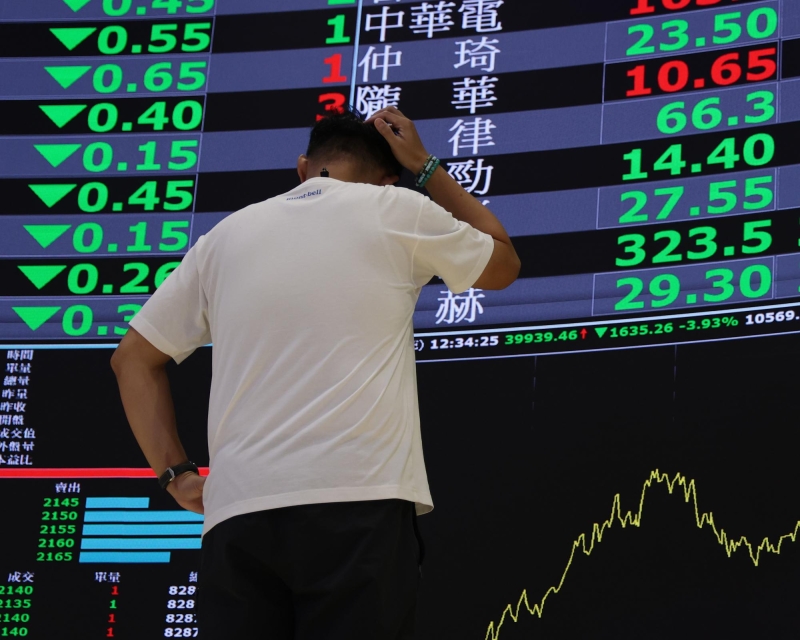
Global tech stocks tumble as US midterms fuel AI slowdown fears
Representational Image- Collected
Major technology companies across the United States, Europe and Asia have suffered massive losses in market value following a global stock sell-off triggered by concerns that the US midterm election results could slow the development of artificial intelligence (AI), according to a BBC report.
Democratic victories in Tuesday's elections, with candidates campaigning to restrict AI expansion and data centre construction, unsettled investors already worried about whether massive investments in AI infrastructure would generate expected returns.
The technology-focused Nasdaq Composite fell more than 5.5 per cent on Thursday, wiping an estimated $2.5 trillion off its market value, according to Dow Jones data. Other major US indexes also recorded their worst performances since 2025.
Asian technology markets continued the decline on Friday. Japan's Nikkei 225 dropped 6.3 per cent, with memory chipmaker Kioxia losing nearly 11.5 per cent and Tokyo Electron falling 5.8 per cent.
South Korea's SK Hynix declined more than 8.8 per cent, while Samsung lost around 6 per cent. The Kospi plunged more than 8 per cent in morning trading, triggering a temporary trading halt to prevent panic selling, before recovering slightly to around 5 per cent down in the afternoon.
Taiwan's Taiex fell 4.5 per cent on Friday, putting the market on course for its biggest weekly decline since 2001, according to LSEG data.
MarketWatch chips analyst Britney Nguyen described the developments as a continuation of concerns over spending on AI infrastructure.
Pressure on data centres
Democratic candidates campaigned across the United States on slowing the expansion of AI and data centres. Several ballot measures sought to restrict the construction of these facilities, which provide the infrastructure needed to run AI systems.
Democrats won control of both the Senate and House of Representatives in Tuesday's midterm elections, securing control of Congress for the remainder of President Donald Trump's term.
Texas governor-elect Gina Hinojosa also campaigned against data centre expansion, promising a moratorium on new construction.
Trump blamed political opponents for the market decline in social media posts, arguing that the Democrats' election victories had triggered the losses. He later criticised voters over the outcome.
Democrats have argued that AI companies have expanded without adequate safeguards or oversight. Senator Bernie Sanders called for a nationwide moratorium on new data centres, saying major technology companies were damaging the environment, threatening jobs and putting humanity's future at risk.
AI-linked companies suffer heavy losses
Shares of companies heavily involved in AI infrastructure fell sharply on Thursday, reflecting growing investor concerns.
In Europe, chipmaker Infineon dropped more than 8.5 per cent, while semiconductor equipment manufacturer ASML declined 6.5 per cent.
In the United States, Nvidia shares fell more than 9 per cent, wiping over $400 billion off its market value. AMD and Micron each lost more than 17 per cent, Intel declined 10.3 per cent and SanDisk plunged over 22 per cent.
The Philadelphia Semiconductor Index, which tracks 30 major semiconductor companies, dropped more than 12 per cent.
Tesla and SpaceX, both associated with Elon Musk, also suffered losses of nearly 11 per cent and 8 per cent respectively, erasing more than $300 billion in combined market value. Musk had spent nearly $450 million supporting Republican campaigns, including at least $45 million backing Ken Paxton's bid for a Texas Senate seat. Texas, however, shifted towards the Democrats in the election.
The so-called Magnificent Seven technology companies, including Apple, Nvidia and Tesla, collectively lost around $1 trillion in market value in a single trading session.
The broader US market also declined, with the S&P 500 falling 4.4 per cent and the Dow Jones Industrial Average dropping more than 3.4 per cent. The Nasdaq's decline pushed it into correction territory, meaning it had fallen at least 10 per cent from its recent peak.
Susannah Streeter, chief investment strategist at Wealth Club, said renewed anxiety over AI investments had hit Wall Street hard. She noted that concerns about the returns on massive AI infrastructure spending were now coinciding with the possibility of a significant slowdown in data centre construction.
Tech leaders respond to backlash
Some technology executives said they had been surprised by the growing opposition to data centres during the elections.
OpenAI President and co-founder Greg Brockman said the industry needed to engage more directly with local communities instead of simply promoting the benefits of new infrastructure online. Speaking at the WSJ Tech conference in California, he said companies needed to build public support in places where they planned to establish facilities.
Meta President Dina Powell McCormick also said technology companies needed to make greater efforts to explain the benefits of AI.
Meanwhile, some investors are increasingly concerned that AI-related stocks may be in a bubble that is approaching a correction, adding to pressure from the political developments.