

- City govt essential for planned development of Chattogram: CCC administrator |
- Asian Stocks Slump After US Tech Rout Amid AI Jitters |
- Free Concert Featuring James and Seven Bands Set for Manik Mia Avenue |
- Garment factories reopen as workers return to work in Savar-Ashulia |
- Trump confirms new US strikes on Iran’s Qeshm island |
Titumir outlines Bangladesh’s ambition to become regional manufacturing and export hub
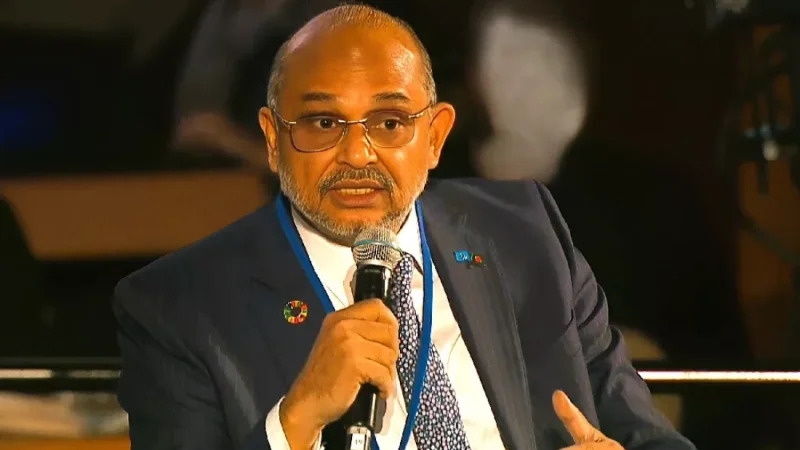
Image- Collected
Bangladesh wants to establish itself as a global manufacturing centre and an export gateway by building stronger regional production networks, Prime Minister’s Adviser on Finance and Planning Prof Dr Rashed Al Mahmud Titumir has said.
He proposed closer cooperation between Bangladesh and Pakistan, including integrated production networks connecting South Asia with Southeast Asia, the Middle East and North Africa.
Titumir made the remarks on Monday at the opening session of the four-day 29th Sustainable Development Conference in Islamabad, where he attended as the guest of honour. The Ministry of Finance disclosed his remarks in a press release issued on Tuesday.
Organised by the Sustainable Development Policy Institute (SDPI), the conference brought together development experts and representatives from different regions.
Titumir said developing countries should focus on attracting investment that strengthens domestic industries, brings in new technologies and generates employment.
He also outlined Bangladesh’s plan to raise public expenditure on education from approximately 2% of GDP to 5% by 2030.
The adviser said Bangladesh was seeking to expand production links with other South Asian countries to restore normal manufacturing flows and address the lasting damage to global production structures.
He described regional cooperation as an important means of advancing inclusive and sustainable development across South Asia.
Addressing the global economic slowdown, Titumir said the government was implementing social protection initiatives, including the Family Card and Farmers’ Card programmes, to promote balanced development.
He expressed optimism that these measures would help the country tackle the prolonged economic difficulties and poverty associated with war, energy shortages and what he described as misrule by the previous government.
Pakistan’s Federal Minister for Planning, Development and Special Initiatives, Prof Ahsan Iqbal, delivered the conference’s keynote paper.
The four-day event includes around 50 panel and plenary discussions, with more than 300 development specialists and prominent figures from political and social sectors expected to attend. More than 100 participants are women.
Representatives from South Asia, Southeast Asia, China and other regions are also taking part.
Following the inaugural programme, Titumir visited the newly built Bangladesh Chancery Complex in Islamabad, where he met officials and employees of the Bangladesh High Commission. He also planted a jamun sapling on the premises.
During the visit, he held separate meetings with Pakistan’s Federal Minister for Finance and Revenue Senator Muhammad Aurangzeb, Federal Minister for Energy Ali Pervaiz Malik, Planning Minister Ahsan Iqbal and Prime Minister’s Adviser on Industries and Production Haroon Akhtar Khan.
The discussions focused on sharing experiences and expanding cooperation to address challenges in areas of mutual interest.