

- City govt essential for planned development of Chattogram: CCC administrator |
- Asian Stocks Slump After US Tech Rout Amid AI Jitters |
- Free Concert Featuring James and Seven Bands Set for Manik Mia Avenue |
- Garment factories reopen as workers return to work in Savar-Ashulia |
- Trump confirms new US strikes on Iran’s Qeshm island |
Copper, steel or glass: Which water bottle is safest?
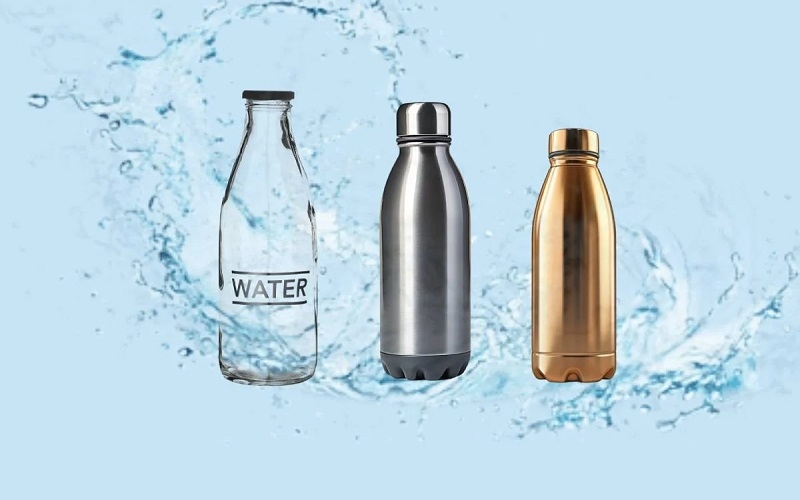
Photo: collected
Many people are switching from plastic to copper or steel bottles for drinking water. While some believe copper bottles offer health benefits, others prefer steel for its durability and safety. Glass bottles are also popular for preserving water's taste and reducing plastic use. But which is the best choice for everyday use?
Benefits of copper bottles
Water stored in a copper vessel is known as tamrajol. According to traditional beliefs, storing water in copper overnight allows the metal's antimicrobial properties to help eliminate harmful microorganisms.
Copper is an essential mineral that supports several bodily functions, including immune system activity and connective tissue formation. However, claims that copper water improves digestion, boosts immunity, promotes healthy skin and hair or relieves joint pain are not sufficiently supported by clinical evidence.
Excessive copper intake can cause nausea, vomiting and abdominal pain and, in severe cases, liver damage. Copper bottles should not be used to store acidic drinks such as lemon water, which can increase copper leaching. Users should follow the manufacturer's instructions on safe storage and use.
Benefits of steel bottles
Stainless steel is a durable, practical option for everyday hydration. Food-grade stainless steel generally does not react with water under normal conditions or significantly affect its taste.
Steel bottles are resistant to breakage, easy to clean and generally resistant to rust. Double-walled, insulated models can keep drinks hot or cold for extended periods, often up to 24 hours, depending on the design and manufacturer.
Benefits of glass bottles
Glass bottles are another alternative for people seeking to avoid plastic containers. Glass is generally non-reactive and does not usually alter the taste or smell of water.
Glass does not typically impart unwanted flavours to water or other beverages, allowing their natural taste to remain unchanged.
Ordinary glass does not retain temperature as effectively as insulated steel. Borosilicate glass can withstand temperature changes better than conventional glass, but insulated designs are preferable for keeping drinks hot or cold for longer.
Glass is non-porous and does not leach chemicals into water under normal use. However, claims that all plastic bottles release harmful levels of chemicals, including bisphenol A (BPA), are inaccurate; the risk depends on the material and conditions of use.
Glass can be recycled repeatedly without significant loss of quality. However, it is heavier than plastic and steel, so transportation and manufacturing also affect its environmental footprint.
Glass bottles are easy to clean and generally resist staining and odours. Borosilicate glass offers better thermal resistance, while silicone sleeves can help protect bottles against impacts. Glass can still break if dropped, and dishwasher suitability depends on the bottle's design and manufacturer's instructions.
Transparent glass bottles offer a simple, elegant design and allow users to see the water level easily. They are suitable for offices and gyms, provided they are handled carefully.
Which bottle should you buy?
The best choice depends on how you plan to use the bottle.
If you prefer copper because of its traditional Ayurvedic associations, remember that many claimed health benefits have not been established by strong scientific evidence. Copper is an essential nutrient, but drinking copper-stored water is not necessary to meet the body's requirements.
For everyday use at the office, gym or while travelling, food-grade stainless steel is a durable and convenient choice. Glass is suitable for those who prioritise taste and a non-reactive material, although it requires more careful handling.
Regardless of the material, choose a bottle designed for drinking water, clean it regularly and follow the manufacturer's safety and maintenance instructions.