

- City govt essential for planned development of Chattogram: CCC administrator |
- Asian Stocks Slump After US Tech Rout Amid AI Jitters |
- Free Concert Featuring James and Seven Bands Set for Manik Mia Avenue |
- Garment factories reopen as workers return to work in Savar-Ashulia |
- Trump confirms new US strikes on Iran’s Qeshm island |
Dengue surge triggers scrutiny over govt preparedness
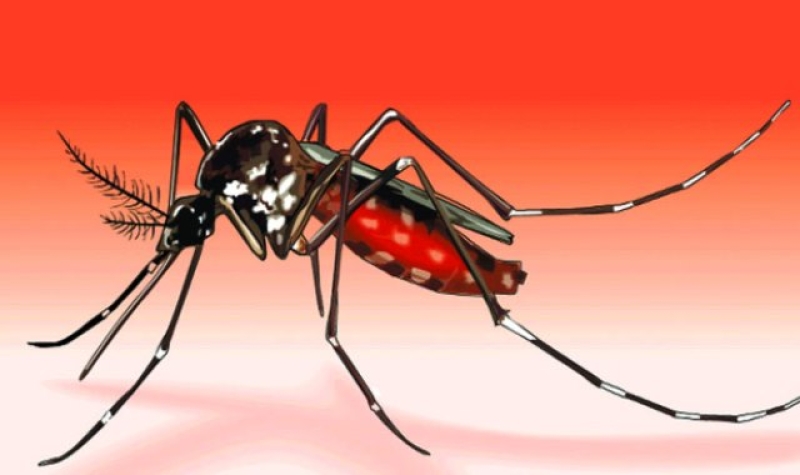
Photo: collected
A severe surge in dengue fever cases across Bangladesh has claimed 389 lives and resulted in over 126,000 hospitalizations this year, raising critical questions from public health experts and entomologists over inter-ministerial coordination and delays in preventive vector control.
Data released by the Directorate General of Health Services (DGHS) through Monday morning (October 26) shows that five more patients succumbed to the virus in a 24-hour period, with 1,546 new admissions recorded nationwide. Between January 1 and October 25, overall dengue infections skyrocketed by 106.8% compared to the same period in 2025, while total fatalities jumped 48.3%.
From January 1 to October 25, Bangladesh recorded 132,948 dengue infections and 384 deaths this year, according to figures cited in the report.
During the same period in 2025, the country recorded 64,297 cases and 259 deaths. In 2024, the figures stood at 54,702 cases and 269 deaths.
Compared with the corresponding period in 2025, dengue cases have increased by 106.8% this year, while deaths have risen by 48.3%. Compared with the same period in 2024, cases have increased by 143% and deaths by 42.8%.
However, the Directorate General of Health Services (DGHS) reported that 123,998 dengue patients were hospitalised between January 1 and October 25, with 384 deaths recorded during the period. The discrepancy between the total case figures cited above and the DGHS hospitalisation data requires verification.
Dhaka Division recorded the highest number of hospitalisations, with 50,292 patients and 183 deaths. Khulna Division ranked second, with 19,092 hospitalisations and 68 deaths.
Chattogram Division reported 18,261 hospitalisations and 37 deaths, while Barisal Division recorded 15,633 hospitalisations and 28 deaths.
Khulna, which ranks second after Dhaka in dengue cases and deaths, has continued mosquito-control and cleanliness drives to curb the outbreak.
Asked about the measures being taken, Khulna Civil Surgeon Dr Md Moniruzzaman said he had joined the post on October 15 and was implementing activities in line with directives from the Ministry of Local Government.
“We are conducting cleanliness drives in areas where stagnant water in ditches, drains and other places could create breeding grounds for Aedes mosquitoes. These drives continue every day, with intensified efforts on Saturdays,” he said.
He added that reports on the activities were being submitted to the ministry.
“We are coordinating with public and private schools, colleges and other institutions to continue mosquito-control operations,” he said, adding that his predecessor had also carried out similar initiatives.
Experts warn that once dengue begins spreading in an area, bringing the outbreak under control becomes difficult. However, regular mosquito-control operations, proper sanitation, the elimination of breeding grounds and timely public health interventions can help reduce transmission.
The rising number of cases has renewed questions about whether preventive measures were implemented early enough and whether coordination among the relevant authorities has been sufficient to contain the outbreak.
Entomologist Professor Kabirul Bashar said climate change is altering temperature, rainfall and humidity patterns in Bangladesh, affecting the spread of Aedes mosquitoes and the transmission of dengue.
He stressed the need to revise mosquito-control strategies to adapt to changing climatic conditions.
While climate change can be addressed through mitigation and adaptation, large-scale mitigation efforts may be beyond the capacity of agencies responsible for mosquito control. However, authorities can develop adaptation-based strategies by identifying how changes in weather and environmental conditions affect Aedes mosquito behaviour, he said.
Asked about preventive measures taken since the government assumed office, amid a rise in dengue cases and deaths compared with the same period last year despite the availability of historical data, State Minister for Local Government, Rural Development and Cooperatives Mir Shahe Alam said preventive activities had been ongoing since the beginning of the government's tenure.
“Our responsibility is to take preventive measures, and we have been doing so since taking office. We have undertaken cleanliness drives, awareness campaigns and leaflet distribution,” he said.
He added that the government had decided to launch large-scale awareness campaigns through loudspeaker announcements across city corporations, municipalities, districts and upazilas.
The campaigns aim to raise public awareness and eliminate potential Aedes mosquito breeding grounds, he said.
The state minister also said anti-dengue activities were being conducted every Saturday with the participation of Scouts, Rover Scouts and voluntary organisations. The programme will continue every Saturday until December 12, he added.
Meanwhile, the government has decided to form 20 special monitoring committees across 20 zones of Dhaka North and Dhaka South city corporations to strengthen dengue prevention, improve cleanliness and eliminate mosquito breeding grounds.
Director-level officials from the Prime Minister's Office will lead the committees, which will include representatives from the relevant ministries, Dhaka WASA, the metropolitan police and the city corporations, as well as executive magistrates.
The committees will monitor dengue prevention efforts and oversee intensified cleanliness drives.
Public health expert Dr Mustak Hossain said dengue had become a persistent public health crisis in Bangladesh and could not be controlled through superficial fogging operations or fines alone.
He said the government should have formed a high-level interministerial task force, similar to the one established during the Covid-19 pandemic, and implemented the 2019 national dengue management guidelines at the grassroots level.
He recommended identifying a one-kilometre radius around each confirmed patient's location as a potential hotspot and launching targeted operations to destroy mosquito larvae in line with scientific guidelines.
He also stressed the need to encourage community participation at the ward level, following Kolkata's model, and provide free dengue tests and mosquito nets to low-income patients through public hospitals.
Unless the government adopts a scientific, source-based approach to eliminating mosquito larvae, the country will continue to pay a heavy price for the outbreak, he warned.
State Minister for Health Dr MA Mohit said dengue-prone areas were being identified for mosquito-larvae destruction and cleanliness drives.
Hospitals' patient records are being analysed to identify areas with high infection rates, where special cleanliness drives and larvicide applications are being carried out promptly, he said, adding that city corporations were also involved in the efforts.
“There is no shortage of government initiatives to tackle dengue,” he said.
According to the state minister, weekly meetings are being held with mayors, administrators and officials from the health and local government ministries to review the situation. The prime minister, ministers and state ministers are also discussing the issue regularly.
He claimed that collective efforts had kept the dengue infection rate lower this year than in previous years.
Five more people died of dengue and 1,546 new patients were hospitalized across the country in the 24 hours ending at 8:00am on Monday.
With the latest fatalities, the dengue death toll in the country has risen to 389 this year, according to the Directorate General of Health Services (DGHS).
Among the new deaths, one each was reported in Dhaka, Chittagong, Khulna, Rajshahi and Barisal divisions.
Since January 1 this year, a total of 126,166 dengue patients have been admitted to hospitals across the country. Of them, 119,393 have recovered.
Courtesy: Dhaka Tribune.