

- City govt essential for planned development of Chattogram: CCC administrator |
- Asian Stocks Slump After US Tech Rout Amid AI Jitters |
- Free Concert Featuring James and Seven Bands Set for Manik Mia Avenue |
- Garment factories reopen as workers return to work in Savar-Ashulia |
- Trump confirms new US strikes on Iran’s Qeshm island |
Historic Dhakai Muslin returns to global market after nearly 170 years
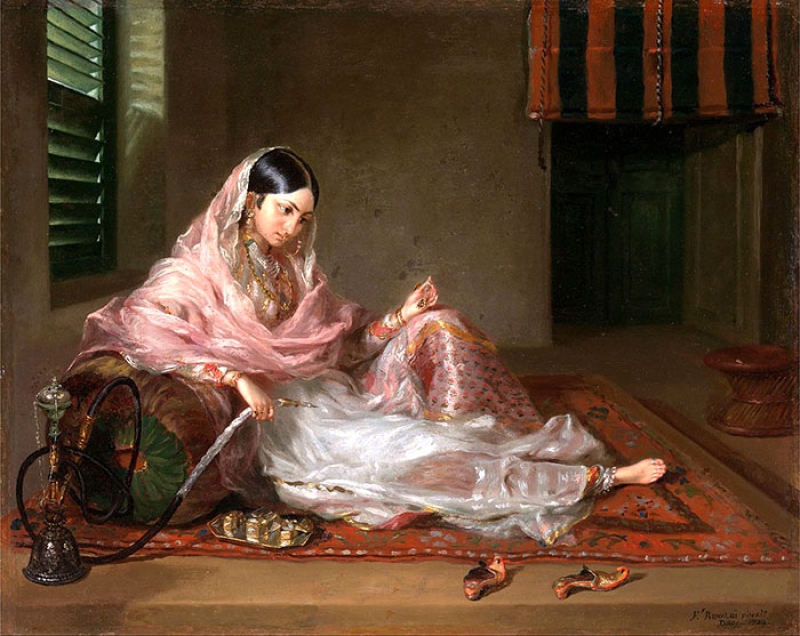
Image- Collected
Dhakai muslin, the famed ultra-fine fabric once prized by emperors and sought after across international markets, is preparing for a commercial revival after nearly 170 years. Government initiatives, scientific research and the skills of rural women artisans have helped restore the traditional cotton variety and thread-making techniques needed to produce the fabric.
Known for its exceptional fineness and transparency, muslin was a luxury textile during ancient times and reached the height of its prestige under the Mughal Empire. Its finest variety, Malmal Khas, was reserved for emperors. Other varieties were known by poetic names such as Ab-e-Rawan, meaning flowing water, and Shabnam, meaning morning dew.

Image- Collected
The industry declined in the 18th and 19th centuries amid competition from British mill-made fabrics, harsh treatment of local weavers and punitive taxes. The disappearance of Phuti Karpas, the distinctive cotton variety traditionally grown in the Meghna River basin, further contributed to the industry’s collapse. Dhakai muslin was last exhibited at London’s Great Exhibition in 1850 before fading from commercial production.
Producing the fabric required specialised knowledge of weather and humidity. Artisans traditionally spun its delicate threads during humid periods because dry air could cause them to break. The process involved 16 stages, from harvesting and cleaning cotton to spinning and weaving with specialised tools.
In 2014, the Bangladesh Handloom Board launched a research initiative to revive muslin production. Researchers collected 39 wild cotton varieties from areas including Kapasia in Gazipur, Baghabari and Rajshahi. They used DNA sequencing and genome matching against historic muslin thread samples preserved at London’s Victoria and Albert Museum to identify and cultivate authentic Phuti Karpas.
More than 50 specialised tools were recreated for the revival project. While ordinary cotton fabrics typically have thread counts ranging from 40 to 80, the revived muslin has reached 731–750 metric counts, contributing to its distinctive fineness.
Bangladesh granted Dhakai muslin Geographical Indication (GI) status in December 2020, recognising its connection to the country.
The government is now implementing the second phase of the revival project at a cost of Tk 18.5 crore. More than 300 women from marginalised communities have been trained to spin the exceptionally fine thread, creating new livelihood opportunities in rural areas.
International luxury brands from countries including the United States, France and Japan have expressed interest in the revived fabric. An international order for 500 yards of muslin has already been completed.
The Dhakai Muslin House in Tarabo, Rupganj, Narayanganj, is serving as a centre for transferring the technology to private-sector entrepreneurs. Authorities are also working to improve the Phuti Karpas variety and establish contract farming arrangements with farmers in Kapasia, Rajshahi and Cumilla to ensure a steady supply of cotton.
Initially, producing a muslin saree cost around Tk 3.6 lakh. Efforts are underway to reduce production costs to between Tk 1 lakh and Tk 3 lakh through expanded production. A single saree can take two to four weavers several months to complete.
Learn more about Dhakai Muslins

Image- Collected
With its high production costs and labour-intensive process, Dhakai muslin is expected to target the premium luxury fashion market initially. However, the government hopes that private-sector involvement and large-scale cotton cultivation will eventually make the fabric more affordable while creating a new high-value export opportunity for Bangladesh beyond its traditional ready-made garment industry.