

- City govt essential for planned development of Chattogram: CCC administrator |
- Asian Stocks Slump After US Tech Rout Amid AI Jitters |
- Free Concert Featuring James and Seven Bands Set for Manik Mia Avenue |
- Garment factories reopen as workers return to work in Savar-Ashulia |
- Trump confirms new US strikes on Iran’s Qeshm island |
Dhaka ranks third among world’s most polluted cities, today
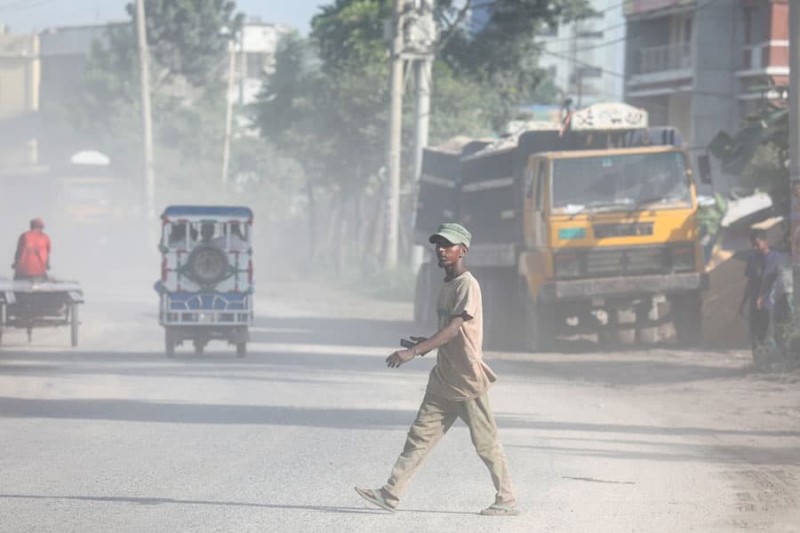
Image- Collected
Dhaka ranked as the world’s third most polluted city on Sunday morning, recording an Air Quality Index (AQI) score of 176 at 10:30am.
The city’s air quality was classified as ‘unhealthy’, meaning pollution levels could pose health risks to the general population.
Pakistan’s Lahore topped the list with an AQI score of 207, followed by Kuching in Malaysia at 203. Mumbai in India ranked fourth with a score of 173.
Under the AQI scale, readings between 101 and 150 are considered ‘unhealthy for sensitive groups’, while scores from 151 to 200 are classified as ‘unhealthy’. Readings between 201 and 300 indicate ‘very unhealthy’ air quality, and scores above 301 are considered ‘hazardous’.
The AQI measures daily air pollution levels and indicates their potential effects on human health.
In Bangladesh, AQI calculations are based on five major pollutants: particulate matter (PM₁₀ and PM₂.₅), nitrogen dioxide, carbon monoxide, sulphur dioxide and ozone.
The World Health Organization estimates that air pollution causes around seven million deaths worldwide each year, mainly from stroke, heart disease, chronic obstructive pulmonary disease, lung cancer and acute respiratory infections.