

- City govt essential for planned development of Chattogram: CCC administrator |
- Asian Stocks Slump After US Tech Rout Amid AI Jitters |
- Free Concert Featuring James and Seven Bands Set for Manik Mia Avenue |
- Garment factories reopen as workers return to work in Savar-Ashulia |
- Trump confirms new US strikes on Iran’s Qeshm island |
Rail links planned for all Chattogram port terminals
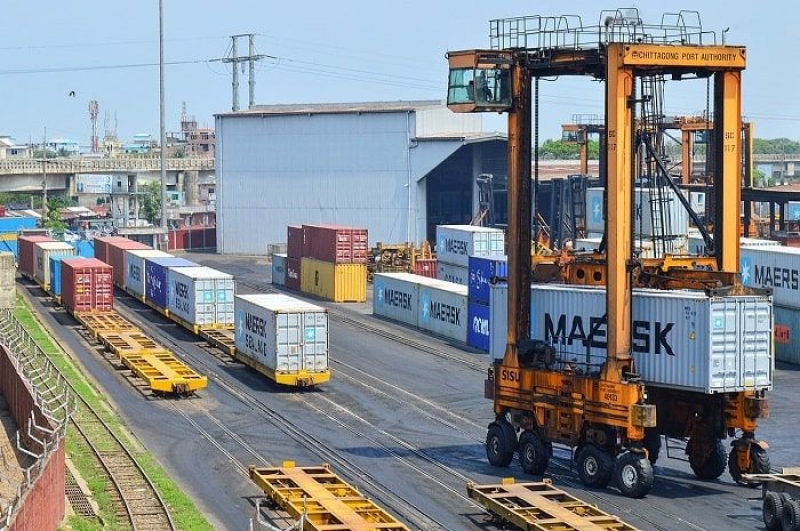
Representational image of CTG port- Collected
Bangladesh Railway is planning to connect all terminals at Chattogram seaport by rail to reduce cargo transport costs, ease road congestion and lower carbon emissions.
The initiative aims to shift freight transport from roads to rail, in line with the Logistics Policy 2025, which targets raising rail’s share of freight movement from the current 2–3% to 20%.
Under the World Bank-funded Green Railway Transport Project Preparation Facility, Bangladesh Railway will conduct feasibility studies to improve rail connectivity to existing and upcoming terminals at the country’s main seaport, which handles nearly 90% of Bangladesh’s export-import activities.
The port’s existing facilities include the General Cargo Berth, Chittagong Container Terminal, conventional jetty areas, Patenga Container Terminal and New-mooring Container Terminal. The Laldia Container Terminal and Bay Terminal are under development.
Project officials said current rail links to some terminals remain limited. Existing tracks also use metre-gauge lines, requiring consideration of integration with future broad-gauge freight operations.
The project will examine improvements to the Dhaka–Chattogram freight corridor, rail connections between Faujdarhat and Chattogram Goods Port Yard, and a proposed link to Bay Terminal. It will also assess requirements for freight locomotives, cargo-handling equipment, storage facilities and other rail infrastructure.
The Tk 930 million project will also update feasibility studies and conceptual designs for a rail link to the logistics hub at Mirsharai Economic Zone and a track-maintenance workshop in Chattogram.
Project officials expect the studies to be completed by the end of 2027. They said shifting freight to rail could help reduce emissions, as rail transport produces an estimated 6–10% less carbon than road transport.