

- Bangladesh Bank Begins Selection Process for Young Entrepreneurs Today |
- Messi Wins Second MLS Golden Boot as Nashville Sets Points Record |
- Israel’s president picks Eisenkot over Netanyahu to form next government |
- Over 900,000 displaced Gazans exposed to winter flooding as storms hit enclave |
- Most garment workers return to work in Savar, Ashulia |
Jaishankar explains what’s delaying India-US trade deal
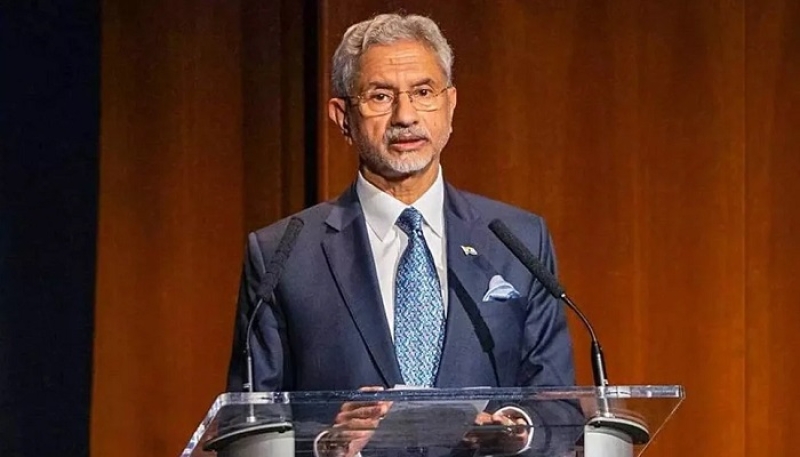
photo: collected
India’s External Affairs Minister S Jaishankar has explained why negotiations on a long-awaited trade deal with the United States have taken longer than initially expected, saying the talks involve “stakes” and “complexities” arising from the fundamentally different nature of the two economies, reports NDTV.
If concluded, the India-US trade agreement would contribute to a “better” bilateral relationship, Jaishankar said, while noting that New Delhi and Washington have now reached a stage where there is “more or less an understanding on the trade agreement”.
The minister made the remarks at an event hosted by the Asia Society in New York, where he was attending the 81st session of the UN General Assembly.
Asked about India-US ties, particularly developments related to trade and tariffs over the past year and what would be needed to put the relationship on a “better track”, Jaishankar said the negotiations had proved more complicated than initially anticipated.
“Bear in mind, India is a society of small producers, small agriculture producers, small factories. Apart from the per capita gap between India and the United States, the nature of production, nature of society is very different,” he said.
“A trade negotiation required a certain amount of ... patience and detailing to see it through. The expectation that it could rapidly move forward, I think, was tested against a ground reality which was much more complex.”
Jaishankar said the two countries have now reached a point “where there is more or less an understanding on the trade agreement”.
New Delhi and Washington announced the finalisation of the framework for the first phase of their bilateral trade agreement in February. However, changes in US tariff policies have led to further negotiations over the pact.
The US Supreme Court had earlier struck down President Donald Trump’s reciprocal tariffs imposed under emergency powers, prompting Washington to adopt a different tariff framework.
In July, the US imposed an additional 10% tariff on imports from India under Section 301 of the Trade Act, following a probe into India’s measures concerning goods produced with “forced labour”.
The two sides have since continued negotiations amid changes in the US tariff regime.
Jaishankar said the remaining issues were linked to changes in US tariff policies and how the new Section 301 process could affect the agreement.
“The 301 process is still in the works; it’s still unfolding. So the issue for us is at what point you close out an agreement which is very, very far advanced,” he said.
“But the period that it took to reach it, that did create bumps last year for the relationship. So presumably, if that agreement is closed out, that would be one point which would contribute to a better relationship.”
Jaishankar also said developments within the US had, to some extent, influenced bilateral ties, particularly over the issue of mobility.
“For many years mobility was seen as an economic gain. Now, today the economics of mobility and the politics of mobility are at odds with each other,” he said.
He added that foreign policy and diplomacy were no longer conducted solely by states, leaders, ministers or diplomats, as public opinion had become an increasingly important factor in the social media era.
“In a social media era, there is a very big public opinion factor,” particularly in democratic societies, he said.
“So I think that’s a reality we have to take into account. So yes, we would certainly hope for and expect the relationship to move on an upward trajectory. But I have to be real about the issues that we confront, and to the extent we are able to move ahead on some of these issues, I think we’ll have a better relationship,” the minister added.
Last week, Commerce and Industry Minister Piyush Goyal said the India-US trade pact was “done and dusted” and would be executed once the US gives India the right competitive advantage over its competitors in the American market. India’s competitors in the US market include ASEAN countries, China and Bangladesh.
Goyal is scheduled to visit the US from September 29 to October 5 to attend a G20 meeting in Milwaukee and hold discussions with US Trade Representative Jamieson Greer on advancing negotiations for the bilateral trade agreement.