

- Oil Shock Sends Asian Markets Lower as Middle East Conflict Threatens Global Shipping |
- Trump Links Iran War to US Midterms, Backs United Ireland |
- PM Tarique Rahman Seeks Public Cooperation to Tackle Nationwide Dengue Outbreak |
- Jatiyatabadi Mahila Dal Vows to Lead Fight Against Rape, Violence Against Women and Children |
- 'Honorable' Dropped: PM Starts Implementing Decision from His Own Office |
Iron Man: The Movie That Built the Marvel Cinematic Universe
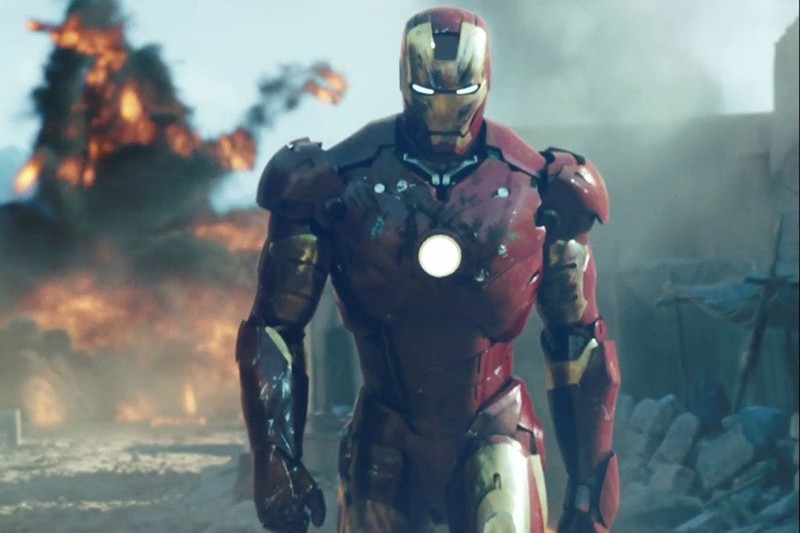
Image: Collected
When Iron Man arrived in theaters in 2008, few people could have predicted that it would become the foundation of one of the most successful film franchises in history. At the time, Marvel Studios was still trying to establish itself as a major force in Hollywood, and the idea of building an interconnected universe across multiple superhero films was largely untested.
Directed by Jon Favreau and starring Robert Downey Jr. as Tony Stark, Iron Man was more than another superhero origin story. It became the starting point of the Marvel Cinematic Universe (MCU), a massive interconnected saga that would eventually bring together dozens of characters and films.
The movie introduced Tony Stark, a wealthy, brilliant and arrogant weapons manufacturer whose life changes after he is kidnapped by terrorists while demonstrating his company's weapons in Afghanistan. Seriously injured and forced to confront the consequences of his business, Stark builds an armored suit to escape captivity.
Instead of returning to his old life, Stark begins transforming himself. He shuts down his company's weapons division and starts developing increasingly advanced versions of his Iron Man armor. His journey from irresponsible billionaire to superhero gives the film an emotional foundation that helped distinguish it from many earlier comic-book movies.
Robert Downey Jr.'s performance was central to the film's success. His version of Tony Stark was charismatic, sarcastic, flawed and surprisingly vulnerable. Rather than portraying a traditional heroic figure from the beginning, the movie allowed Stark to make mistakes and gradually become a better person.
The film also established the tone that would become an important part of the MCU. Iron Man combined superhero action with comedy, technology, character-driven storytelling and a sense of realism. Tony Stark's workshop, experimental armor and technological inventions made the superhero world feel modern and tangible.
However, the most important moment for the future of Marvel came after the main story. In the post-credit scene, Stark returned home to discover Nick Fury, played by Samuel L. Jackson, waiting for him. Fury told Stark about something called the "Avenger Initiative."
That brief scene changed the possibilities of superhero cinema.
The post-credit sequence suggested that Iron Man was not an isolated story. There were other superheroes operating in the same world, and Marvel was planning something much bigger. Audiences would soon discover that Tony Stark was only the beginning.
The strategy continued with The Incredible Hulk in 2008, followed by Iron Man 2, Thor and Captain America: The First Avenger. These movies introduced characters who would eventually come together in The Avengers in 2012.
This interconnected approach became one of Marvel Studios' greatest innovations. Characters could appear in each other's movies, events in one film could influence another, and audiences were encouraged to follow the larger story rather than viewing every movie as a completely separate franchise.
Iron Man was therefore important not simply because it was successful, but because it proved that audiences would invest in a shared superhero universe. Marvel transformed individual films into pieces of a much larger narrative.
The movie also helped revive Robert Downey Jr.'s career. His performance became so closely associated with Tony Stark that the character eventually became one of the defining figures of the MCU. Over the following decade, Downey's Iron Man appeared across numerous Marvel films and became one of the emotional centers of the franchise.
Looking back, the simplicity of Iron Man is part of what makes it remarkable. Before the MCU became known for enormous crossover battles, multiverse stories and sprawling ensembles, it began with one man, one suit and a decision to become something better.
The final line of the film—"I am Iron Man"—also became symbolic of the character and the franchise itself. Tony Stark did not hide behind a secret identity. Instead, he publicly embraced his transformation into Iron Man.
That confidence reflected what Marvel Studios was attempting. The studio was taking a major risk by connecting multiple superhero stories into one universe. Iron Man proved that the experiment could work.
Today, the MCU has grown into a sprawling cinematic universe spanning films and television projects, but its foundation remains the same: Tony Stark stepping out of his armored suit and declaring his identity to the world.
Without Iron Man, the MCU as audiences know it might never have existed. The 2008 film did not simply introduce a superhero. It introduced a new way of making blockbuster movies—and gave Marvel the first building block of a cinematic universe that would change Hollywood.