

- Oil Shock Sends Asian Markets Lower as Middle East Conflict Threatens Global Shipping |
- Trump Links Iran War to US Midterms, Backs United Ireland |
- PM Tarique Rahman Seeks Public Cooperation to Tackle Nationwide Dengue Outbreak |
- Jatiyatabadi Mahila Dal Vows to Lead Fight Against Rape, Violence Against Women and Children |
- 'Honorable' Dropped: PM Starts Implementing Decision from His Own Office |
Australia’s Remarkable Underground City: Homes, Churches, Hotels and Cafés Beneath the Desert
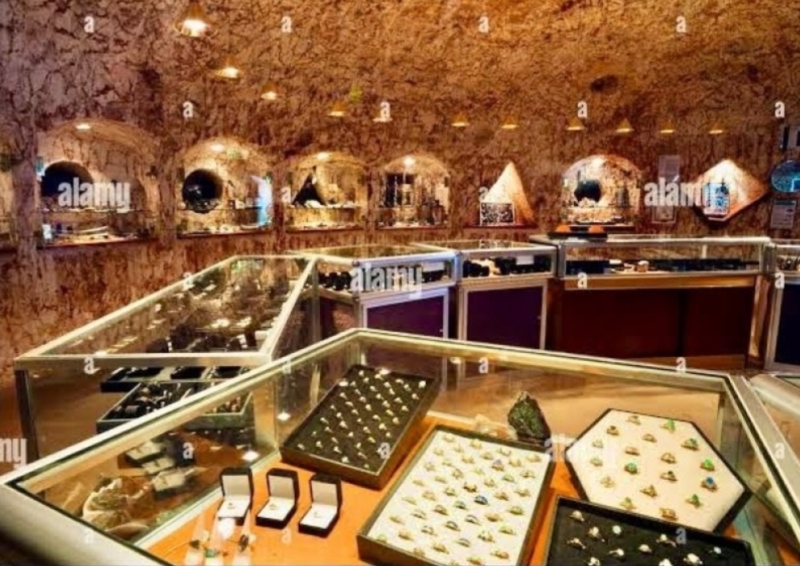
Image: Collected
Mohammad Abdul Matin:
Deep in Australia’s vast Outback lies a town where much of everyday life exists beneath the surface. Homes, hotels, churches, shops, museums, cafés and even tourist accommodation have been built underground. The remarkable town in South Australia is Coober Pedy.
Located about 850 kilometres north of Adelaide along the Stuart Highway, Coober Pedy is known around the world as the “opal capital.” While the remote desert town is famous for its valuable opals, its unique underground lifestyle has also made it a major attraction for tourists. According to South Australian tourism information, homes, hotels and businesses have been established underground, creating a distinctive way of life adapted to the harsh environment.
Coober Pedy lies in one of Australia’s driest and hottest regions. During summer, temperatures can regularly rise above 40 degrees Celsius. To cope with the extreme heat, residents have built homes underground for generations. These underground dwellings are locally known as “dugouts.”
Constructed by excavating layers of sandstone, the homes maintain relatively stable temperatures throughout the year. As a result, while temperatures outside can become extremely high, underground homes remain comparatively comfortable. Beyond providing relief from the desert heat, this architecture represents a remarkable example of how people have adapted their way of life to their environment.
According to the 2021 Australian Census, the Coober Pedy region had a population of around 1,566. People from different countries and cultural backgrounds have settled in the town, giving it a distinctly multicultural character.
Perhaps the most striking feature of Coober Pedy is that underground life extends far beyond residential homes. Churches, tourist attractions, shops, museums, cafés and accommodation facilities can all be found beneath the ground.
The town is home to the Serbian Orthodox Underground Church. Carved directly into the rock, its interior design and stained-glass windows are particularly popular with visitors. Another attraction is the Catacomb Church, which was carved out of sandstone in the shape of a cross. St Peter and Paul’s Catholic Church is also regarded as Coober Pedy’s first underground church.
Another major attraction is the Umoona Opal Mine and Museum. Built around an old opal mine, the underground attraction offers visitors an insight into the history of opal mining, fossils, the history of the region’s Indigenous communities and European settlement, as well as examples of modern underground homes. It also features a large collection and retail outlet for opals.
The Old Timers Mine contains an old opal mine dating back to 1916, an underground home, a museum and a collection of opals. Visitors can walk through sections of the historic mine and also experience searching for opals in designated areas.
Coober Pedy also offers underground accommodation for tourists. Several dugouts have been converted into modern residences, while some hotel rooms have been excavated directly into natural sandstone hills.
The Lookout Cave Underground Motel features 18 underground rooms. Carved into a natural sandstone hill, the accommodation offers visitors an opportunity to experience Coober Pedy’s distinctive subterranean lifestyle firsthand.
The town also has an underground café. According to South Australian tourism information, the Crystal Cave Café is known as Coober Pedy’s only underground café. Enjoying food or coffee underground while escaping the intense desert heat has become another popular experience for visitors.
The story of Coober Pedy itself began with opal. Opals were discovered in the area in February 1915. According to local history, 15-year-old Willie Hutchison discovered opal in the region. The discovery was followed by an influx of miners, and a new settlement gradually developed.
In 1920, the town was named Coober Pedy. The name is derived from a phrase from the local Indigenous language and is commonly interpreted as meaning “white man’s hole.”
Some Australian soldiers returning from the First World War also settled in the area. Local history suggests that some were inspired by their experiences living in trenches on the battlefields of France and adopted the idea of building underground homes. Over time, migrants from Europe and other parts of the world further strengthened the town’s multicultural character.
Today, Coober Pedy is more than a mining town. It is one of South Australia’s major Outback tourism destinations. Alongside its underground attractions, the surrounding area features the Kanku-Breakaways Conservation Park, Moon Plain, the Dingo Fence, historic mines and vast opal fields.
The red and orange desert landscapes of the Kanku-Breakaways are particularly spectacular around sunset. Visitors can also try “noodling”, a traditional method of searching for opal by sifting through the ground by hand in designated areas.
The story of Coober Pedy is not simply that of a desert mining town. It is a story of mining, migration, culture, human ingenuity and adaptation to an extreme environment. In the middle of a hot and arid desert, people have built their homes, places of worship, businesses and tourist attractions beneath the earth. Over time, this underground way of life has itself become a remarkable experience for visitors from around the world.
Coober Pedy is, in many ways, a complete city hidden beneath the ground—one where the desert above is harsh and unforgiving, while life below is remarkably diverse, creative and fascinating.